MARINE Echinoderms
INTRODUCING ECHINODERMS
When it comes to bottom dwellers that earn their keep, you could do a lot worse than some of the sea stars, writes Tim Smith.
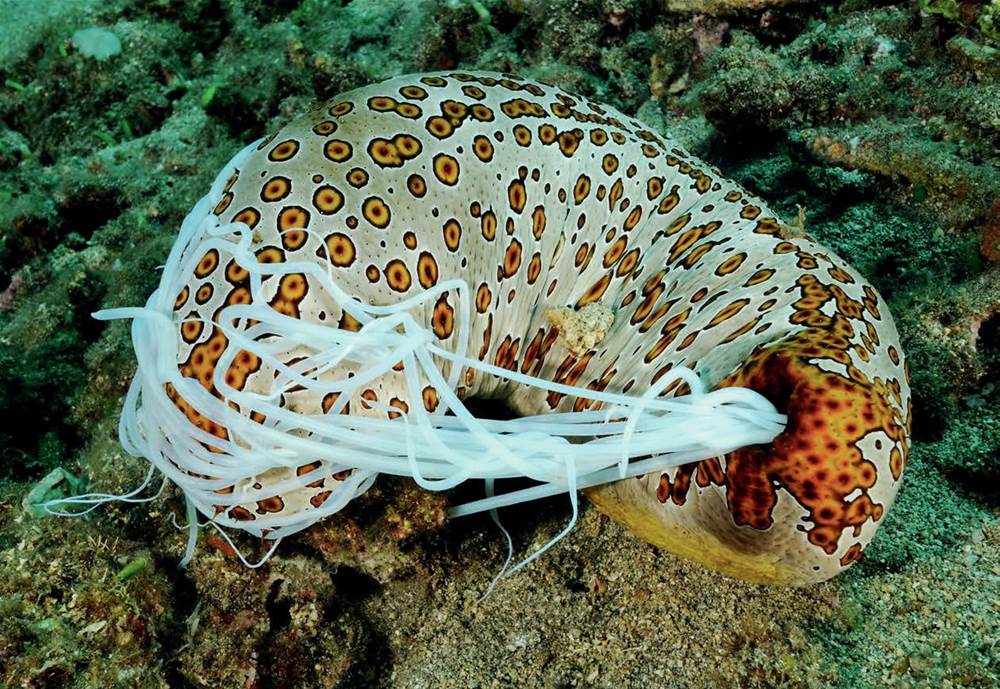
A sea
cucumber ejects its stomach.
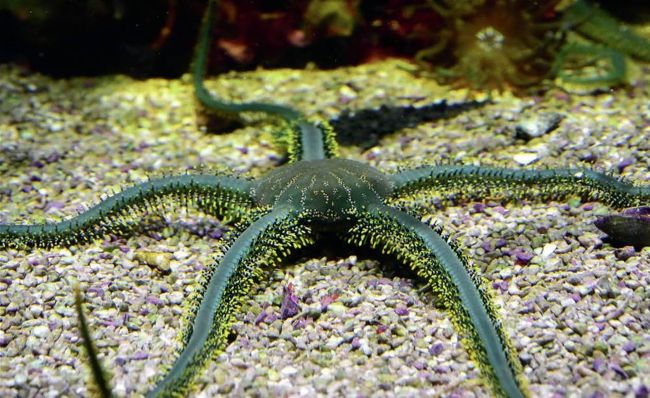
Green brittlestar.
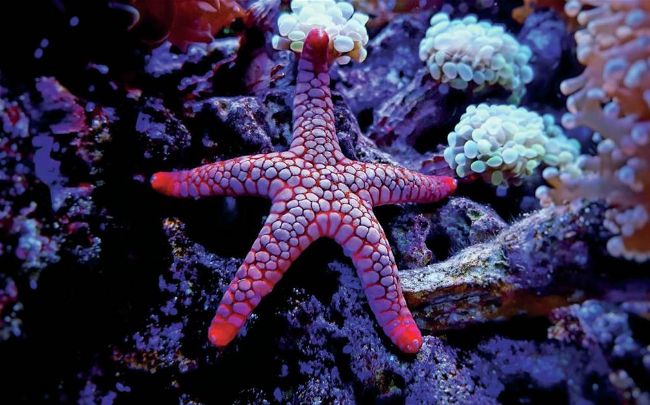
Red necklace sea star.
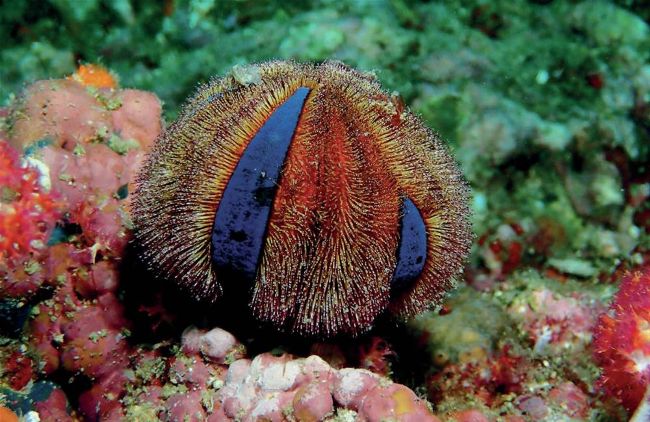
Bluestriped sea urchin.
TIM SMITH
An ichthyologist and oddball aquarist, Tim has been involved with fi sh for 15 years, from retail to academia.
THE ECHINODERMS aren’t given as much credit as they deserve, at least not in proportion to their diversity. They’re this bizarre, unique group of creatures that are often inadequately thought of as simple marine invertebrates relegated to the ocean floor. But their numbers and roles in any given marine ecosystem can be staggering.
In the marine aquarium world, too, their importance is often overlooked. In most instances they’re assigned some lesser role: clean-up crew, hitchhiker, nuisance. However, given a closer look and a new appreciation, these animals can become the stars of a marine tank, and challenges for the aspiring marine aquarist looking to broaden their horizons.
Dazzling diversity
To put it very simply, the echinoderms are made up of the sea stars, brittle stars, sea cucumbers, sea urchins, and feather stars. These are neat categories, but it says little for the diversity represented by some 7000 species contained within. Even among these groups are a range of lifestyles and ecologies that reflect the absurd numbers of niches that these animals can fill. From tropical to temperate waters, reefs to deep sea, you’ll be hard pressed to find a marine environment without some form of echinoderm.
The group as a whole share a number of common traits, but the defining characteristic is their five-fold symmetry. While most animals (such as fishes and ourselves) can be split in two parts equally, echinoderms cannot; equal portions can only be achieved when splitting them five ways. It’s the reason that (most) sea stars are five-armed, or why urchin shells have five segments. Some very unique species are arranged in multiples of fives.
They also all have tube feet. These line the echinoderm exterior and facilitate all manner of important functions from feeding to locomotion to camouflage. These can be obviously seen in many species, but are a lot more subtle among others such as feather stars and some sea cucumbers. Other times they’re greatly modified, as in the huge feeding appendages of the sea cucumbers.
Leggete l'articolo completo e molti altri in questo numero di
Practical Fishkeeping
Opzioni di acquisto di seguito
Se il problema è vostro,
Accesso
per leggere subito l'articolo completo.
Singolo numero digitale
Practical Fishkeeping January 2022
Questo numero e altri numeri arretrati non sono inclusi in un nuovo
abbonamento. Gli abbonamenti comprendono l'ultimo numero regolare e i nuovi numeri pubblicati durante l'abbonamento.
Practical Fishkeeping
Abbonamento digitale annuale
€79,99
fatturati annualmente