IT
  
Attualmente si sta visualizzando la versione Italy del sito.
Volete passare al vostro sito locale?
3 TEMPO DI LETTURA MIN

News & Views

New turtle foraging area discovered
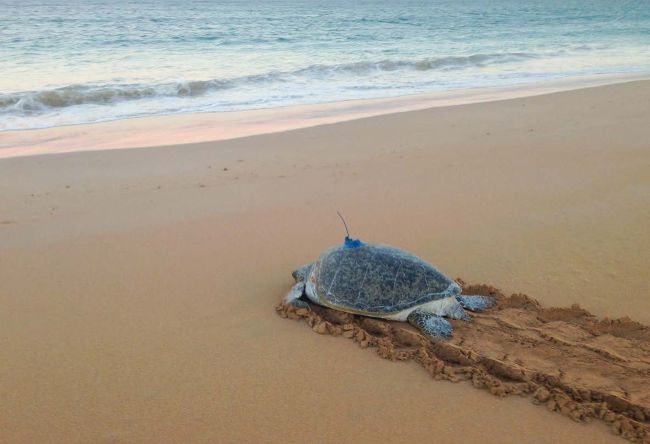
A green turtle returns to the sea after being tagged with a satellite transmitter in the Pilbara region of Western Australia.
Photo courtesy Luciana Ferreira. 

Marine scientists have recently mapped previously unknown foraging grounds and migratory routes for Western Australia’s green turtles (Chelonia mydas) to support the conservation of this iconic threatened species.

The Australian Institute of Marine Science (AIMS)-led study also examined where turtles spent time during the nesting season, which will allow researchers to identify the areas that are most important to them, and to determine where this overlaps with industrial activity.

The project saw researchers tag 20 female green turtles nesting at Western Australia’s beaches and track them with satellites. They then combined their data with that from a further 76 turtles tagged in previous studies. AIMS marine ecologist Dr Luciana Ferreira emphasises the ultimate goal in mapping the green turtle distribution is to provide the knowledge to help in reducing the species’ potential interactions with human activities in the resource-rich areas of Australia’s north-west.

Leggete l'articolo completo e molti altri in questo numero di Practical Reptile Keeping
Opzioni di acquisto di seguito
Se il problema è vostro, Accesso per leggere subito l'articolo completo.
Singolo numero digitale Issue 132
 
€4,99 / issue
Questo numero e altri numeri arretrati non sono inclusi in un nuovo abbonamento. Gli abbonamenti comprendono l'ultimo numero regolare e i nuovi numeri pubblicati durante l'abbonamento. Practical Reptile Keeping
Abbonamento digitale annuale €39,99 fatturati annualmente
Risparmiare
33%
€3,33 / issue
Abbonamento digitale di 6 mesi €21,99 fatturati due volte l'anno
Risparmiare
27%
€3,66 / issue
ABBONAMENTO ALLA STAMPA? Disponibile su magazine.co.uk, la migliore offerta di abbonamento a una rivista online.
 

Questo articolo è...


View Issues
Practical Reptile Keeping
Issue 132
VISUALIZZA IN NEGOZIO

Altri articoli in questo numero


Welcome
Welcome
Main cover image of a strawberry poison-dart frog
Regulars
Alligators gain new tails
Featuring  stories about the way that some amphibians are
Why are some amphibians so noisy?
This month, Paul Donovan investigates the calls of amphibians, and explains why some species prove to be much noisier than others
Lighting advice for dart frogs
D O YOU NEED A HELPING HAND OR ADVICE?
INVERTEBRATE FOCUS
Photo courtesy Dr Morley Read/www.shutterstock.com There are a
The shamir and the stone worms
Ancient Judaic sources, medieval accounts, and most recently, a new species from the Philippines. Dr Karl Shuker investigates the links and considers an intriguing possibility regarding a strange invertebrate that is said to be capable of destroying and eating rock
YOU & YOUR Reptiles
I f you have a favourite photograph of
On the edge of extinction
The island of Nihoa, a slice of jagged
The rise of iguanas
The rise of iguanas
The discovery of the first known fossil iguana
Bees learn how to defend themselves
What’s the best way to ward off giant
How amphibians benefit from beavers
The recovery of beavers may have beneficial consequences
WHY INSECTS GAVE UP FLIGHT
Most insects can fly, yet scores of species
WHY AMPHIBIANS MATTER
The iconic red-eyed tree frog (Agalychnis callidryas) lies
New species of mosasaur found
A new species of an ancient marine reptile
Features
Insights into the leopard gecko
In the third and concluding part of his series of articles on advances in the care of leopard geckos, John Courteney-Smith MRSB of Arcadia Reptile explains how using the latest knowledge and equipment enables you to see more of the natural behaviour of these popular and fascinating lizards
Snakes with unusua al dietary tastes
It is easy to assume that all snakes are relatively unfussy about food, with the vast majority being offered rodents or chicks in vivarium surroundings. But as Paul Donovan reveals, some species have developed very specific and even bizarre dietary tastes
Grow your own reptile food
Although it is possible to buy salad packs and other vegetables from supermarkets, it is much better to grow your own food for tortoises and other herbivorous reptiles, and you can do this easily, even if you don’t have a garden, as David Alderton explains
The fascinating world of Tarantulas
For many people, much of the appeal of keeping reptiles and amphibians as pets stems from a deep fascination with these animals and a genuine appreciation of all aspects of their natural biology, writes Hannah Salisbury, MSc BSc (Hons) AnSci. It’s no great surprise then that enthusiastic keepers who start out with just one type of exotic pet will often go on to develop a keen interest in other varieties -and particularly those that can be housed easily in the home
HOW TO GET AWAY The anti-predator behaviour of lizards
Lizards have developed surprisingly varied means of escaping from predators, even communicating directly with them in some cases. Dr Julia Mueller-Paul investigates how they survive, and explains the implications for those keeping lizards
The approach of winter
& My lizard has really slowed down over
SUBSCRIBE ONLINE TODAY!
SUBSCRIBE ONLINE TODAY!
ALSO EVERY  BACK ISSUE AVAILABLE
Chat
X
Supporto Pocketmags