Caravan In The Land Of Grey And Pink
In September 1970 Caravan went into the studio to begin recording their third album. In December they emerged with what would be not only the greatest album of their career, but also a progressive rock classic. In an article that originally appeared in Prog issue 8, the band reveal the story behind the making of In The Land Of Grey And Pink.
Words: Paul Henderson
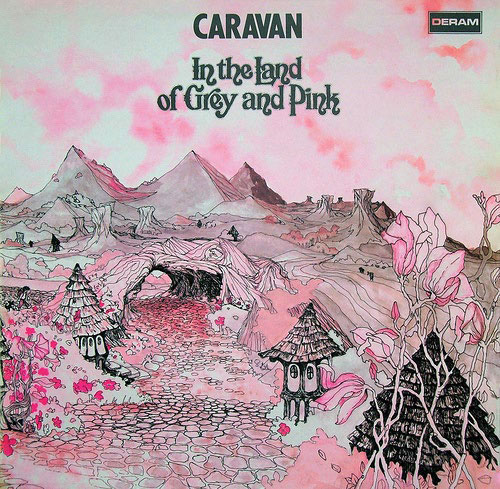
Canterbury Scene touchstone, In The Land Of Grey And Pink.
The feelgood British summer of 1970 may have been one of hot, sunny days, with Mungo Jerry’s ubiquitous In The Summertime the defining song of its soundtrack, but it was also a year in which, along with the good vibes and warm zephyrs, some particularly chill winds blew through the rock music scene.
More than half a million revellers had smoked, toked, tripped and generally let it all hang out at the sun-kissed Isle of Wight Festival with a stellar line-up that featured The Doors, Free, The Who and Jimi Hendrix. But no matter how strong the IoW’s Yang, it was crushed by the Yin of events that included The Beatles breaking up and, on September 18, the bombshell that was Hendrix’s death.
On the upside in 1970, the 747 airplane had its first commercial flight, the soar-away Sun introduced the Page 3 Girl… and Caravan recorded their third album.
A four-piece from the sleepy cathedral city of Canterbury, decidedly English progressive rock band Caravan were major players in what came to be known as the Canterbury Scene. With three strong songwriters and two contrasting lead vocalists, Caravan had released two albums of highly original, inventive, accomplished and engaging music, yet outside the coterie of Canterbury Scene fans they remained largely unknown, their records acclaimed but not selling in numbers that would enable them to swap the out-of-date shelf at Tesco for the food hall at Harrods.
Caravan were arguably at a crossroads in late 1970. They may have been talented, but they were also skint. In fact their finances had improved little since two years earlier when, with not much more than fluff in their pockets, they’d spent the summer living in tents, happy campers until autumn’s falling temperatures forced them to seek shelter crashing with friends. It was a difficult time for the Canterbury Scene’s de facto leaders.
“I was in a club called the Beehive and I’d had a little smoke. They put the album on very loud and I thought, ‘Wow! This sounds really good!’”
Dave Sinclair