THE PROG INTERVIWE AL STEWART
Every month, we get inside the mind of one of the biggest names in music. This issue it’s Al Stewart. The Scottish singer-songwriter became part of the British folk revival in the 60s and 70s after he bagged a weekly slot at one of London’s emerging folk cafés. He almost joined The Paramounts, but instead carved out a solo career and has since worked with Alan Parsons, Rick Wakeman and Richard Thompson, among many others. As he celebrates the 45th anniversary of his best-known album, Year Of The Cat, he looks back over his life so far.
Words: Mike Barnes
"I 'been doing this job for over half a century and all of a sudden I was unemployed says Al Stewart of the effects of recent events. “But I rather liked having a year off because I’ve worked in a straight line since I was 19.”
On his 1973 autobiographical song Post World War Two Blues, Stewart sang that this all began when he travelled to London in 1965, ‘With a corduroy jacket and a head full of dreams.’ He soon established himself as a singer- songwriter in the capital’s folk scene. In the 70s, together with artists such Roy Harper, Ralph McTell, Sandy Denny, Richard Thompson and Michael Chapman, he helped create a golden age of progressive folk rock, using imaginative arrangements and expanded structures. Stewart developed a signature style of writing with lyrics inspired by literature and history. “I wanted an historical folk rock record and the only way I would get my hands on one was if I did it myself,” he explains.
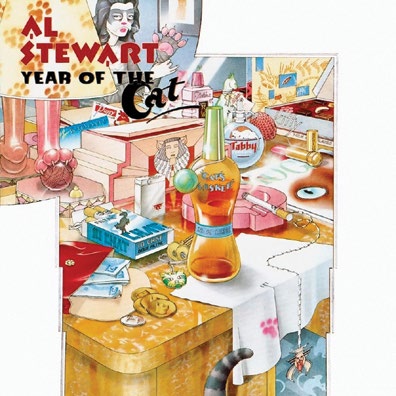
Year Of The Cat album (1976).
MICHAEL PUTLAND/GETTY IMAGES
In the mid-70s he achieved considerable commercial success with Modern Times, which reached No.30 in the US Billboard charts.
It was followed by the smoothly polished Year Of The Cat, which got to No.38 in the UK but No.5 in the US, with title track peaking at No.7 in the singles charts.
Stewart’s albums have continued to gain critical praise. And if, as he hopes, “normal service is resumed”, he has a UK tour pencilled in for October this year in which he hopes to play old favourites and highlight some new material.
Although you were born in Glasgow, you grew up in Bournemouth. What was the music scene like there?
After I left school I spent two years playing in bands. Everything was modelled on The Beatles, The Kinks, The Who, and The Hollies. By 1965 I realised that Bournemouth wasn’t the way to make progress and sign record deals; you had to go to London to do it. So I arrived as a 19-year-old would-be rock’n’roller.
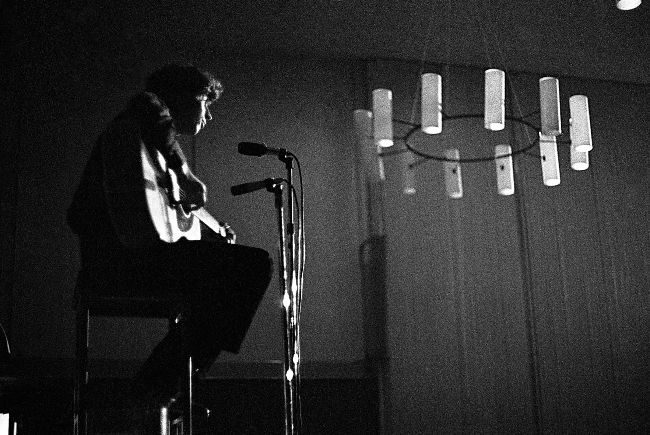
An educated guest: Al Stewart at Presco Folk Concert, organised at the start of Bristol
University’s academic year, in October 1968.
TONY BYERS/ALAMY STOCK PHOTO