VOYAGER
They may not have won Eurovision, but the Australian keytar kings (and queen) deliver the feelgood prog metal sound of the summer.
Words: David West Illustration: Kevin February
Whether it’s serendipity at work or simply good planning ahead, the arrival of Voyager’s eighth album hot on the heels of their appearance at Eurovision seems like a case of striking while the iron is in the fire. So, is Fearless In Love the album that can help the band cross over to a wider, dare we say mainstream, audience? It certainly possesses plenty of qualities that should appeal beyond the borders of the prog world, with its big choruses and accessible melodies, but those are balanced out by fiery guitar solos and slamming breakdowns.
One common criticism of progressive rock is that the genre has become retrospective, forever harking back to its heyday of the late 1960s and early 1970s. The birth of the form was a reaction to blues-based rock, experimenting with bringing in ideas from classical music and jazz. Yet subsequent generations have brought new approaches to the form, from the arrival of prog metal in the 1980s and then progressive death metal in the 1990s. Now, the bands who seem most likely to carry prog into the future have their own distinctive influences to draw upon that inevitably result in a different sound. Voyager belong to the rising wave of forward-thinking prog bands like Leprous and Vola, drawing upon 1980s synthpop, dance music and djent to mix in with prog rock and metal.
Further to that point, it’s easy to hear similarities in the vocal styles of Voyager’s Danny Estrin and Einar Solberg from Leprous. While Estrin doesn’t have Solberg’s falsetto range, they possess similar tones and the ability to pour their emotions into their performance. One notable difference between the Australians and both Leprous and Vola is the overall mood of their music. Solberg has used recent Leprous albums and his solo release 16 to explore depression and battling his demons, while there can be darkness and catharsis in much of Vola’s music. Fearless In Love, by contrast, has a much more uplifting,optimistic mood overall. It’s not all lollipops and rainbows; in The Lamenting Estrin looks back over a failed relationship, and Twisted finds the vocalist, ‘seeking resolution that may never come,’ as well as seeking answers to whether he’s good enough and strong enough.
Fearless In Love
SEASON IN MIST
The competing influences of prog and pop work well together.
Their Eurovision entry Promise is full of yearning, venturing into early Coheed And Cambria territory with Estrin pleading, ‘Promise me you’ll hold me ’til I die.’ Yet, the song’s chorus seems designed to get an arena or festival crowd bouncing in euphoria. There’s a second point of comparison between the two bands and their latest offerings. Coheed used pop punk producer Zakk Cervini for last year’s Vaxis II: A Window Of The Waking Mind, giving them a contemporary pop sheen to their sound, particularly in the guitars. While Voyager have stuck with their regular co-producer Matt Templeman, Fearless In Love is a step further down the road from 2019’s Colours In The Sun, allowing them to give fuller expression to those moments when they reach for their 80s electro and synthpop influences. The band will often begin a song with a pop beat, Twisted being a fine example, starting out with a synth melody and pulsing bass line that bring to mind such 80s chart titans as Frankie Goes To Hollywood or Pet Shop Boys, before the song shifts gear with the arrival of the guitars. The two competing influences of prog metal and pop work well together in the hooky yet heavy chorus, which encapsulates Voyager’s approach in a nutshell.
The songwriting maintains a consistently high standard throughout. Submarine is a standout, akin to Devin Townsend with its densely layered production, drop-tuned guitars, and huge, anthemic chorus. Prince Of Fire shows the band’s talent for building dynamic shifts into their arrangements. By turns it moves between drop-tuned djent heaviness, open expanses where the drums and bass carry the song, and a soaring chorus. Dreamer is a dance-metal chimera, and Daydream is a feelgood summer anthem that sounds custom built for outdoor festivals.
Purists who think that anything invented after the Mellotron constitutes sacrilege may not feel attuned to Voyager’s vibe, but if prog, in the widest sense of the genre, is to have a future beyond legacy acts and not become trapped in retrospection, looking to some heyday vanishing ever further into the past, it needs fresh ideas. And it makes sense that musicians who grew up against the cultural backdrop of the rise of electronic music since the 1980s and modern developments like djent would find ways to reflect their experiences in their creativity. Voyager may have been denied a Eurovision victory, but Fearless In Love captures a band that’s buzzing with confidence, writing the most compelling and energised music of their career.

HAUNT THE WOODS
Ubiquity
SPINEFARM UK
four-piece deliver stellar, shape-shifting second album.
The West Country has always felt like another world, in the best possible way. Its history, its dialects, its legends, its music – it sits in the UK geographically, but outside of it in many other ways.
The second album from Haunt The Woods – formed by four self-professed “Cornish hippies” currently based across the Tamar in Plymouth – is imbued with that otherness. Not in a ‘which ley line did I leave my piskie on?’ way, but in the manner that it sits slightly apart from the influences of folk, prog and alternative rock that it draws on.
Ubiquity is steeped in drama and grandeur, but it feels tethered to a very specific point on the earth. The giant crashing chords of opening song Fever Dream usher in instant theatrics, but it soon shifts shape, locking into a hypnotic, low-key psychedelic groove, before it all bursts upwards again, stacked with epic-scale harmonies. Vocalist/rhythm guitarist Jonathan Stafford’s acrobatic voice swoops and dives around the upper register but he never showboats – like Jeff Buckley, a clear inspiration, emotional clarity is everything.
Buckley isn’t the only influence evident on Ubiquity, vocally or musically. Gold comes on like a more analogue version of post-Kid A Radiohead, its tick-tock rhythm tugging and nudging rather than nagging and cajoling to another dramatic pivot point. Home’s golden-hour halo makes it sound like a long-lost early 70s Floyd track lifted from some unreleased Greek arthouse movie. And Now Is Our Time is a call to arms that’s pure Muse, albeit a Muse that have been dumped in a field by the aliens that abducted them the night before.
But Haunt The Woods are far more than the sum of their inspirations. They’ve taken what they’ve grown up listening to and spun it into something distinct, layering it with detail that makes it all their own: the dislocated atmospherics of Sleepwalking, the muted trumpet that drifts through Numb, the lone violin that haunts the amorphous title track.
For all its moments of performative pomp, a streak of seriousness underpins Ubiquity, not least lyrically. ‘There’s a line between myself and my reality/I often wish I could be someone else,’ sings Stafford over sparse, stark piano on The Line Part II, seemingly a sequel to the title track of their 2017 debut EP The Line. Later, on Overflow, he intones: ‘Every time I try and make sense of this/I just find a chasm, a great abyss.’ A strange, nagging riff courtesy of guitarist Phoenix Elleschild only adds to the sense of underlying discomfort.
Like the area Haunt The Woods come from, Ubiquity is a beautifully strange album – familiar yet different, exhilarating yet dark. It must be in the water.
DAVE EVERLEY
BELBURY POLY
The Path
GHOST BOX
Hauntology pioneer returns with funked-up prog odyssey.
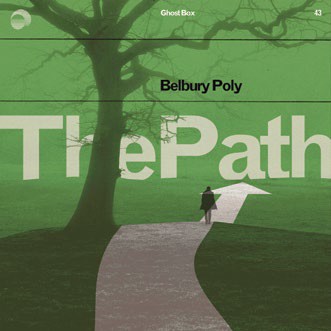
Operating at the intersection between hypnagogic electronica, library music and forgotten TV themes, Belbury Poly is the solo project of Ghost Box mastermind Jim Jupp. The Path is, by some margin, their grooviest and most accomplished album to date. Author and poet Justin Hopper returns from 2019’s Chanctonbury Rings project to deliver a spoken-word antinarrative about the mysteries of the English landscape. But it’s bassist Christopher Budd and drummer Max Saidi who make the biggest difference to the sound, creating a supple and dynamic rhythmic foundation for Jupp’s woozy pastoral melodies. The funky jazz noir soundtracks of Roy Budd are a stated influence, but there’s also more than a hint of Gil Scott-Heron’s The Revolution Will Not Be Televised in the cool flute and beats of the title track. The swooping synth voices and dramatic bass of Highways And Byways recall Jeff Wayne’s War Of The Worlds, while The Exile Way could be a Rick Wakeman/Funkadelic mash-up. There’s also a nod to John Barry’s Persuaders theme on The Wrong Spot. Yet The Path rises above its references and points to a new direction for Belbury Poly.
JB
BIG BIG TRAIN
Ingenious Devices
ENGLISH ELECTRIC RECORDINGS
Keepers of the classic prog flame mourn and regroup on five-track EP.
Though this revisit of BBT’s much-loved, technology-themed epics – East Coast Racer, Brooklands and Voyager – might at first seem superfluous, Ingenious Devices is a completely valid staging post prior to the release of the band’s new album proper in 2024.
Re-recorded from scratch save for David Longdon’s original vocals, these new incarnations of those three gems are ornamented with a 17-piece string section recorded at Abbey Road, lending an elegiac quality as the band pay tribute to Longdon, who died suddenly in November 2021. Also
featuring Longdon’s successor Alberto Bravin on a stunning live version of Atlantic Cable from September 2022, Ingenious
Devices signals that Big Big Train’s expressive, inherently musical virtuosity is not easily derailed (East Coast Racer now also features the incisive Dave Gregory guitar solo previously only performed at live shows).
Elsewhere, succinct strings instrumental The Book Of Ingenious
Devices completes the album’s tracklist, serving as a bridge between Big Big Train’s illustrious past and their intriguing future.
JMN
DORIS BRENDEL & LEE DUNHAM
Pigs Might Fly
SKY-ROCKET RECORDS
British duo deliver classy album with some surprising twists and turns.
Five albums into their recording partnership, Doris Brendel and Lee Dunham have carved a niche for themselves. By applying alternative/madcap/steampunk patinas to what’s fundamentally a catalogue of classic rockinclined, prog-adjacent music that’s sometimes embellished with unexpected instrumentation and genre influences, they’re not too “odd” for good-time rock fans, yet not so mainstream as to alienate proggers.
Pigs Might Fly continues in a similar vein to 2020’s well-received Mass
Hysteria – great tunes with foundations solidly in hard and heavy rock such as
Better The Devil You Know and Rock And A Hard Place, as well as slow and sultry – Good Deed Of The Day – and the spacious yet powerful ballad Still Waters, which showcases Brendel’s extraordinary, husky Elkie Brooks-esque vocals.
Those in search of more unconventional approaches can take a listen to mildly eclectic yet potent confections like Ghost, the dark twists of I Saw You and the nicely observed
Rorschach. Redolent of music of the past, yet sounding quite unlike anybody else, Pigs Might Fly ticks many boxes for fans of stylistically diverse yet accessible rock.
GMM
CELESTIAL NORTH
Otherwordly
1142994 RECORDS DK
The arrival of a major new talent.
While most albums take a few listens to reveal their treasures or lack thereof, the debut record from Scottish singer and multi-instrumentalist Celestial North (which may or may not be her real name) is an instant joy. Ethereal, haunting and with a beauty shrouded by mystery, this is a statement of seductive intent.
Her relocation to the Lake District is in full evidence, for this is an album that embraces both the splendour of nature and the danger that lies within it. It wastes no time in setting out its stall early as gloriously enigmatic vocals blend seamlessly with skittering
rhythms and fully rounded synth pulses on the title track. This is music that takes flight and surveys the vistas surrounding it.
The gorgeous Yarrow shares a sensibility with Yann Tiersen as a gently twinkling piano coalesces with sweeping vocals and a comforting sense of weirdness. Similarly, her cover of REM’s
Nightswimming is given a waiflike makeover as elsewhere, The Nature Of Light and When The Gods Dance are driven and informed by a pagan sensibility that’s life affirming. The sound of a musician blossoming from intriguing to essential in real time.
JM
CRACK THE SKY
From The Wood
ALUMINUM CAT RECORDINGS
A lacklustre acoustic collection from the legendary prog rock ensemble.
Veteran American band Crack The Sky have released nearly two dozen studio LPs since their terrific 1975 debut, so it’d be foolish to expect something close to the same level of quality and freshness here. Even so, the all-acoustic From The Wood can’t help but disappoint due to its mostly mediocre songwriting and occasionally rough performances.
Those issues are apparent from the jump, with generic rustic opener I Get
High finding frontman John Palumbo singing banally about combating modern woes by, well, getting high. A similar approach is taken by the
equally cringe-inducing Fun In Isolation (an on-the-nose blues/folk romp about corrupt politicians that features some surprisingly hackneyed instrumentation) and the superficially supportive Heart Of The
Lion. There are some bright spots, such as heartfelt ballad Don’t Close Your Eyes and hooky singalong My New World. None of them are outstanding, though, and they don’t make up for the surface-level lyricism and weary arrangements.