THE MAKING OF: JACKIE CHAN STUNTMASTER
MOST GAMES WITH A REAL PERSON’S NAME IN THE TITLE HAVE ACTUALLY VERY LITTLE TO DO WITH THEM. BUT THERE ARE SOME STARS WHOSE INFLUENCE ON A GAME GOES FAR BEYOND THEIR FACE AND VOICE. ONE OF THE MOST IMPORTANT OF THESE IS THE GREAT ACTION GOD HIMSELF: JACKIE CHAN
WORDS BY PAUL KAUTZ
IN THE KNOW
» PUBLISHER: MIDWAY, SONY INTERACTIVE
» DEVELOPER: RADICAL ENTERTAINMENT
» PLATFORM: PLAYSTATION
» RELEASED: 2000
» GENRE: BEAT-’EM-UP/ PLATFORMER
DEVELOPER HIGHLIGHTS
THE SIMPSONS: HIT & RUN (PICTURED)
PLATFORM:
PS2, XBOX, GAMECUBE, PC
RELEASED:
2003
CRASH TAG TEAM RACING
PLATFORM:
PS2, XBOX, GAMECUBE, PSP
RELEASED:
2005
THE WORLD IS YOURS PLATFORM:
PS2, XBOX, PC, WII
RELEASED:
2006
IAN VERCHERE
» Ian was one of the founders and longtime creative director of Radical Entertainment, and the original lead designer of Jackie Chan Stuntmaster. After stints at Electronic Arts and Roadhouse Interactive, he founded Session Games in 2016, where he serves as CEO.

» [PlayStation] All the animation was performed by Jackie Chan himself using motion-capture technology.
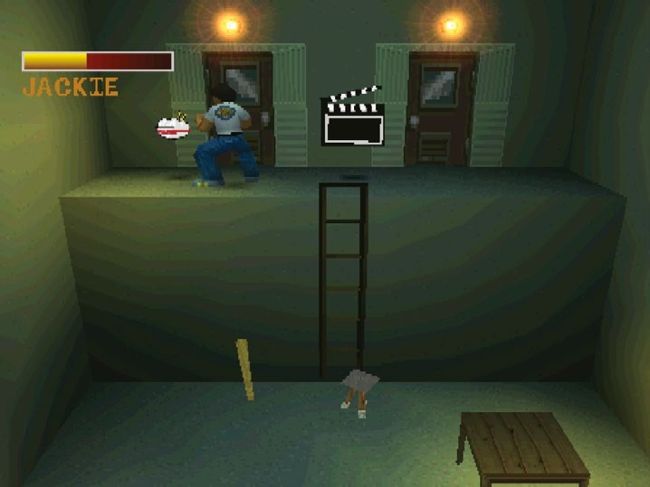
» [PlayStation] Collectable items provide additional energy and give Jackie more ‘Takes’.
For decades, the name Jackie Chan has been synonymous not only with top-notch action, but also with an extra dose of slapstick. So it’s no surprise that the name has appeared on a number of game boxes over the last 40 years already (see the Rumble In The Box panel for more on that) – but none bigger than Jackie Chan Stuntmaster.
According to the game’s original developer Ian Verchere, Stuntmaster was planned as a Jackie Chan game from the very beginning, “I’ve always been a huge fan of Jackie’s films, and there are scenes from Armor Of God II: Operation Condor that could easily have been taken directly from Super Mario 64 levels. The pitch for me was simple: replace the Italian plumber with the most famous action movie star in the world. It didn’t need to be more complicated than that – make an excellent action platformer that captures the humour and physicality of Jackie Chan.”
This idea was met with some scepticism by the management of Radical Entertainment, but Ian soon pulled the ultimate rabbit out of the hat: the man himself! “The process was surprisingly simple: we basically called Jackie Chan up through his management, and the deal for exclusive rights to his animated likeness came together really quickly.” Which, according to Ian, wasn’t as expensive as you might think, given Jackie’s extremely high profile at the time, “I can’t say exactly, but it wasn’t more than $500,000.” And Jackie was more involved in the game than you might expect – more on that in the Mr Nice Superstar panel.
“I
WANTED TO MAKE A GAME THAT WAS BASICALLY SUPER MARIO WITH
FIGHTING”
IAN VERCHERE
The game was supposed to be finished in the spring of 1999, but that didn’t happen. The next target date was the autumn of that year, and finally the spring of 2000, when it was finally released. The big question is, why did it take so long? “I wanted to make a game that was basically Super Mario with fighting, and to focus on the innovative use of an AI ‘fight coordinator’ to make one versus many fighting feel like the movies,” explains Ian on the game’s delay. “So sure, punch and kick and get x points. But grab a frozen fish and swing it around as you fall back over a chair and knock out three bad guys, then that’s worth 10x points. Since I put the deal and concept together, I had this vision for what the game should be – I could play it in my head. In this case though, it was ‘decided’ that everyone’s creative input should be considered, even this one ‘executive producer’ who didn’t even play games, nor do I think gave two shits about games in general. So, you end up with a game designed by a ‘committee’, and that never works. To be clear – you have to collaborate to make a great game; you need to work directly with artists, programmers, audio/composers, a good production team, QA etc. What you don’t need though are a bunch of people making creative decisions that detract from the vision, and create confusion with the dev team. Games are like films in that sense – you can’t have ten directors telling everyone what to do.”