LONG-RANGE LONGEVITY
Auxiliary and Replacement Tanks to Fuel Future Adventures
BY MERCEDES LILIENTHAL
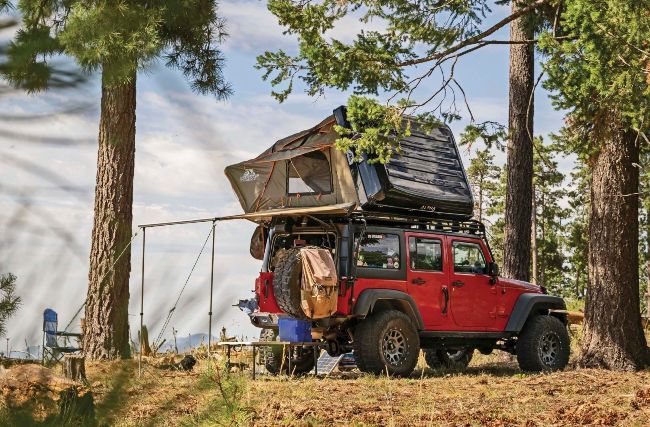
Camping upon the Mogollon Rim, outside of Payson, Arizona, offers expansive views while nestled in the pines of Arizona’s high country. (Photo: Josh Roelle)
No matter if you’re adventuring in the remote wilderness or dashing across the country with your family, having a vehicle with long-range fuel capability is important. It minimizes fuel stops, and it’ll get you to your end destination more quickly.
However, if you’re tired of constant fill-ups and want to expand your vehicle’s capacity, adding an extended-range fuel tank could be the perfect answer. Some vehicles, such as Toyota Tundras, have stock tanks ranging from 26.4 to 38 gallons, but many other automakers offer much less than that.
Case in point: the 1991 right-hand-drive Mitsubishi Pajero my husband and I own. Our miniscule OE bladder offered 250 miles per tank—at best. Our 1994 Mitsubishi Delica Space Gear’s tank wasn’t much better … not good when you’re spending remote nights in the middle of nowhere or running a 5,120-milelong Arctic road rally in the dead of winter.
We hated dealing with jerry cans. While they do work, they can often be messy, smelly and lead to frustration. Plastic containers can discolor or leak; metal ones can dent or rust … not to mention the constant venting to release pressure built up within them. We wanted a better solution for our travel-fueled, long-range woes.
What are the alternatives? Installing an auxiliary or replacement fuel tank could double your adventuremobile’s capacity, as opposed to that of its OE holder—giving you endless opportunities to explore Mother Nature. Not only do they offer increased range, they’re also safer and more secure—no more jerry can “eye candy” for thieves to steal.