The style & technique of JULIAN BARNES
Tony Rossiter examines a writer who believes that fiction can be more truthful than journalism
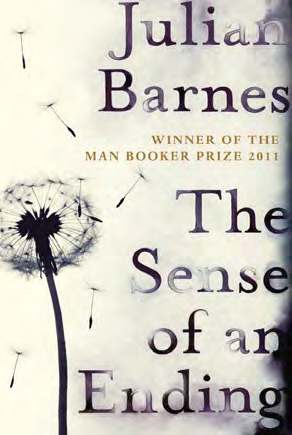
photo credit Pascal Saez/Writer Pictures
He’s written thirteen novels, several collections of short stories and essays, lots of journalism plus, in his early days, four crime novels under the pseudonym Dan Kavanagh. Three of his earlier novels (Flaubert’s Parrot, England, England and Arthur and George) were shortlisted for the Booker before he won the Man Booker Prize in 2011 for The Sense of an Ending. The head judge said it was ‘exquisitely written, subtly plotted and reveals new depths with each readin … We thought it was a book that spoke to humankind in the 21st century.’ I’ll have to focus on just a handful of his books.
How he began
Born in Leicester, he moved with his family to Northwood, Middlesex in 1956. As a child he was a diligent reader, his imagination stirred by comics and the books he found in the public library: Enid Blyton, William, Biggles and lots of ‘imperial nostalgia and war glory’.
He became a passionate reader in his teens. With parents who were both teachers, there were plenty of books in the house, but he thought of writing as something that other people did. Educated at the City of London School, he then studied Modern Languages at Magdalen College, Oxford. He worked for three years as a lexicographer for the Oxford English Dictionary before becoming a reviewer and literary editor for the New Statesman and the New Review; he later became a television critic for the New Statesman and then for The Observer. The Oxford English Dictionary is among his favourite reading – along with Shakespeare, the Michelin Guide to France, Flaubert’s letters and Jane Grigson’s Vegetable Book. Around 1974 he entered a ghost story competition organised by
Leggete l'articolo completo e molti altri in questo numero di
Writing Magazine
Opzioni di acquisto di seguito
Se il problema è vostro,
Accesso
per leggere subito l'articolo completo.
Singolo numero digitale
May 2019
Questo numero e altri numeri arretrati non sono inclusi in un nuovo
abbonamento. Gli abbonamenti comprendono l'ultimo numero regolare e i nuovi numeri pubblicati durante l'abbonamento.
Writing Magazine
Abbonamento digitale annuale
€69,99
fatturati annualmente
Abbonamento digitale di 6 mesi
€35,99
fatturati due volte l'anno