48 HOURS IN…
Lucca
Usually overshadowed by its more famous Tuscan neighbours, Florence and Pisa, Lucca has long been ‘the town in between’. Now it is coming into its own, says Jane Gifford.
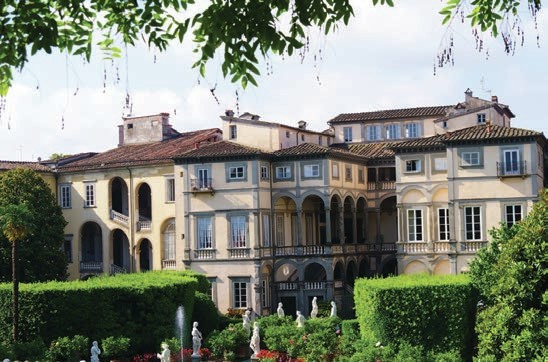
Palazzo Pfanner garden from the city wall
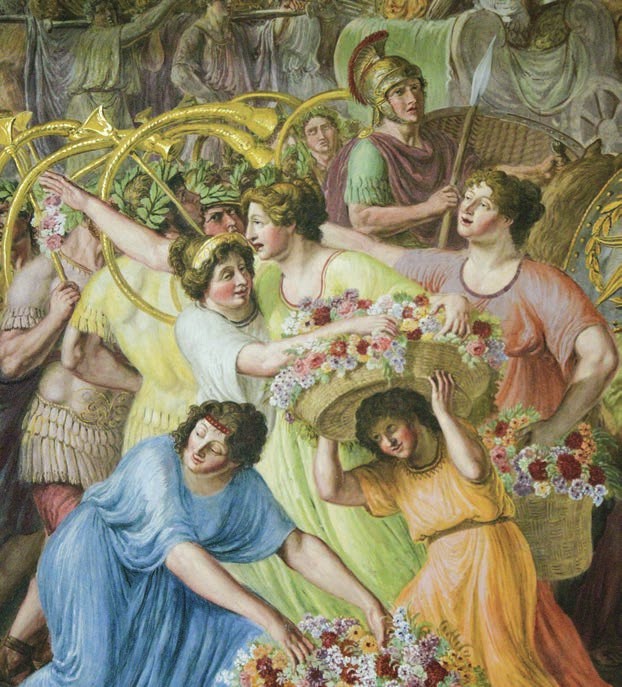
Detail of an enormous fresco at the Palazzo Ducale
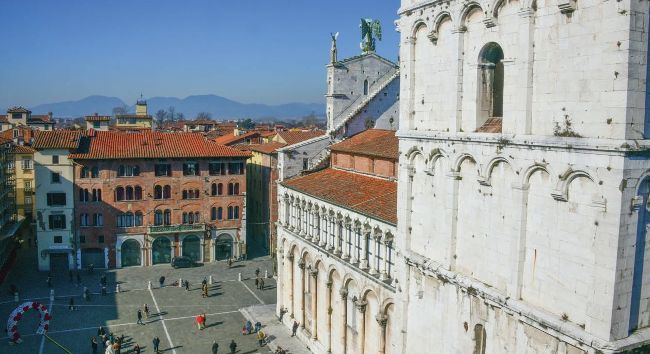
Piazza San Michele from Palazzo Rocchi
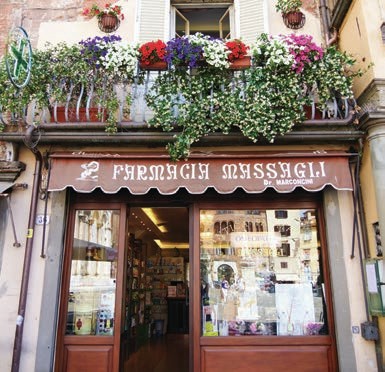
One of the oldest shops in Lucca
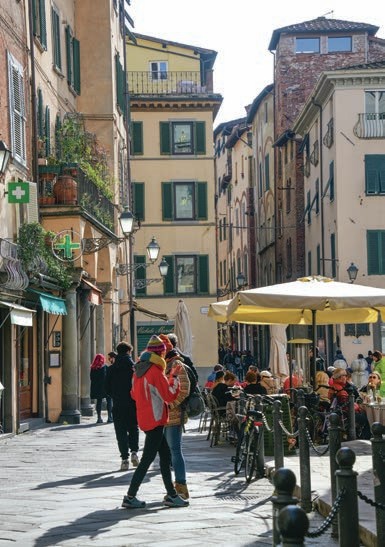
Caffè Taddeucci, behind Piazza San Michele
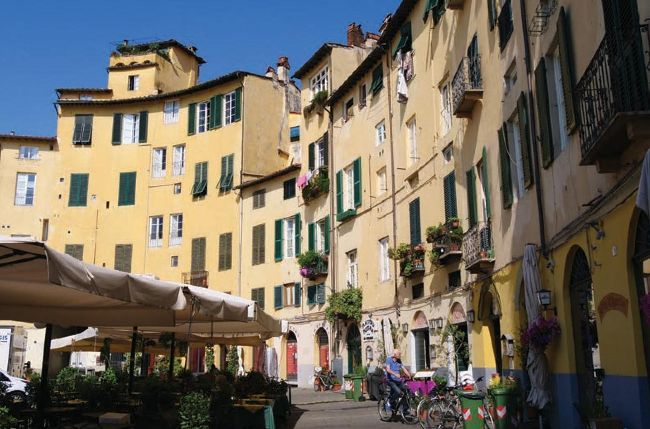
Piazza dell’Anfiteatro
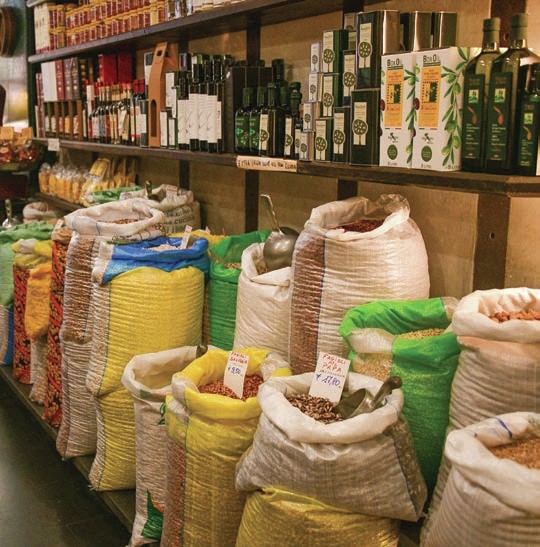
Bottega di Prospero
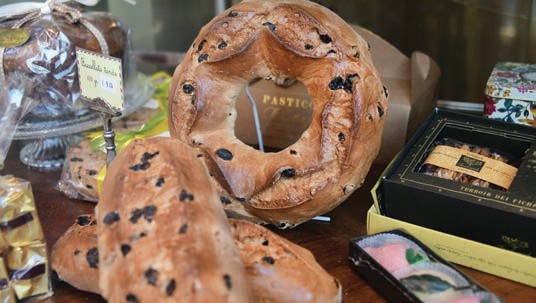
Pasticceria
Taddeucci Buccellato
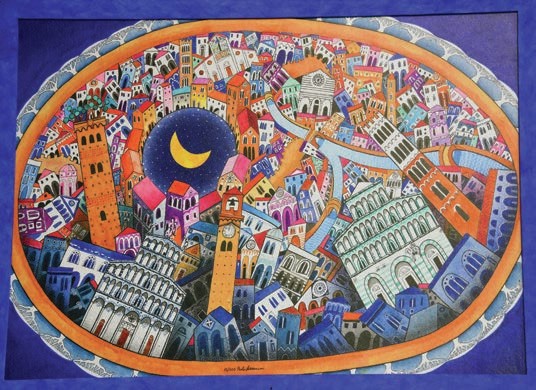
Paolo Lazzerini painting in Lucca’s old town
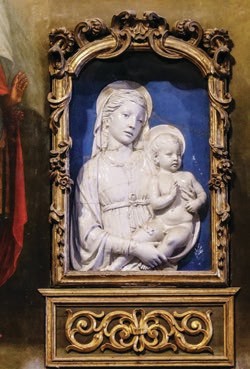
Madonna and Child by Della Robbia at San Michele in Foro
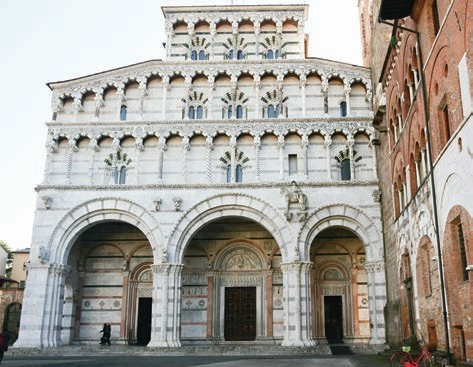
Duomo di San Martino
Images by Jane Gifford
Last year Pisa Airport was full of signs asking ‘Could Lucca be the most beautiful little town in Italy?’ The medieval mosaic of Lucca certainly merits its own glory, and here’s hoping that it avoids becoming prohibitively expensive and over-run with tourists. The city is already well-known for its city walls topped with different trees – every season offers you a new sensation. This is a favourite location for early morning exercise, offering a free peak behind mansions along the way, like the garden of Palazzo Pfanner, a popular venue for weddings near Porta Santa Maria.
In summer Lucca becomes an open-air art gallery. It’s also a green city, famous for bicycle travel, and of course for Puccini and his operas. Less well known, but also from Lucca, Francesco Geminiani was an 18thcentury violinist and composer who, in his time, was celebrated as the equal of Handel and Corelli. And the Istituto Musicale Luigi Boccherini is world-famous and teaches everything from jazz to classical music. While I was there I saw Filippo Gorini, the latest young Italian prodigy, and another resident of Lucca, at the Boccherini Auditorium. Filippo played Brahms and Schubert without sheet music. But this was not an exclusive affair. The audience ranged from older women in fur coats to casual young boys with earrings and long hair. In Lucca, music is for everyone.
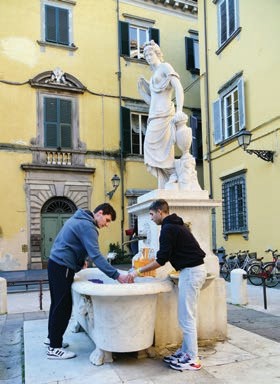
La Fontana della Pupporona
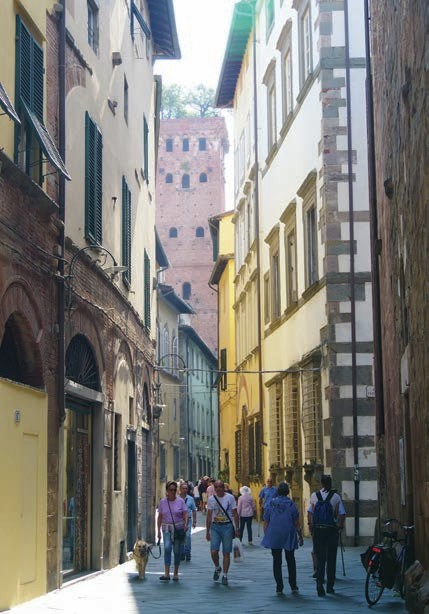
Street view towards Torre Guinigi
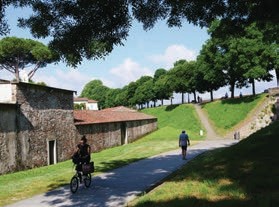
Walking and cycling along the city walls
DON’T MISS
INTERNATIONAL SCHOOL OF ITALIAN COOKING Chef Gianluca Pardini holds the prestigious title of ‘Maître de Cuisine and Executive Chef’ awarded by the Federation of Italian Chefs. He’s an advocate of ‘Slow Food’, simple dishes made with the best ingredients. www.italian cuisine.it
INDEPENDENT CITY
Lucca was an independent dukedom from the 12th to the 19th century, and was one of the last to join the new nation of Italy. The city grew rich on the silk trade, being famous especially for silk woven together with silver or gold thread. It rivalled Byzantium in the 11th and 12th centuries and was an important stop-over on the Via Francigena, the main pilgrimage route from Canterbury.
Lucca also has a reputation for free-thinking and liberal politics, features of which Lucchesi remain immensely proud. La Fontana ‘della Pupporona’ (the breast), as she is known, is a sculpture of a water nymph. She bares one breast. The Catholic Church covered her nudity but the Lucchesi complained that she should be left as intended. She remains barebreasted. She is often used as an emblem of feminism. People wait to fill their water bottles here. The water is carried from nearby Monte Pisano and Lucchesi swear this is the best water in town.