MAKING A CASE for NUTS
Planting a nut tree in your garden may not be your first choice, but are you overlooking something? Sue Stickland visits a nut grower in Devon and is impressed by the attractiveness of nut trees and how easy they are to grow
Sue Stickland
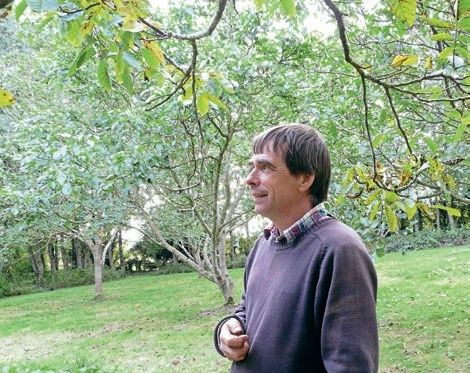
Martin Crawford among his acres of nut trees
Roasted chestnuts from the street market, chestnut stuffing with the turkey, mixed bags of unshelled nuts – they are all Christmas favourites. Yet, unlike the parsnips and Brussels sprouts, or the apples in the fruit bowl, we rarely think of growing nuts ourselves, and few are produced commercially in the UK.
Agroforestry expert and author Martin Crawford sees many reasons to change all that. He believes nut trees have great potential for both gardens and commercial orchards in this country, and for the last 20 years he has run eight acres of trials to prove it. I visited his Devon site last October when the harvest was well under way: sweet chestnut trees were laden with prickly cases, walnuts were freshly splitting from their green coats, and (new to me!) heartnuts were hanging in curious long strings.
WHY GROW NUTS?
Traditionally most nuts grow on large trees, but Martin is looking at different varieties, different types of nut and different ways of growing them, so they can be more easily accommodated into gardens and farming systems. He says that there are nuts to fit any size of site and location.
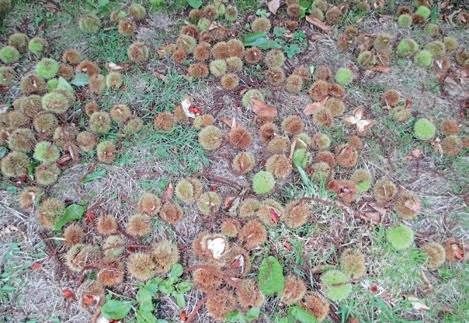
Chestnuts are harvested after they have dropped to the ground
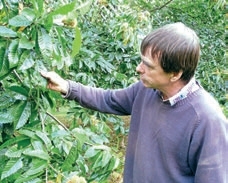
Martin explaining sweet chestnut breeding
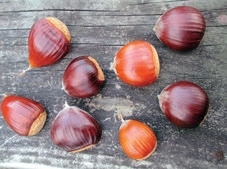
Different chestnut varieties have nuts of different size, shape and colour – and taste
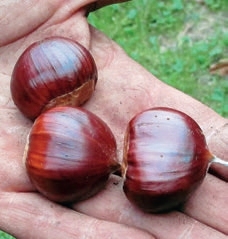
The chestnut ‘Belle Epine’, bred in France, has very large nuts
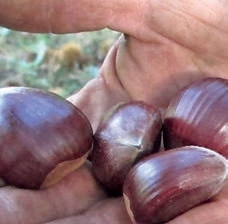
The dark chestnuts of ‘Marigoule’ – this variety is self-fertile, so a good one to choose if you are only planting one tree