FRUIT TREES: MAKING A CHOICE
Permaculture pioneer Patrick Whitefield sadly passed away in 2015 but in this excerpt from an exciting new collection of his writings he explains what to consider when buying a new fruit tree
Patrick Whitefield
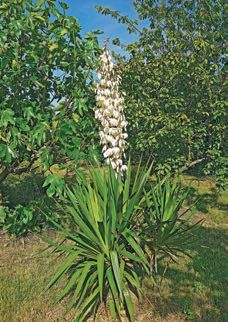
A microclimate in Hampshire, England, where fig and yucca grow
It’s worthwhile choosing your trees with care.They will last many decades, maybe your whole lifetime or more. If you find your trees yield fruit your family doesn’t like, or too much of it all at one time, or that they grow too big for the space available for them, you will have plenty of time to regret not having taken more care over your choice.
APPLES TO PEACHES
Have you ever wondered why the apple is far and away the most common fruit grown in Britain?The main reason is that it grows so well here. It’s reliable. To some extent there’s a tradeoff between reliability and deliciousness of the fruit, with a range that runs something like this:
■ Cooking apples, dessert apples, pears
■ Damsons, plums, gages, peaches and apricots.
Some others need special conditions: figs need an almost frost-free microclimate, while cherries will yield nothing if not protected from birds, unless you grow a whole orchard of them, that is.
If you live in a cool, rainy area or your garden is shady, cooking apples and damsons are most likely to yield well. But don’t think of growing peaches and apricots unless you have a favourable microclimate, and preferably a nice south-facing wall on to which you can fan train them and give them all the care and attention they need. Here in Britain they’re far to the north of their natural range.
FOOD OR EXPERIMENT?
Many permaculturists are fired by an enthusiasm for unusual plants, including fruit. Books such as Plants for a Future, by Ken Fern, are full of inspiring descriptions of unfamiliar species that could be grown here. But beware. If a plant isn’t commonly grown it may be for a good reason. It may not taste that good or it may not yield well in our climate.
I don’t want to discourage anyone from experimenting with new fruits, but before you devote valuable space to a tree that will live for decades, be clear about your main aim. Is it to put food on your table or to experiment? If it’s the former, you would be well advised to stick with apples, pears and plums.