CREATING A RIDGE PURROW PLOT
Composting expert and author Andrew Davenport explains the technique of ridge and furrow growing
Andrew Davenport
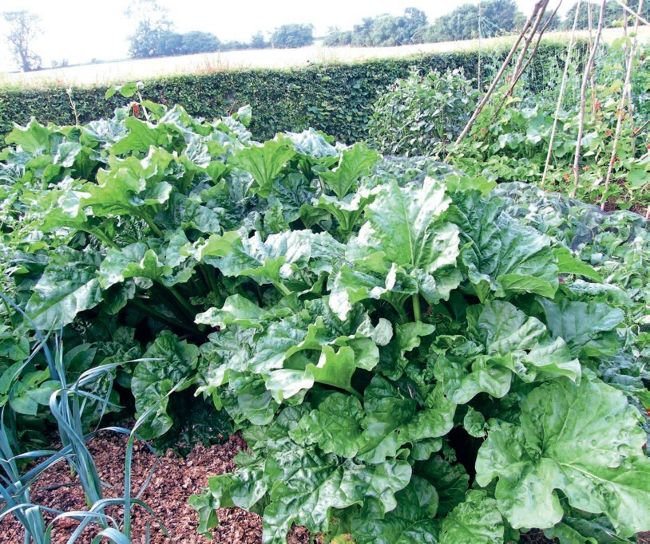
Andrew’s ridge and furrow in full productivity showing a mulch of spent hops in the ridges
After several years of good service, my timber raised beds finally rotted through and collapsed. Unperturbed, I decided that this was a good opportunity to adopt a method of veg gardening that I had read about in the Vegetable Gardener’s Bible by Edward C Smith. The system was based on the ancient ‘ridge and furrow’ farming system, whereby raised beds (the ridges) and sunken pathways (the furrows) were constructed by ploughing techniques. Growing crops using ridge and furrow first began shortly after the Romans left our shores and up until the 17th century. In some areas, including rural Northumberland where we live, these systems are still intact and clearly visible.
ADVANTAGES OF THE SYSTEM
One is that there are no construction materials, other than the soil itself, so therefore no cost other than the labour expended to create them. For the medieval farmer, the system offered good drainage in the ridges further improved by the action of the furrows which usually channelled water away downhill to a drainage ditch. The system also increased the usable surface area in a field due to the increased length of the undulations compared to a level piece of land. Of course in warmer weather, the raised parts would warm up more quickly, increasing the length of the growing season in much the same way as the conventional raised beds we use today.