REVERSE-GRIP REALITIES
LEARN THE PROS AND CONS TO THIS COMMON SELF-DEFENSE GRIP.
TEXT BY MICHAEL JANICH
PHOTOS BY SALLY JANICH
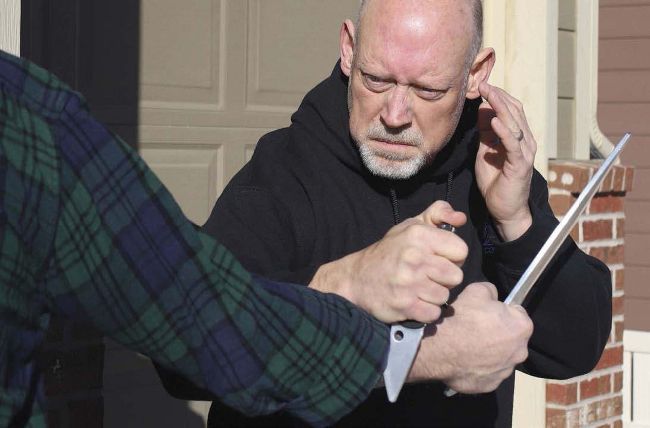
Whether you call it “reverse” grip, “icepick” grip, “earth” grip or something else, grasping a knife with the blade extending from the little-finger side of the hand is nothing new. It is also not a panacea; and, as with any other choice you make in self-defense tactics, it has both advantages and disadvantages.
For the purposes of this article, let’s keep things simple and consider the reverse grip in its “edge-out” configuration— with the cutting edge of a single-edged knife facing away from the person wielding it. We’ll save “reverse-edge” or “edge-in” tactics for another time.
Reach
The most obvious difference between reverse grip and standard grip is the effective range—especially when it comes to delivering the power necessary to cut or puncture a target with fight-stopping effect. Although practiced body mechanics can help compensate for this, the bottom line is that when you grip a knife in reverse grip, you give up at least several inches in reach.