Easter around the world
As Easter celebrations are curtailed again due to the Covid-19 pandemic, this issue offers a collection of reflections looking at the celebration of Easter around the globe.

Photo: iStock
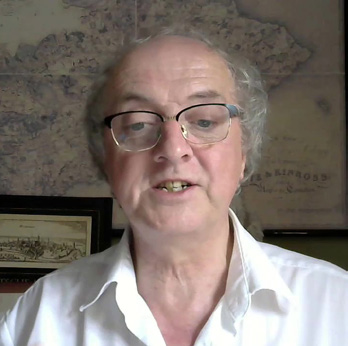
The Rev Jimmy Brown, Church of Scotland minister in Bochum, Germany. The congregation is an associate member of the Presbytery of International Charges of the Church of Scotland.
Many of Germany’s most widespread Easter traditions are clearly of pre-Christian origin: the Easter hare (not a bunny, but a hare) lays Easter eggs in an Easter nest. This all smacks more of the ancient fertility goddess Ostera (hence German Ostern, English Easter) than of any deeper-seated, specifically Christian message, in spite of strained attempts to claim the hare was a Byzantine symbol for Christ.
But there are plenty of ancient Christian customs in Germany too. The Lutheran Reformation, less iconoclastic than the Calvinist, retained many liturgical Easter usages from pre-Reformation times, so they survive both in the predominantly Roman Catholic south and in the majority Protestant north.
You will find an Easter or Paschal candle close to the altar in all Roman Catholic and many Protestant churches, for example, lit throughout the year whenever any act of worship is celebrated (German Protestants don’t shun candles in church as many Scottish Presbyterians might!). It is decorated with a cross, the year’s date, and five spikes or thorns symbolising the wounds of Christ.
These Easter candles are usually inaugurated during a midnight service on Holy Saturday, which starts in total darkness until the point when – at midnight – the new candle is carried forward into the sanctuary lit. In our local context, it is donated by the neighbouring Roman Catholics, an ecumenical sign of the unifying power of Christ as Lux Mundi (the Light of the World). Baptisms are often celebrated during these midnight services, a tradition dating back to the Early Church.
The Easter chorale Christ ist erstanden (Christ is Risen), dating from the 12th century, is probably the oldest liturgical song in German. Martin Luther included it in his 1529 hymnbook, and a widespread practice is still, especially in Protestant areas, for church brass ensembles to play it in celebration of the Resurrection at sunrise services in local graveyards on Easter morning:
Christ is arisen, from His torment broken free; wherefore we all should shout for joy, Christ shall be our solace now, Kyrie eleison. Had He not been raised this day, the world would surely pass away; now He has been raised to life, we praise the Father of Jesus Christ, Kyrie eleison. Hallelujah! Wherefore we
all should shout for joy, Christ shall be our solace now, Kyrie eleison.

Szabina Sztojka, Student Associate Minister, St Columba’s Church, Budapest