RAINLOOP
Take full control over your email
David Rutland does the impossible and sets up a VPS-based email server and a webmail front-end, then writes a tutorial about it – all in one afternoon.
OUR EXPERT
David Rutland hasn’t moved for the past four hours. He’s drenched in a pool of his own sweat and in need of a cuppa.
Email is the king of online communication. Even today, with alternatives including an array of messaging services, video platforms, Slack, and of course, the ‘Tok, email is where it’s at if you want a secure, reliable, platform through which you can contact anyone in the world.
Signal, Telegram and WhatsApp are ideal for organising a night out, but problems arise when one friend uses Facebook Messenger, two are on Signal, and there are a couple of revenants from the 1990s who refuse to use anything more up to date than their own IRC chatroom.
Messages need to be relayed to everyone in the friend group, and getting anything done relies on some members having access to more than one services and acting as an intermediary. Honestly, it would be quicker and easier to deliver RSVP invitations by carrier pigeon.
Email isn’t like that. Anyone with an email address can send messages, GIFs, audio clips and top-secret documents to those with an email address. Fastmail doesn’t prevent you from interacting with people who prefer Outlook, and even if Google is your data-slurping behemoth of choice, you can still use Gmail to send messages to your Apple-crunching friends.
Email is also insanely resilient. If Telegram goes offline or is banned in your country, tough luck – you’ve lost contact with all of your Telegram buds. If you lose access to Gmail for some reason, you can just pick another provider and carry on as normal.
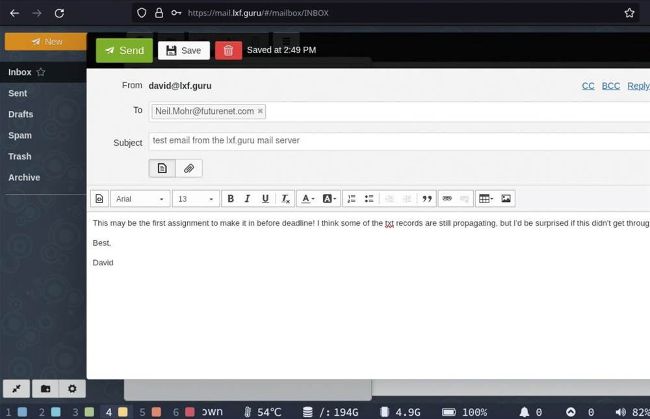
RainLoop is a pleasure to use, and unlike a client such as Thunderbird you can access it from anywhere. Remember to change the default login credentials.
As this article is being written, the inhabitants of a large, supposedly European country have lost access to Instagram, and it looks likely that both WhatsApp and Facebook Messenger will follow suit. It’s impossible to know what will happen with the Telegram and Signal services, but we can practically guarantee that the email network will continue to function even if the countries involved no longer exist.
Who’s reading your mail?
We’ve established that email is fantastic, reliable and the only sensible way to send messages if you want them to be received by everyone. But for most people it isn’t exactly private, and the ability to use their email account to communicate with others exists at the whim of a corporation that has a nasty habit of shutting down services and changing the terms and conditions of use.
Around two billion people have Gmail accounts in 2022. That means that around one-quarter of the people alive on our planet have their mail routinely scanned and mined for details of their personal and professional lives. Such information is worth money. Google claims it stopped scanning emails for advertising purposes (we may or may not believe them) in 2019, but it still has its AI read through your ramblings for other purposes. Read the terms and conditions some time – they’re about what you would expect.