PI CAMERA
Pinhole photography with the HQ Camera
Interchangeable lenses enable us to experiment with that historical curiosity, the pinhole camera, Mike Bedford shows you how.
`

OUR EXPERT
Mike Bedford likes to engage in unusual forms of photography, but he has to admit that the pinhole approach is one of the strangest, but no less interesting for that.
The pinhole camera might date back to 1856, but it would be wrong to think it predated cameras with lenses. Instead, it seems that the idea of a lens-less camera was always intended as a curiosity, not a serious suggestion for a practical camera. It has been used as such by enthusiasts, but in the main pinhole cameras have been employed as teaching aids. Irrespective of whether you want to learn more about optics and photography by experiment, or take some shots with a rather unique look, if you have a healthy curiosity we’re confident that you’ll enjoy trying our various hands-on exercises.
A pinhole camera can be nothing more complicated than a cardboard box, as we demonstrate with our first experiment. While it might seem incongruous to mix old and new technology in this way, we then bring the concept up to date by showing you how to use a Raspberry Pi HQ Camera as a pinhole camera. This isn’t just a desktop exercise though – we also provide some guidance on how to make that pinhole camera portable so you can use in the great outdoors.
Because pinhole photos aren’t always perfect as they come out of the camera, we’ll offer some brief thoughts on photo processing. Finally, to round off our look at this primitive form of photography, we also take a look at pinhole photography with a DSLR.
Illuminating in a cardboard box
Right at the start we have to come clean and admit that you’re probably not going to take a photo with our first pinhole camera, even though it’s quite feasible to do so. Instead, the real purpose of this experiment is to demonstrate how simple a pinhole camera can be – after all, this one is just a cardboard box – and to give you a better feel for what’s happening when we get embroiled in high-tech pinhole cameras.
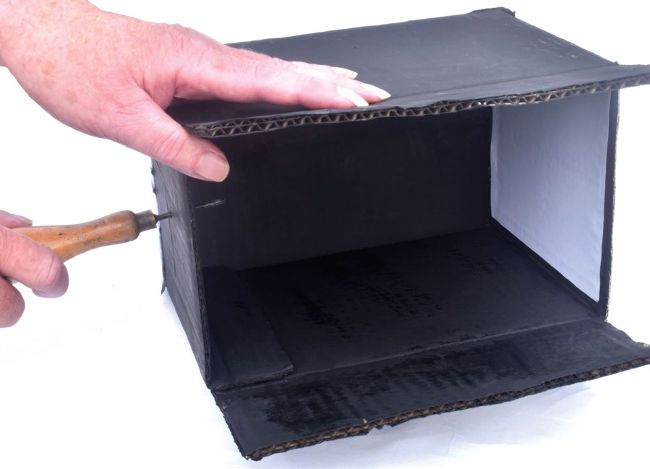
Here we’re putting the final touches to the incredibly simple cardboard pinole camera, and real photos can be taken on a barely more sophisticated variant.
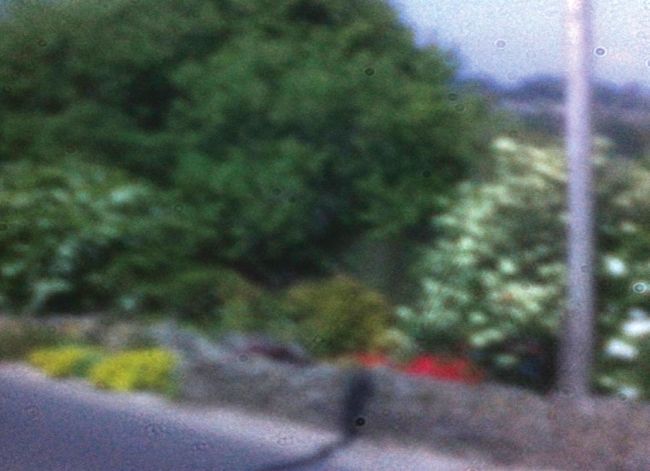
The first photo on our HQ Camera pinhole camera, before we made it portable, was shot out of the window. The pinhole was imperfect, the sizing was largely guesswork, and dust specs are clearly visible, but it’s quite an eye opener given the lack of a lens.
First of all you need to find a cardboard box. The size isn’t critical, but we suggest going not much larger than the one in the photo, bottom left. Paint it matt black, inside and out, and when the paint has dried, glue a piece of white paper to the inside of one of the smaller faces. Now, using a sharp object like a small bradawl, make a small hole about 1-2mm in diameter through the face opposite the one with the white paper. In picking the faces to which you’ll stick the white paper and make the pinhole, make sure that one of the other two faces can be opened. Congratulations, you’ve made your first pinhole camera.