2
Menu
Home
My Library
My Account
Pocketmags Plus+
Title A-Z
Category A-Z
Best Selling Magazines
Latest Offers
Gift Vouchers
Activate a Subscription
Blog
Help & Support
GB
0
Basket
My Account
My Library
Login
Plus+
BEST SELLERS
OFFERS
Hobbies & Craft
Aviation & Transport
Leisure
General Interest
Sport
SITE SETTINGS
GBP - £
USD - $
AUD - $
CAD - $
EUR - €
EUR - €
EUR - €
EUR - €
EUR - €
EUR - €
EUR - €
LIGHT MODE
DARK MODE
All Categories
Art & Photography
Art
Design
Architecture
Photography
Aviation & Transport
Motorbikes
Aviation
Automotive
Rail
Family & Home
Kids
Parenting
Animals & Pets
Food
DIY
Landscaping & Gardening
Property
Interior Design & Home
Food and Drink
Cooking & Baking
Drink
Vegetarian & Vegan
Gluten Free & Special Diets
General Interest
History & Fact
Astronomy
Education & Literary
Spiritual & Religion
Trade & Professional
National & Regional
Books
News & Current Affairs
Health & Fitness
Medical
Running
Women's Health
Men's Health
Slimming
Spirituality & Wellbeing
Hobbies & Craft
Collecting
Radio Control Modelling
Scale & Millitary Modelling
Sewing & Knitting
Woodworking
Arts & Crafts
Leisure Interest
Travel
Boating & Yachting
Poker & Gambling
Caravan & Motorhome
Camping & Outdoor
TV & Film
Tattoo
Horse Riding & Equestrian
Wildlife
Men's Interest
Lifestyle
Gay
TV & Film
Men's Fitness
Motorbikes
Automotive
Football
Fishing & Angling
Gaming
Gadgets
Newspapers
All
Music
Classical
Heavy Metal
Other
Rock
Pop
Practical & Playing
Hi-Fi
Sport
Football
Cycling
Rugby
Cricket & Golf
Football Programmes
Fishing & Angling
Shooting & Archery
Boxing & Martial Arts
Horse Riding & Equestrian
Other
Watersports & Board
Athletics & Running
Motorsport
Ski & Winter Sports
Outdoor & Adventure
Tech & Gaming
Apple
Gaming
Internet
Gadgets
PC
Mobile
Trade & Professional
Money & Investment
Building & Architecture
Military & Defense
Education
Media
Retail News
Farming & Agriculture
Catering
Business
Transport
Politics
Travel
Women's Interest
Hair
Celebrity
Weddings & Brides
Fashion & Lifestyle
Healthy Food & Slimming
Fitness
SITE SETTINGS
GBP - £
USD - $
AUD - $
CAD - $
EUR - €
EUR - €
EUR - €
EUR - €
EUR - €
EUR - €
EUR - €
LIGHT MODE
DARK MODE
Digital Subscriptions
>  
Blog
>
Could Your Gay CV Stop You Getting a Job?
You are currently viewing the United Kingdom version of the site.
Would you like to switch to your local site?
Home
My Library
My Account
Pocketmags Plus+
Title A-Z
Category A-Z
Best Selling Magazines
Latest Offers
Gift Vouchers
Activate a Subscription
Blog
Help & Support
Gift Cards
£5
£10
£25
£50
View All
Read on any device
Safe & Secure Ordering
< 
Back to Blogs
Could Your Gay CV Stop You Getting a Job?
Posted 28 July 2015
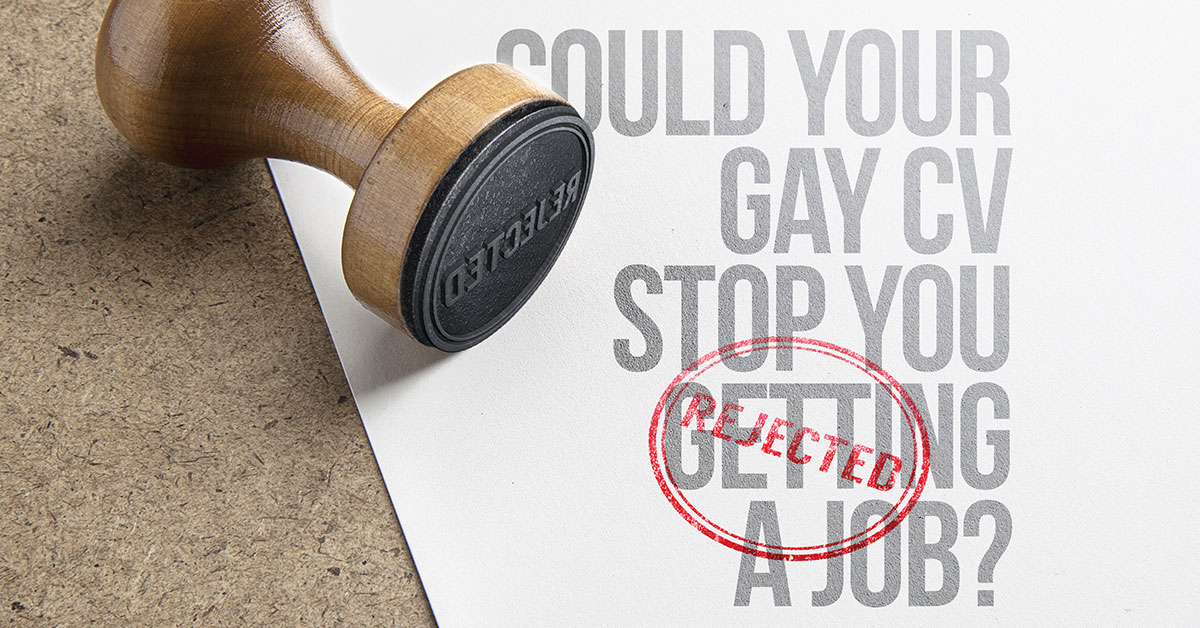
Recently this magazine posted a news story from their website divamag.co.uk to their Facebook page reporting on a study that found people who mentioned a prominent role in a university LGBT society on their CV were 5% less likely to be offered a job interview.
I was surprised that the majority of the comments weren’t concerned about the findings. Instead, they disagreed with the research based on their own positive experiences of job-seeking or hiring – with some describing the research as "scaremongering" – and suggested that this type of discrimination doesn’t exist. I find this incredibly worrying and wanted to clarify what the research actually did, and make the case for why this type of research isn’t scaremongering but really, really important.
The study was conducted by Dr. Nick Drydakis from Anglia Ruskin University. Drydakis recruited 144 third-year students from across the UK. Seventy-two of the students’ CVs mentioned a prominent role in their university’s LGBT society and the other 72 a role in a human rights organisation. Drydakis created 72 pairs of students, one LGBT, one non-LGBT, who were matched on skills, experience, age, gender, ethnicity, and academic grades. Cover letters and CVs were then checked by the HR department to make sure that one of the pair was not better than the other, regardless of LGBT association. The only difference between the pairs was whether they mentioned the LGBT society.
The students applied to 5549 different firms, with each firm receiving an application from a matched LGBT and non-LGBT student. Drydakis found that those who mentioned having a role in an LGBT society were 5% less likely to be offered a job interview than those who didn’t. He also found that LGBT students were offered interviews for jobs that paid less than the jobs non-LGBT applicants were offered interviews for. Additionally, LGBT CVs were less likely to be offered interviews for positions in which stereotypical masculine or feminine personality traits were highlighted in the job description.
Why am I so worried about the comments that were written below the news story? There are a few reasons. First, there’s some misunderstanding of what the study did. Some people asked "why you would mention your sexuality in a job interview?" If this was the case I’d agree that talking about your sexuality in an interview where it’s not relevant would be inappropriate. Other comments mentioned sexual orientation questions on equal opportunities forms that employers could use to discriminate. Dr. Drydakis didn’t look at interviews or equal opportunity forms. The only difference between the LGBT and non-LGBT applications was the role in an LGBT society. This is a really important point. None of the LGBT applicants explicitly revealed their sexuality in an interview or on an equal opportunities form. They simply noted that they had a prominent role in an LGBT society.
The reason that we do research is so that we can try and control for all other factors that might affect the outcome, so that we can determine whether one thing makes any difference. For this study, the ability, skills, experience, age, gender, ethnicity, and academic aptitude of the applicants were controlled by matching the CVs into pairs. By conducting the study in this way, the only difference between the two groups is the manipulation - the type of student society – so if there’s a difference between the groups’ results then it’s extremely likely that it’s caused by that manipulation. This research is really important because it suggests a very subtle type of discrimination that employers themselves may not even be aware of.
What’s particularly concerning is that students are actively encouraged to take roles in university societies and to put them on their CV. I teach 2nd year psychology students and only a few weeks ago we had a class on how to enhance their employability - one of the things stressed was this type of extra-curricular activity. If a student has put their time and effort into taking a role that requires leadership and organisational skills, why shouldn’t they put it on their CV? This research indicates it’s not quite as simple as that.
The second thing I found worrying was the number of people who felt that their own positive experience of being out whilst job-hunting means this type of discrimination doesn’t exist. There’s a saying, “the plural of anecdote is not data”, which basically means that just because you know someone who smoked 40 cigarettes a day for 40 years and died peacefully in their bed at the age of 104 doesn’t mean that cigarettes aren’t bad for you. We can’t rely on personal stories to get a true picture of discrimination because they don’t control for all those other factors like age, skill and ability, and they’re not representative of the bigger picture. This study recruited participants from all across the UK and sent out applications to thousands of companies. A 5% reduction in interview offers translates to 1 out of 20. As an individual, it’s small enough that you’re unlikely to notice but when we apply that figure to the entire LGBT population, that’s thousands of interview offers that aren’t being made. Without these types of studies it’s very hard to know that discrimination is occurring at the level of interview offers. It’s easier to see when an interview panel is being homophobic, or if you get the job and suffer discrimination in the workplace, and the Equality Act (2010) is in place to protect us against this. But to notice the discrimination requires you to get a foot in the door.
Personally, I have never experienced discrimination because of my sexuality when it comes to job-hunting. I went to my interview at Aberdeen dressed like the lovechild of Bette and Shane, and got the job. I am out to all of my colleagues and my students, and six years later I have a PhD, a promotion and a permanent contract. But this is the great thing about well-conducted research: it doesn’t care about your personal experience. If it’s done well, it just reports the facts, and we need the facts.
The Equality Act (2010) means it’s illegal to refuse a job applicant on the basis of their sexuality. The act does not mean that discrimination doesn’t exist. Studies like the one by Dr. Drydakis allow us to see the bigger picture and ask questions. Are employers aware that they are discriminating against LGBT applicants? If they are, this is serious because it’s illegal. If they’re not, what can we do to reduce unconscious discrimination? When I asked Stonewall for their view, they told me:"These figures go to show that lesbian, gay, bisexual and trans people are still far from equal in society. We’d argue that these organisations who do discriminate on the grounds of sexual orientation or gender identity are, perhaps deservedly, missing out. A diverse workforce can both boost innovation and, and can be more representative of your market and client or customer demographic." In other words, this type of research provides organisations like Stonewall with evidence that a problem exists or persists, and helps them to target their campaigns.
There’s a popular belief that companies have quotas for recruiting LGBT employees; this is simply not true. Organisations may have targets for a diverse workforce and try to provide an LGBT-friendly workplace, but discrimination laws work both ways: you can’t legally hire someone because they’re LGBT.
Finally, this research is important because, if you’re applying for the job in the UK, you should know this is a potential issue. Many people said they wouldn’t want to work for a company that would discriminate on the basis of sexuality. I agree. If I’d been asked in my interview why I was wearing a shirt and tie I would have responded “because I look fabulous” and walked out. But that would have been my informed decision because the discrimination would have been clear.
For some people, equality and the right to put your experience on your CV is worth not getting a job. For others, it’s not worth it, and that’s rightfully their decision. But in order to make that decision and enact positive change, we have to be objectively informed.
What do you think? Tell us at letters@divamag.co.uk
Dr Emily Nordmann is a Teaching Fellow in psychology at the University of Aberdeen
Most read articles this month
Live Forever: Oasis Are Back - And These Must-Read Magazines Will Take You There
After years of speculation, it’s finally happening - Oasis are back for a 2025 reunion tour that’s sending shockwaves through the music world.
More...
Basket -
0 items
Your basket is currently empty.
Continue Shopping
Basket Total:
£
0.00
 Earning
0
Loyalty Points
Each Point is worth 1 penny or unit of currency and can be redeemed against future purchases here at Pocketmags.com
Got a discount code? Add it in the next step.
Checkout Securely
Continue Shopping
Or, read for just
99p
with
You can enjoy:
The issue in your basket
Instant access to 600+ titles
Thousands of back issues
30 days for just 99p
TRY PLUS+ FOR 99p
30 days access, then just £9.99 / month. Cancel anytime. New subscribers only.
Learn more
Chat
X
Pocketmags Support
Contact Us
Use the form below, and we’ll get back to you as soon as possible.
Send a copy of chat messages
Send Message
Message Sent
Many thanks for your enquiry.
One of our support staff will get back to you soon.
Start New Chat
Close Chat
Error In sending Email
We could not send your ticket at this time, please try again later
Start New Chat
Close Chat