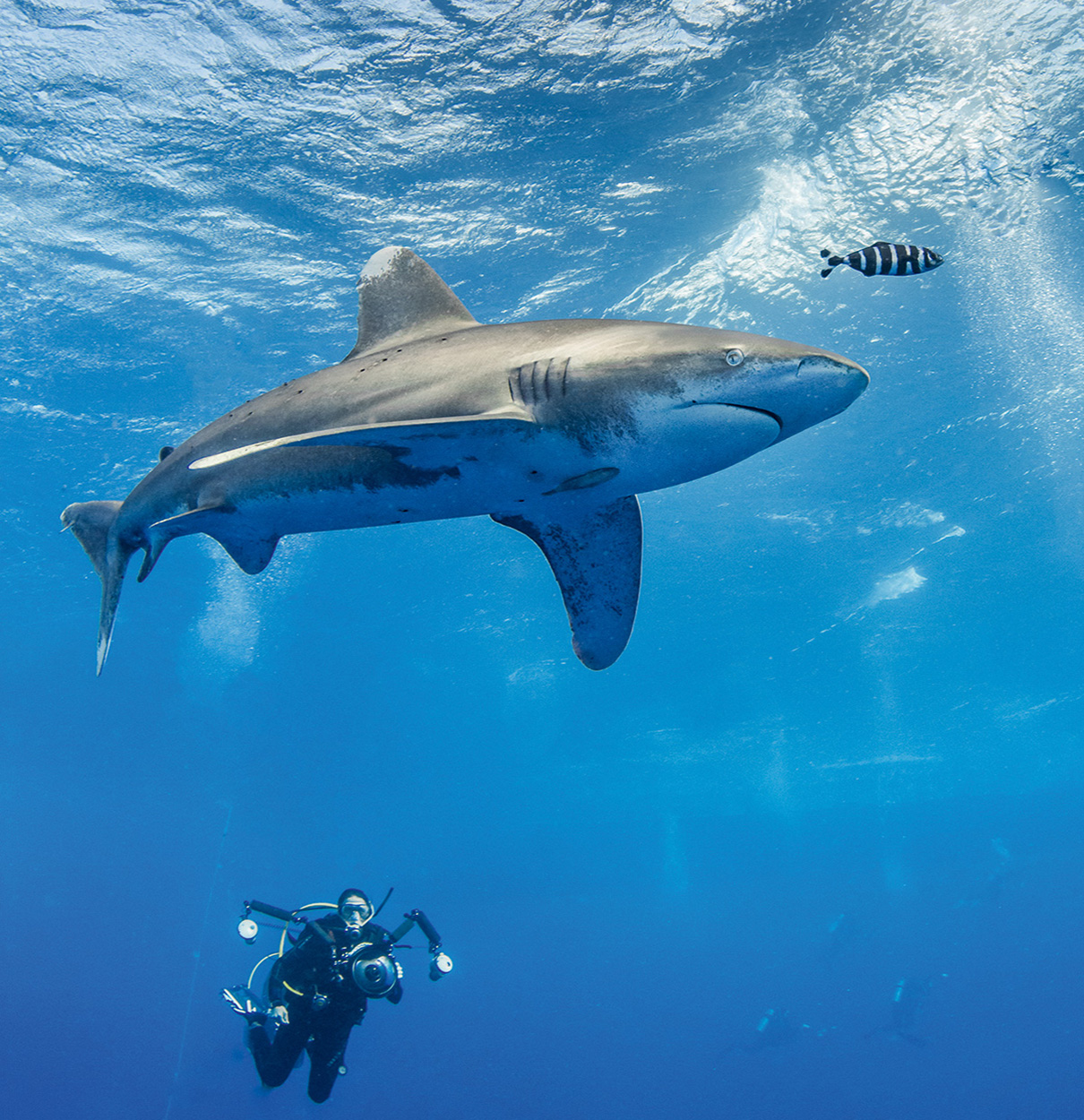
I GUESS A KIND OF HIERARCHY does form, with the most experienced shooters acting as mentors to the less advanced. That particular group included some heavy-hitters from the underwater photography scene, such as Mario Vitalini and Nick More. Mario was named up-and-coming photographer of the year in the first Underwater Photographer of the Year competition, while Nick has now won the BSoUP/DIVER Print competition two years on the trot.
Their submissions to the image review drove me to become better, and they were usually on hand to help out with little tips, too. They were just two of the many talented photographers around, and one of the pleasures of these workshops is meeting a whole new network of people who share the same passion.
I came away from that first workshop inspired and excited for the next. However, if I had one frustration, it was that I hadn't seen Alex Mustard in action. We had seen beautiful shots in the presentations, but these fell under the “something I prepared earlier” umbrella.
Just as watching YouTube clips of Messi isn’t the same as watching him in person, I was eager to see Mustard live. This would soon be made possible on the Grand Cayman workshop.
Unlike in Egypt, we were now based in a resort, and I would recommend this workshop as the first to attend, because it’s more geared at getting your fundamentals right.
I had read about a technique called “inward lighting” in Alex’s Underwater Photography Masterclass book and was determined to add it to my repertoire. Basically, it involves pointing the strobes back towards the camera, which enables you to isolate wide-angle subjects against a dark background. I’d swotted up on the theory and felt sure I could figure it out.
On the first day, Alex held a pool session to make sure that everyone’s cameras were correctly set up and to go through some lighting basics. This was also a chance for any of us wanting to practise a particular technique to do so.
I had arrived a bit early, and Alex suggested that I start practising inward lighting on a plastic toy he had set up. I confidently swam to the deep end and started shooting, and shooting, and making small adjustments, and shooting again, for a frustrating while, never quite getting the desired result.
Alex eventually swam over and, clearly not too impressed with my results, borrowed my camera, adjusted the strobes, took a shot… reviewed… took one more shot… then passed me back an image of a beautifully lit toy against a perfect black background. Wow, I thought, this guy knows his stuff!
His mastery of technique and speed were also apparent in another memorable moment. We were on the house reef taking super-macro photos of a rough-head blenny. Alex had suggested that I follow him to this particular individual, because its unusual position at the top of a coral head meant that you could either expose for a black or blue background.
Once descended, Alex quickly found the blenny and spent perhaps two minutes shooting it. He came over and showed his LCD screen displaying two shots: one with a blue background and the other black, both beautifully crisp.
I thanked him and settled down to try to replicate it – a process that took my full concentration and 20 headache-inducing minutes. There could be no more doubt that the man was fully deserving of all the accolades.