2
Menu
Home
My Library
25% OFF Sale
Pocketmags Puzzles
My Account
Pocketmags Plus+
Title A-Z
Category A-Z
Latest Offers
Gift Vouchers
Activate a Subscription
Help & Support
GB
0
Basket
My Account
My Library
Login
Plus+
BEST SELLERS
OFFERS
Hobbies & Craft
Aviation & Transport
Leisure
General Interest
Sport
SITE SETTINGS
GBP - £
USD - $
AUD - $
CAD - $
EUR - €
EUR - €
EUR - €
EUR - €
EUR - €
EUR - €
EUR - €
LIGHT MODE
DARK MODE
All Categories
Art & Photography
Art
Design
Architecture
Photography
Aviation & Transport
Motorbikes
Aviation
Automotive
Rail
Family & Home
Kids
Parenting
Animals & Pets
Food
DIY
Landscaping & Gardening
Property
Interior Design & Home
Food and Drink
Cooking & Baking
Drink
Vegetarian & Vegan
Gluten Free & Special Diets
General Interest
History & Fact
Astronomy
Education & Literary
Spiritual & Religion
Trade & Professional
National & Regional
Books
News & Current Affairs
Health & Fitness
Medical
Running
Women's Health
Men's Health
Slimming
Spirituality & Wellbeing
Hobbies & Craft
Collecting
Radio Control Modelling
Scale & Millitary Modelling
Sewing & Knitting
Woodworking
Arts & Crafts
Leisure Interest
Travel
Boating & Yachting
Poker & Gambling
Caravan & Motorhome
Camping & Outdoor
TV & Film
Tattoo
Horse Riding & Equestrian
Wildlife
Men's Interest
Lifestyle
Gay
TV & Film
Men's Fitness
Motorbikes
Automotive
Football
Fishing & Angling
Gaming
Gadgets
Newspapers
All
Music
Classical
Heavy Metal
Other
Rock
Pop
Practical & Playing
Hi-Fi
Sport
Football
Cycling
Rugby
Cricket & Golf
Football Programmes
Fishing & Angling
Shooting & Archery
Boxing & Martial Arts
Horse Riding & Equestrian
Other
Watersports & Board
Athletics & Running
Motorsport
Ski & Winter Sports
Outdoor & Adventure
Tech & Gaming
Apple
Gaming
Internet
Gadgets
PC
Mobile
Trade & Professional
Money & Investment
Building & Architecture
Military & Defense
Education
Media
Retail News
Farming & Agriculture
Catering
Business
Transport
Politics
Travel
Women's Interest
Hair
Celebrity
Weddings & Brides
Fashion & Lifestyle
Healthy Food & Slimming
Fitness
SITE SETTINGS
GBP - £
USD - $
AUD - $
CAD - $
EUR - €
EUR - €
EUR - €
EUR - €
EUR - €
EUR - €
EUR - €
LIGHT MODE
DARK MODE
Digital Subscriptions
>  
Blog
>
Living with birds of prey
You are currently viewing the United Kingdom version of the site.
Would you like to switch to your local site?
Home
My Library
25% OFF Sale
Pocketmags Puzzles
My Account
Pocketmags Plus+
Title A-Z
Category A-Z
Latest Offers
Gift Vouchers
Activate a Subscription
Help & Support
Gift Cards
£5
£10
£25
£50
View All
Read on any device
Safe & Secure Ordering
< 
Back to Blogs
Living with birds of prey
Posted 10 May 2015
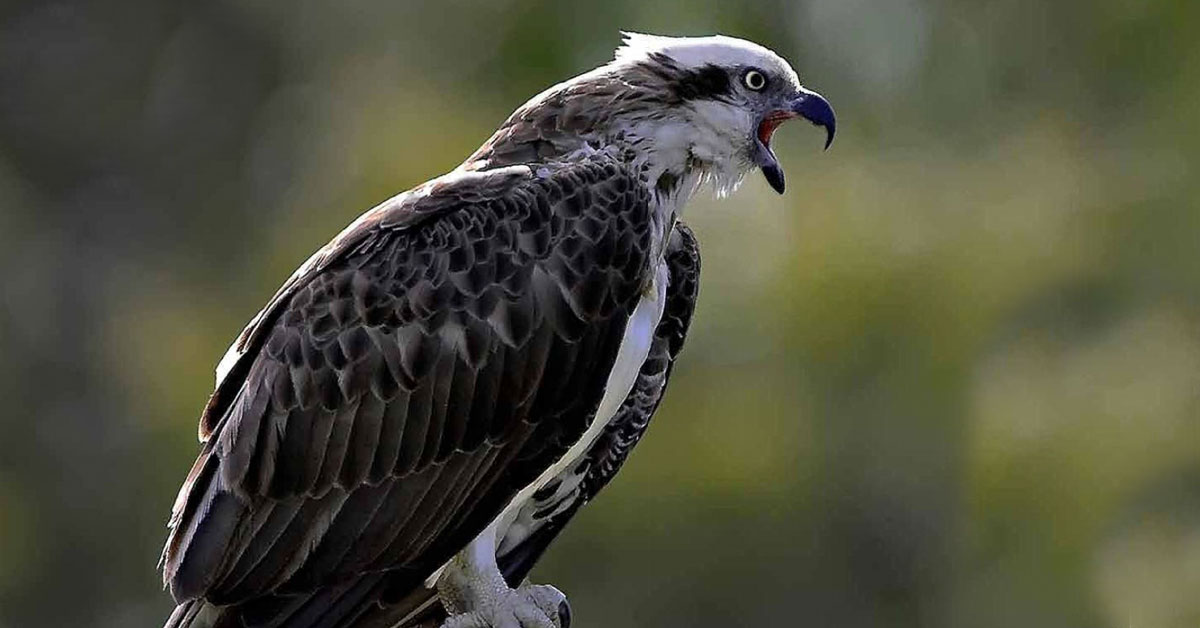
Since the earliest times, the speed, hunting prowess and sheer beauty of birds of prey have captured our imagination but, as we become the most ubiquitous animal on the planet, the nature of our relationship with them is changing fast.
Our continent is home to 24 species of diurnal birds of prey. These can be divided into two main groups. The family Accipitridae includes the broad-winged eagles, hawks and kites. The family Falconidae is comprised of the falcons. ‘Raptors’, as they are often colloquially known, are a diverse group and they range greatly in size and behaviour. They have evolved to take advantage of every habitat on the Australian continent and Tasmania, from sandy deserts to cool temperate rainforests.
Although some are shy and rarely seen, others are more likely to live near human habitation. Even if you live in the CBD of one of our major cities, the chances of having a close encounter with one are pretty good; for example, Australian kestrels, Australian hobbies, Collared sparrowhawks and Peregrine falcons are commonly seen in built-up areas. Despite the resilient nature of raptors, our way of life poses a big threat to the survival of these birds.
This unique group of birds has fascinated me since my early childhood. For the past 12 years, I have been fortunate enough to live on a 20-acre Trust for Nature covenanted property in Victoria. In this idyllic atmosphere of open woodland and reed-fringed wetlands, I have been able to care for injured birds of prey under a government permit. I have found that operating a wildlife shelter places you at the coalface of human/wildlife interactions. Aside from the usual phone calls from members of the public who have found injured birds or simply have a story to tell, I have also received many calls from those who have conflict-related issues with what they call ‘nuisance’ raptors. The attitude of those who phone in can range from vitriol to reverence, with every shade in between. Perhaps no other group of birds invokes such powerful emotional reactions in people.
Various species of Australian birds of prey share their environment with people. They can be useful creatures to have around, helping to control rodents, rabbits and exotic birds such as sparrows and starlings. As top-order predators, raptors are an important component of our ecosystems. But, sometimes, birds of prey become victims of persecution by people or accidents in our environment; for instance, barbed wire puts eagles and other wildlife at risk of terrible injury and death. It is my hope that by learning more about these avian wonders it may help members of the community to live more harmoniously with our predatory neighbours who, of course, also have an intrinsic right to exist in the wild.
CONFLICT-RESOLUTION
The predatory tendencies of birds of prey are not appreciated by everyone. Peregrine falcons are often persecuted for preying on racing pigeons, Brown and Grey goshawks often run into trouble around chicken coups and aviaries and Wedge-tailed eagles are sometimes accused of killing lambs. But there are ways to avoid these types of incidents. Never, however, resort to shooting, poisoning or trapping raptors. Birds of prey are strictly protected by law and heavy penalties apply for harming them. The removal of an offending bird is also a pointless exercise as it simply results in a territorial vacancy, which will probably be filled quickly by another bird of prey.
Peregrines are efficient bird hunters and do sometimes prey on racing pigeons. The losses reported by some members of the pigeon-racing fraternity, however, are frequently exaggerated. In the past, I have been involved in the removal of pigeons from derelict buildings and have always been surprised at the high proportion of live ‘feral’ pigeons that wear numbered leg bands. So not every pigeon that goes absent without leave has been taken by a peregrine. Some losses this way are to be expected as part of the natural order of things; although, as a very sensible pigeon fancier once said to me, ‘If it’s not fast enough to get away from a falcon, it’s not a true winner’. The following guideline on how to protect your pigeons from being preyed upon, however, should be helpful if you experience this problem.
• Birds of prey are creatures of habit so try altering or varying your pigeons’ exercise times to prevent your flock becoming a predictable target.
• Raptors are often most active in the early morning or late in the afternoon, so avoid letting your pigeons out during this time.
• Minimise the time your pigeons spend around the outside of the loft.
• If you suffer losses, analyse whether or not pigeons of a particular plumage colour or pattern are more prone to attack. If there is an obvious favourite, try to limit the number of birds of this type in your flock.
The Brown Goshawk is one of our more widespread hawk species and is common in dry eucalypt forest. Grey goshawks are considerably rarer, probably due to the loss of their breeding habitat. Both of these species are aggressive hunters and can be attracted to domestic birds. The culprits are often juveniles who have left the care of their parents in the summer or autumn. At this stage of their lives they must quickly perfect their hunting skills or die of starvation. Once goshawks discover an easy food supply, such as domestic chickens, they can be tenacious. Most problems occur when chickens are kept in enclosures with no roof.
• Put a wire mesh or shade cloth roof on your chicken pen.
• For aviaries, cover most of the top or have a temporary roll-on cover handy. If hawks cannot catch or clearly see potential prey they will soon be discouraged. A double layer of mesh (with a 5-cm gap) may also be helpful.
• Raptors are often most active in the early morning or late in the afternoon, so avoid letting chickens out during this time.
• Dogs, large roosters and even geese can be good defenders of chickens.
• Smaller hens are clearly more vulnerable to hawk attack so it is wise to keep pullets locked up until fully grown.
• Provide under-cover areas where the birds can retreat during a threat.
Many Wedge-tailed eagles live in agricultural areas and private property is essential to their future survival. In the past, due to a perceived threat to stock (notably lambs) this species was one of the most persecuted raptors anywhere on the face of the planet. Between 1958 and 1967, some 120,000 bounties were paid for the destruction of eagles in Queensland and Western Australia alone. In the 1960s and ’70s several scientific studies revealed that Wedge-tailed eagles were rarely responsible for lamb deaths. More recently a study by the CSIRO examined the cause of death in 12,000 lambs. While around 34 per cent of lambs had been partially eaten by predators (including, but not exclusively, eagles), only 2 per cent of the lambs born had actually been killed by predators. The Wedge-tailed eagle is now fully protected by law in all states.
To read the full article, download the FREE sample issue of Wildlife Secrets Magazine
Most read articles this month
Basket -
0 items
Your basket is currently empty.
Continue Shopping
Basket Total:
£
0.00
 Earning
0
Loyalty Points
Each Point is worth 1 penny or unit of currency and can be redeemed against future purchases here at Pocketmags.com
Got a discount code? Add it in the next step.
Checkout Securely
Continue Shopping
Or, read for just
99p
with
You can enjoy:
The issue in your basket
Instant access to 600+ titles
Thousands of back issues
30 days for just 99p
TRY PLUS+ FOR 99p
30 days access, then just £9.99 / month. Cancel anytime. New subscribers only.
Learn more
Chat
X
Pocketmags Support
Contact Us
Use the form below, and we’ll get back to you as soon as possible.
Send a copy of chat messages
Send Message
Message Sent
Many thanks for your enquiry.
One of our support staff will get back to you soon.
Start New Chat
Close Chat
Error In sending Email
We could not send your ticket at this time, please try again later
Start New Chat
Close Chat