IRON MAIDEN
INTO THE BLACK
Released in May 1992, Iron Maiden’s ninth album, Fear Of The Dark, was designed to future-proof Britain’s biggest metal band for the decade ahead. Ironically, it ended up putting the band’s entire existence in jeopardy
WORDS: DAVE EVERLEY
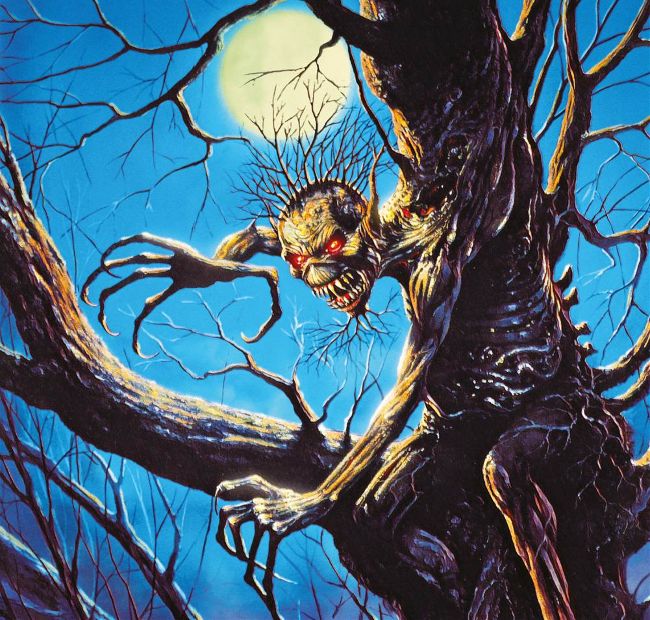
IRON MAIDEN HOLDINGS LLP.
On August 28, 1993, the decapitated head of Bruce Dickinson was shoved onto a metal spike in front of several hundred Iron Maiden fans by the band’s deathless mascot, Eddie.
The symbolism was hard to miss. This wasn’t just the climax of the final show on the tour in support of the previous year’s Fear Of The Dark album, it was also the last show of the singer’s 12- year tenure with the metal icons.
The gig was being filmed at Pinewood Studios near London for an MTV special titled Raising Hell. It was part rock concert, part magic show – the latter courtesy of illusionist Simon Drake, who provided suitably schlocky interludes involving audience members being burned alive in coffins and semi-naked women having their hearts torn out while tied to a rack.
The gory finale, involving Bruce being shoved in a ‘iron maiden’ torture device before Eddie lumbered out to separate the singer’s ‘head’ from his body, was the culmination of a journey that had begun several months earlier, with Bruce’s realisation that he no longer wanted to be the singer in one of the world’s biggest metal bands.
Speaking to US TV journalist Charlie Rose in 2017, the singer laid out his reasons for leaving. “I was having my little artistic dark night of the soul,” he said. “I was thinking, ‘I am in an institution, and I will die in this institution if I don’t do something about it.’”
His decision was as unexpected as it was drastic. Fear Of The Dark hadn’t just righted the Iron Maiden ship after an uncharacteristically wobbly period, it had updated their musical and lyrical approach, jettisoning some of the musical excesses of the past and bringing the band more in line with changing contemporary musical tastes. Maiden’s career didn’t exactly need saving, but Fear Of The Dark had set them up for a new decade.
Now everything was in turmoil.
Maiden started the 1990s in an unfamiliar position: with their backs against the wall. 1988’s Seventh Son Of A Seventh Son was heavy on proto-prog metal epics, and the band’s first headline appearance at the Monsters Of Rock festival and subsequent tour had seen the East London quintet playing in front of an impressive wall of fake icebergs. But as the new decade dawned, those kind of musical and visual excesses were starting to feel outdated.
That problem, as bassist Steve Harris saw it, would be easy enough to solve: they would go back to basics. Maiden’s commander-in-chief had recently converted a barn on his Essex estate into a studio, christening it Barnyard Studios, and the band would convene there to record a new album that stripped away the flab.
Their plans were thrown into chaos when guitarist Adrian Smith left the band just before they were due to start recording. He had become increasingly unhappy with life in Iron Maiden, and the decision to record in Steve Harris’s barn was the final straw. “Adrian wasn’t fired, but he didn’t quit entirely willingly,” Bruce Dickinson later said.
There was a ready-made replacement at hand. Hartlepoolborn guitarist Janick Gers was a veteran of the 80s rock scene, and had appeared on Bruce Dickinson’s debut solo album, Tattooed Millionaire, released in May 1990.