Better Hide Your Heart
Don’t cry for Laura Nyra the singer-songwriterwho launched a legion of smash-hit covers but whose own albums only inched into the charts. For over 40 years, she turned pain into art into self- knowledge and, as her friends and collaborators insist, victimhood never looked good on her. “She did what she wanted,” they tell Dave DiMartino.
Portrait: David Gahr
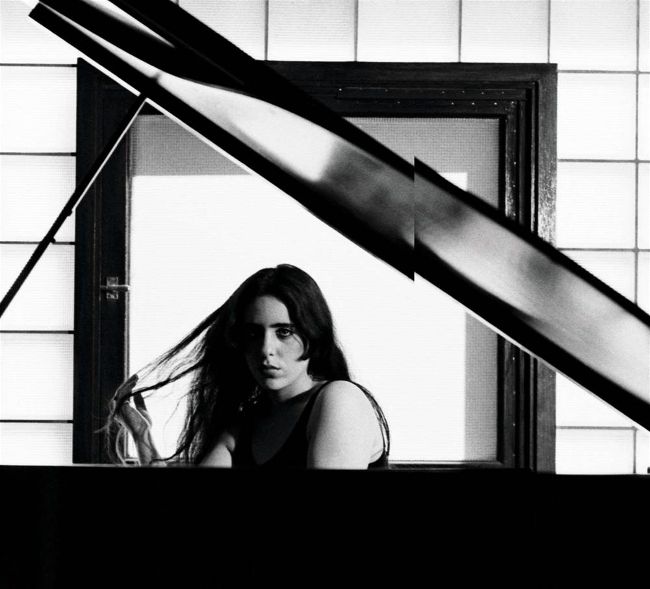
Photo by David Gahr/Getty Images
More than a new singer-songwriter: Laura Nyro thinks it over, Boston, Massachusetts, May 25, 1972.
IT IS MIDDAY AND MID-YEAR 1998 in well-to-do Brentwood, California. At the moment, I am sitting across a table from none other than Ms Joni Mitchell, who is discussing the treatment she is getting from the press these days. The routine: names of contemporar y female artists are run by her – Alanis Morissette, Sher yl Crow, Jewel, say – and she is asked to assess the artistic worth of each. It is the era of the all-female Lilith Fair, and Joni Mitchell, coincidentally a female, is well known for her outspoken opinions. And the press, of course, wants dirt.
“I’m sick of being lumped in with the women,” says Joni. “Laura Nyro you can lump me in with – because Laura exerted an influence on me. I looked to her and took some direction from her. On account of her, I started playing piano again. Some of the things she did were ver y fresh. Hers was a hybrid of black pop singers – Motown singers – and Broadway musicals, and I like some things also from both those camps.”
“And,” I note, “There is that record New York Tendaberry.” “Beautiful record,” says Joni. “Beautiful.”
THE RECENT AMERICAN DREAMER BOX, which collects the extraordinar y recordings Nyro made from 1967 to ’78 and, song by song, details her artistic worth, bears out ever y ounce of Mitchell’s admiration. Those who like to go by numbers alone might look at the Billboard Hot 100 chart for the week of ➢
November 29, 1969 for three Top 10 entries of note: Blood, Sweat & Tears’ And When I Die (Number 2), The 5th Dimension’s Wedding Bell Blues (Number 3), and Three Dog Night’s Eli’s Coming (Number 10). All compositions by Laura Nyro, all seared into America’s music psyche, and as telling in its own way as that week in 1964 when The Beatles had five of the Top 5 entries in the same chart.
Though the Bronx-born singer-songwriter, born Laura Nigro, lived a regrettably abbreviated life – she died of ovarian cancer, just as her mother did, in 1997 – much had gone on in her 49 years. There was the Ver ve album deal that produced 1967’s More Than A New
Discovery and introduced And When I Die, Wedding Bell Blues, and Stoney End (a later Top 10 hit for Barbra Streisand). There was the mixed reception she received at 1967’s Monterey Pop Festival, which had significant impact on her enthusiasm for live performance. And there was that time when current billionaire and über-biz magnate David Geffen entered the picture.