BROTHERS GONNA WORK IT OUT
Forty years since
the first Green River
demos, 30 since the
death of Kurt Cobain
sank their world in
chaos, PEARL JAM
abide, flying a flag for
rock’s outsiders,
finding new ways to
express their anger
and their hope. A new
album, Dark Matter,
testifies to their
uniqueness as
musicians, but also
as people. “We
got through by
looking out for
each other,” they
tell DAVID FRICKE.
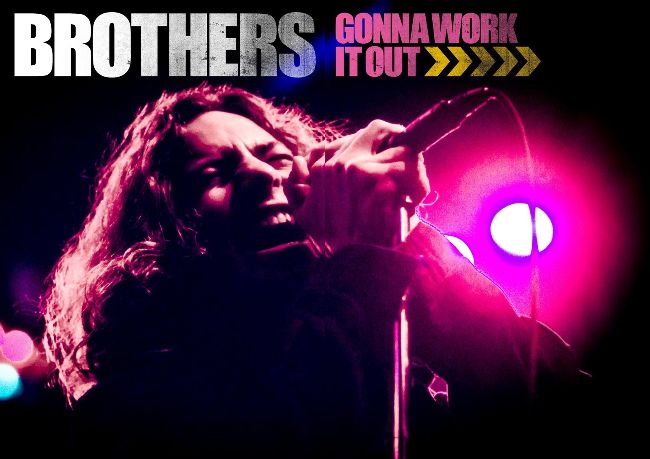
Troubled souls unite: Eddie Vedder on-stage with Pearl Jam at Chicago Stadium, March 10, 1994.
Photograph by LANCE MERCER.
PEARL JAM WERE ON THE ROAD, A WEEK AWAY FROM finishing a half-year blur of theatres and arenas for their second album, 1993’s Vs – two hours every night of guitar stampede and confessional howl for audiences as unhinged in their love as the band was in performance – when the darkness fell like a hammer. On April 8, 1994 in Seattle, Pearl Jam’s birthplace and rock’s chaotic ground zero for the last three years, Nirvana’s desperately troubled singerguitarist Kurt Cobain – struggling with drug addiction and an overwhelming fame – was found dead in his home of a self-inflicted gunshot wound.
A few hours later, at the Patriot Center in Fairfax, Virginia, Pearl Jam opened with the mourning in Release from their 1991 multi-platinum debut, Ten. A pensive-to-frenzied march rooted in singer-lyricist Eddie Vedder’s teenage anguish over a biological father he never got to know, it was one of the first songs he wrote with the group after he moved to Seattle in the fall of 1990. It was also the first number Vedder sang live with bassist Jeff Ament, guitarists Stone Gossard and Mike McCready and then-drummer Dave Krusen that October at the Off Ramp in Seattle – Pearl Jam’s inaugural club date, before they had a name.
On this night, Release kicked off a long rush into deepening shadows – Go, Animal and Dissident from Vs; the brutal sorrow in Ten’s Jeremy – before Pearl Jam directly addressed the void in the room: via Neil Young’s Hey, Hey, My, My (Out Of The Blue), quoted in Cobain’s suicide note, and a song about another day “the music died”, Don McLean’s American Pie. “Sometimes, whether you like it or not, people elevate you… and it’s very easy to fall,” Vedder told the crowd. “But I don’t think any of us would be in this room if it weren’t for Kurt Cobain.” Then he counted the band into more Ten dynamite, a furious reading of Even Flow.
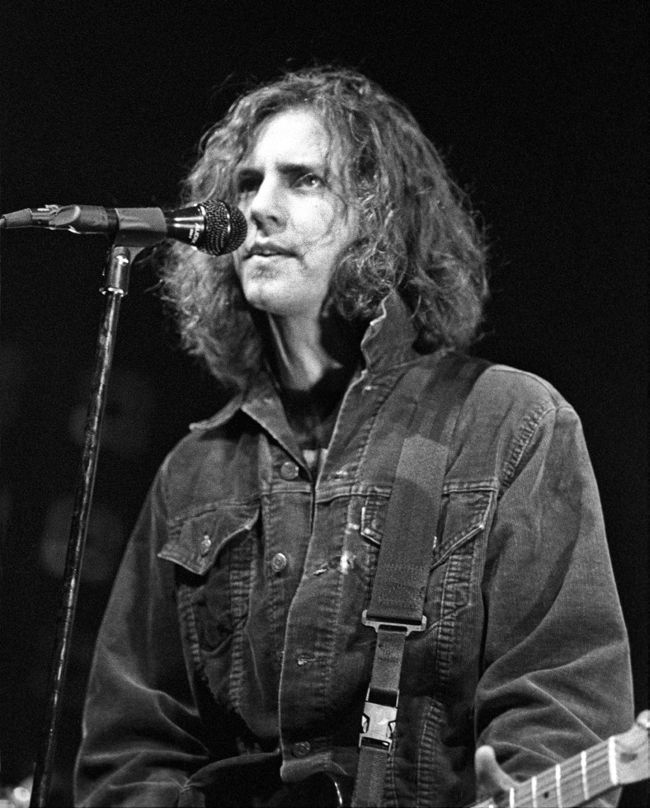
Danny Clinch, Ebet Roberts/Getty, Eddie Malluk/IconicPix, Lance Mercer
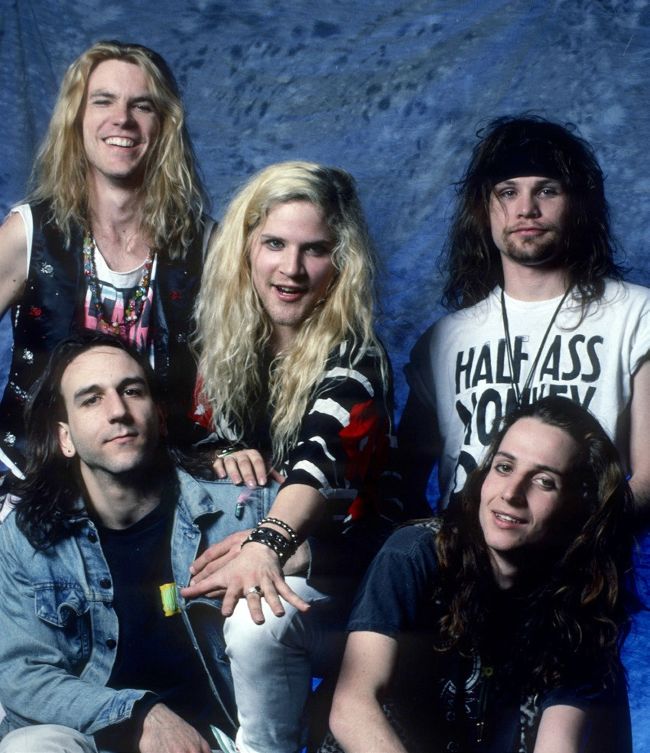
Lance Mercer
A week earlier, in Miami, Vedder introduced the song as “a bit of street education”, a lesson in the scourge and daily trials of homelessness. But there was another strife in there now: the success that drives you to madness and worse. “Faces that he sees time again ain’t that familiar… Dark grin, he can’t help/When he’s happy he looks insane,” Vedder sang, conceding the profound, interior warfare he shared with Cobain, up to a point. Because Pearl Jam’s singer remained in the fight, armed with the band that saved his life. “Oh someday yet he’ll begin his life again,” Vedder went on with gritty assurance. “Life again, life again.”
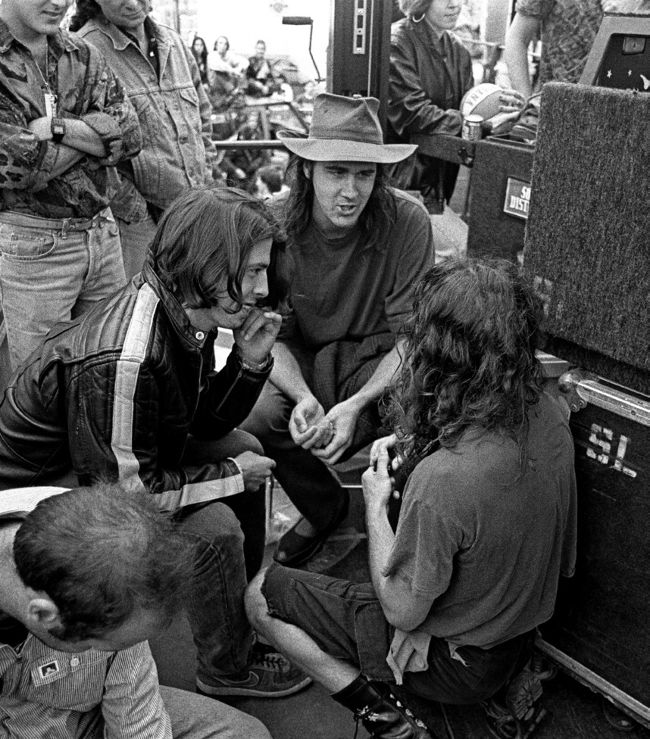
THIRTY YEARS LATER, ON THE EVE OF RELEASING their twelfth studio album, Dark Matter, Pearl Jam’s founding core recall that shock and afterburn as if they still fill the rear-view mirror. Ament speaks of an earlier loss that shattered, then changed his life: singer Andrew Wood of the Seattle glammetal band Mother Love Bone, founded with Ament and Gossard in 1988 and suddenly over in March 1990 when Wood died of a heroin overdose at 24. It was during their initial rehearsals for Pearl Jam that Ament and Gossard first recorded with McCready and Vedder – joining singer Chris Cornell and drummer Matt Cameron of Soundgarden on a memorial album for Wood, released in 1991 as Temple Of The Dog.
“Any unresolved feelings I had when Andy passed all came back,” Ament says. “And I was thinking about Krist and Dave” – Nirvana bassist Krist Novoselic and drummer Dave Grohl – “because of what Stone and I had gone through with Andy.” There was also “the worrying about each other” in Pearl Jam. “All of a sudden, you had money. Everybody wants to be with you. Early on, I’d get out of Seattle, go back to Montana” where Ament was born and grew up. “It was selfish,” he admits. “I did it for survival.”
“It was a whirlwind,” McCready remembers, noting a painful coincidence: Cobain died three days before he was found: on April 5, McCready’s birthday. “Ed felt the pressure,” the guitarist says. “All of a sudden, he was the focal point, and that was on top of the pressure we were already feeling.” Whenever Vedder climbed into the lighting rig or jumped from a balcony during a Pearl Jam concert, “I was like, Wait a second, dude, slow down.” After every show, “I’d go, Is this over?”