Insider dealing
FILE UNDER...
Earl McGrath was beloved by the grandees of art, movies and rock, yet little known outside those circles, and he stashed a trove of forgotten music.
By Jim Irvin.
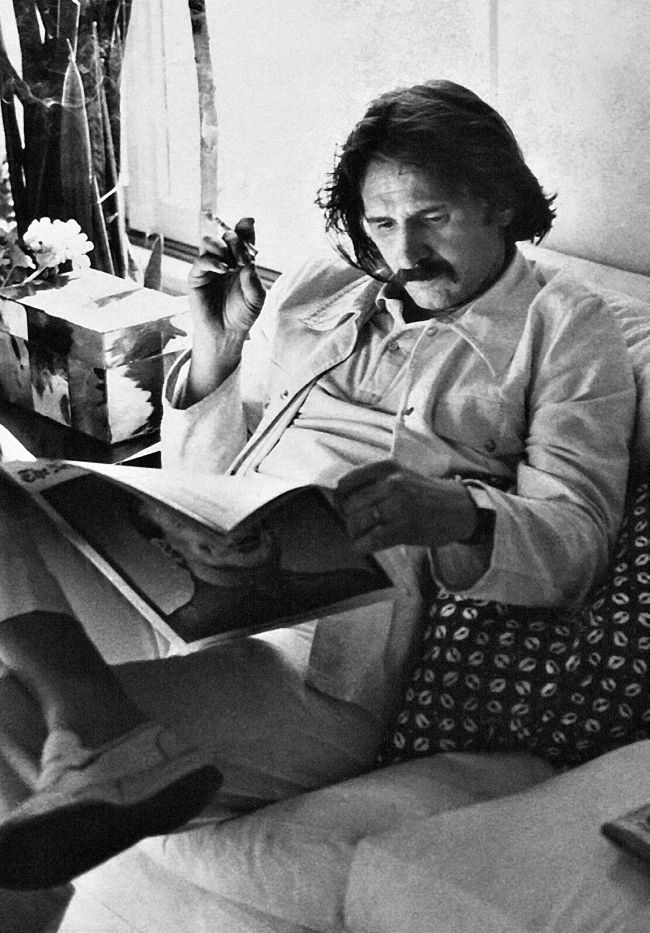
The last of the bohemians: (clockwise from above) Earl McGrath kicks back in the ’70s; Hall & Oates – McGrath’s first signings; plus Closet artists Johnny Angel; Len &
Betsy Greene; Terry Allen.
IT’S HARD, they say, to accurately describe what Earl McGrath did. He did moving, he did shaking, he did living it up and hanging out. A piece in the music trade press described him as a “writer, bon vivant and confidant to tycoons”. Somewhere on his merry way he found himself at the heart of the ’70s music business, being put in charge of record labels by Ahmet Ertegun and Mick Jagger.
Jagger met Jerry Hall – then dating Bryan Ferry – at one of McGrath’s soirées.
He scooped her up and later hired Earl to run Rolling Stone Records. “Earl was a wonderful man,” he says, “and such an amusing companion, too.”
“Bryan Ferry stopped speaking to me for a year,” McGrath noted.
Born in poor circumstances in 1931, in Superior, Wyoming, McGrath left home at 14 after his abusive father broke his arm, having discovered that Earl was the result of a fling and not his child. Earl joined and left the merchant marines, hung out in the Middle East, then, arriving in LA, befriended literary luminaries WH Auden and Henry Miller. In New York he was introduced to Italian opera via Leonard Bernstein. In Italy he organised a jazz festival. By 1963, the penniless ex-marine was married to an Italian countess and collecting fine art. A spell in Hollywood led to him writing film scripts. He claimed to have had the original ideas for The Monkees and Saturday Night Live stolen from him.
He was a friend to Warhol, Joan Didion – who dedicated her celebrated book The White Album to him – Annie Leibovitz (“He was so handsome, so seductive”), and Harrison Ford, brief ly McGrath’s handyman and pot dealer, who called him, in a Vanity Fair obituary, “one of the last great gentlemen and bohemians”.
Many remember his ribald sense of humour. Clowning around at a party on New York’s Upper East Side, McGrath caught the attention of an amused Ahmet Ertegun, sparking an instant friendship. “He called me up the next day and every day after that until he died 30 years later,” stated McGrath, who, in 1969, introduced Ertegun to The Rolling Stones. In return Ertegun gave McGrath his own label, Clean, with third partner Robert Stigwood.