RENAISSANCE MAN
Celebrating Monteverdi’s 450th birthday anniversary this year, John Eliot Gardiner revisits a composer who has been a lifelong inspiration as a fellow musical pioneer. Ash Khandekar meets the conductor as he embarks on an extraordinary musical and intellectual odyssey back to the 1600s, touring Monteverdi’s three surviving operas around the world.
Ash Khandekar
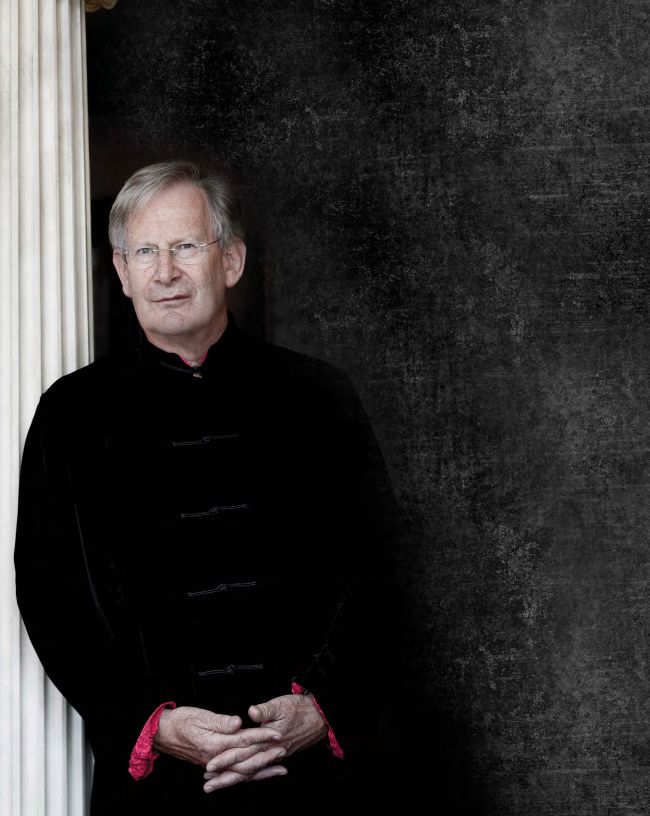
SIM CANETTY-CLARKE
More than half a century ago, a young student of history, Arabic and Medieval Spanish conducted a performance of the Monteverdi Vespers in the chapel of King’s College Cambridge and threw down the gauntlet before the orthodoxy of the ‘English Choral Tradition’, creating a palpable sense of shock and delight.
The 21-year-old John Eliot Gardiner had hand-picked his chorus for that famous occasion, bringing into existence the now worldfamous Monteverdi Choir. True to the spirit of the 1960s, they brought an energetic, youthful and, yes, sexy vigour to music that had until then tended to be performed with po-faced reverence.
Gone were the ‘white’ voices of the treble line, the studied tempi and the mannered phrasing that had caused Monteverdi’s great choral masterpiece to ossify. Instead, Gardiner brought drama, spice, colour and a sense of wide-eyed discovery to the fusty regard of academic investigation that had been cast over Renaissance music for a century and more.
Fast forward 52 years to the spring of 2016, and we find Sir John Eliot still working his magic on Monteverdi. This time, he was in Venice at the Fondazione Giorgio Cini, launching a new venture with a group of young soloists dubbed the ‘Accademia Monteverdiana’.
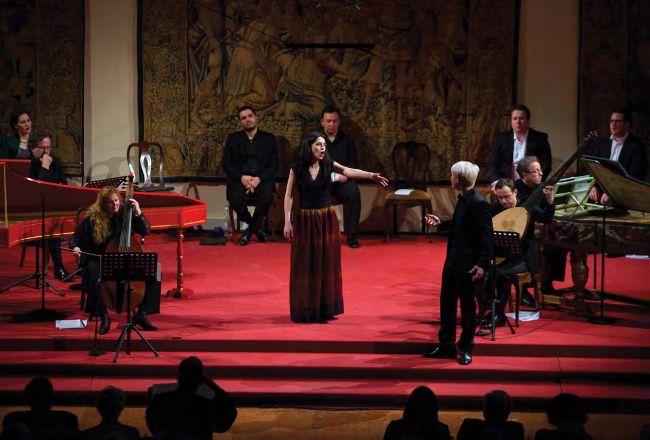
Exploring the drama of the Madrigals at the Fondazione Cini in Venice: taking centre stage are Hana Blažíková and Kangmin Justin Kim