EXPLORING JAPAN
AN EYE-OPENING TRIP TO OSAKA, HOKKAIDO, GIFU, AND KYOTO
By Jim Gladstone
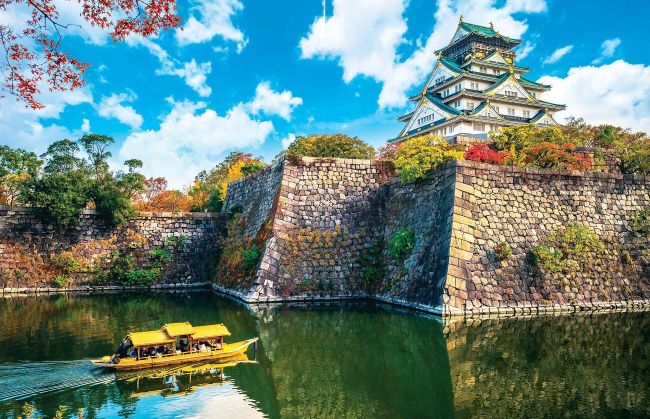
Photo: Richie Chan
Wandering the narrow alleyways of Shinsekai, a historic working class neighborhood in Osaka, Japan, it’s impossible to miss the glimmering golden statues: dozens of lovingly tended effigies of a pudgy fellow seated on a plinth. He’s got an impish grin on his face and a satyric lack of clothes on his body. No, the nude dude’s not Buddha. He’s Billiken, a visitor from America. Billiken was first sketched in 1908 by Florence Pretz, an art teacher from Kansas City, Missouri. She declared that the barefoot sprite had come to her in a dream and explained that he was “The God of Things as They Ought to Be” and would bringing luck to those who encountered him.
Whether Pretz actually had the cockamamie vision she reported, or her dream was pure cunning, good fortune indeed came her way. Merchandise emblazoned with winsome comic characters was a staple of American pop culture in the early 20th Century, and Pretz quickly sold the rights to her concept to a Chicago novelty manufacturer. An array of Billiken merch soon hit the market, from good luck charms, dolls, and figurines, to piggy banks and pickle forks.
The Billiken fad quickly faded in America, but exported products featuring the beatific butterball’s image remained popular in Japan. It’s been theorized that the Japanese affection for adorable anthropomorphic characters is a cultural remnant of ancient Shinto beliefs, in which non-human spirit creatures provided comfort and protection.
Billiken was especially adored in Osaka, where he was licensed by a textile company as their advertising mascot and gradually came to be identified with the city as a whole, proliferating in Shinsekai’s sidewalk shrines where passersby rub the soles of his feet for good luck.
OPTING FOR OSAKA
My partner John and I had never heard of Billiken before visiting Osaka (visitgayosaka.com) to attend the 2024 convention of the International LGBTQ+ Travel Association (IGLTA), but we were already aligned with his positive perspective and desire to optimize circumstances.
Our quest for “things as they ought to be” included turning our trip to the IGLTA’s four-day meeting into a much lengthier adventure— nearly three weeks in total. Why fly such a long distance and not make the most of it?
To the IGLTA (iglta.org/foundation) and its charitable foundation, “things as they ought to be” includes queer people being able to travel freely worldwide, driven by curiosity and the desire for authentic cultural exchange, without concerns about discrimination or safety. Since 1983, the organization has worked with governments, tourism-related businesses, and advocacy organizations in pursuing these goals.
Beginning in 2020, Osaka pursued the opportunity to become the first-ever Asian city to host the IGLTA’s annual convention. Winning the highly competitive proposal process would provide a chance to to introduce hundreds of queer travel professionals to Osaka in person, promoting the city and prefecture, along with many other participating Japanese locales, as welcoming and worthwhile destinations for the LGBTQ+ community.
While Japan does not yet legally recognize same-sex marriage at the national level, recent years have seen queer advocacy groups working with many supportive local and national government officials to pursue that cause while driving other significant progress for the community.
Osaka, in particular, has been a stronghold of advocacy. In 2018, its prefecture was Japan’s first to offer same-sex partnership benefits, including housing and hospital visitations, Since then, more than 90% of municipalities nationally have followed suit.
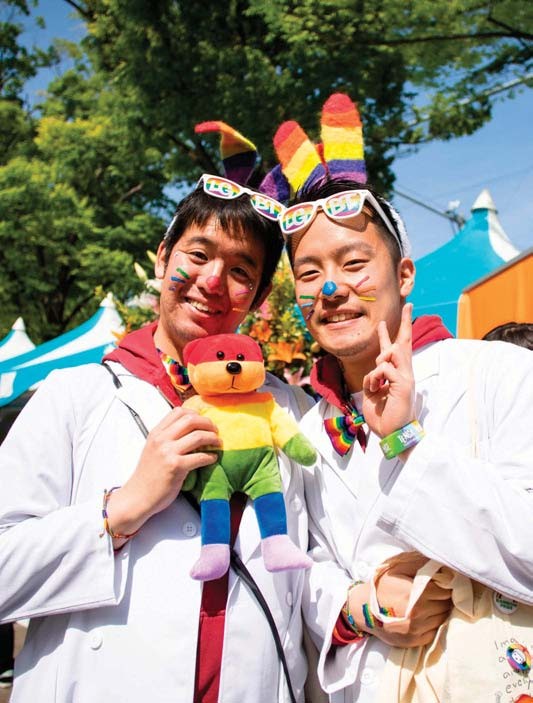
Celebrating Pride in Japan
Photo: Morumotto
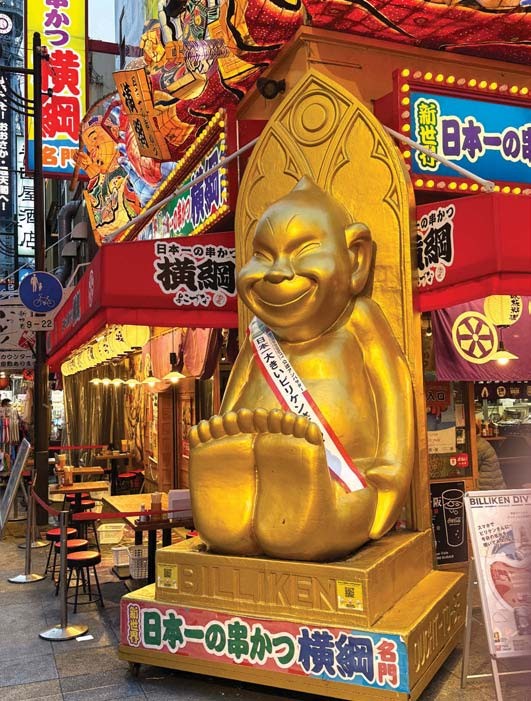
Billiken
Photo: Jim Gladstone
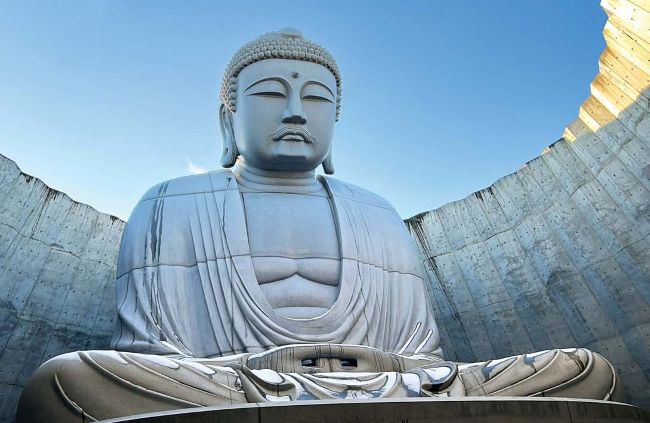
The Hill of the Buddha Temple in Sapporo
Photo: Thanit Jomchai
The Hill of the Buddha Temple is a contemporary masterpiece honoring time-honored ideals. Architect Tadao Ando designed and constructed this colossal work, a hybrid of a building and an earth sculpture, around a 44-foot-tall Buddha statue.
The city has supported an initiative to evaluate local businesses and publicly recognize commitments to providing equal benefits to employees and equal service to customers regardless of gender identity or sexual orientation. Osaka was also the first Japanese city to proudly showcase its LGBTQ culture and businesses by launching a tourism outreach program specifically directed to the global queer community.
Convention and Tourism Bureau president Hiroshi Mizohata, an outspoken supporter and highly engaged participant at the IGLTA convention noted: “I would like to make a strong impression on the people of the world that Japan and Osaka are places where everyone, regardless of nationality, age, gender, disabilities, ideology, creed, or religion…can enjoy themselves in a safe and secure environment with respect for everyone.”
A SOFT LANDING
While planning our trip, John and I came up with a strategy to turn the cloud of jet lag inside out and reveal a silver lining: Instead of fighting that fuzzy feeling brought on by transglobal travel, we would lean into it.
Our initial destination en route to Osaka was Hokkaido, the northernmost of Japan’s four major islands. We spent our first two days on the ground at KAI Poroto (hoshinoresorts.com), a stunning onsen ryokan just 40-minutes from New Chitose international airport, where we’d touched down