Getting ready to hit the road
The lockdowns and stay-at-home message over the past year or so mean that most of us have barely used our caravans for many months – if at all. This necessary break could result in problems when you come to take your van back on the road again, particularly if you’ve been unable to carry out. any maintenance on it, either.
With that in mind, we asked former Practical Caravan editor Nigel Donnelly to write a comprehensive article on everything you need to know about getting back on the road post-lockdown – you’ll find his excellent guide on p92.
practical.caravan@futurenet.com
OUR TECH EXPERTS include (left to right) John Sootheran, Sammy Faircloth and Nigel Hutson
AT SKILLS SCHOOL THIS ISSUE…
Caravan genius
84 At your service
What to expect from your annual caravan service
92 Back on the road
DIY checks to prepare your van for touring after the past year’s prolonged lay-off
DIY mechanic
98 Towing mirrors
Milenco’s new Grand Aero Platinum mirrors
TOP TIPS!
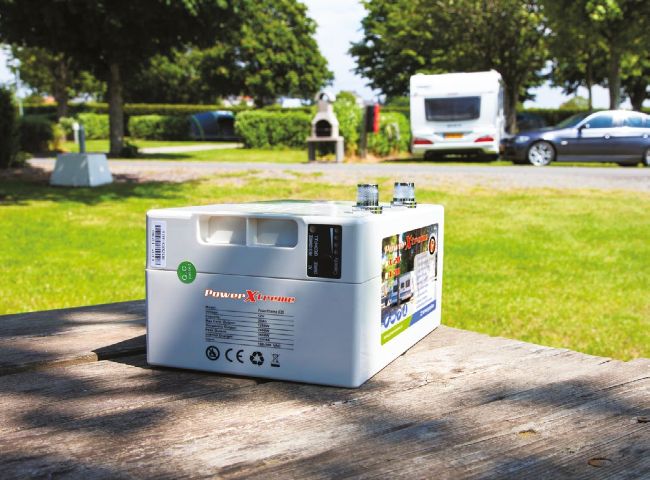
EmergoPlus lithium-ion battery
HOW TO... POWER UP OFF-GRID
Going off-grid, with no electric hook-up, is a fun experience that allows you to be more flexible when choosing a campsite.
But with no mains hook-up, you’ll be relying on your leisure battery for all of your electric power. This is the main reason why many serious off-gridders often install a second battery, with manual or auto switchover.
The NCC’s Verified Leisure Battery Scheme offers clear guidance on a battery’s capacity.
› Category A batteries have higher storage capacity and are designed for caravanners who tend to camp away from an electric hook-up.
› Category B is for those who typically stay on pitches with electric hook-up, but need power for devices such as motor movers.
› Category C is designed for use over a short time to power basic, low-demand equipment.
It’s best to start by fitting the largest leisure battery you can find, ideally Category A. Your battery power (reserve) is measured in ampere/hours (Ah), and an ideal size for off-gridders is 110Ah.
This is a large item, so check it will fit your battery locker. Bear in mind that a second battery can also take up 20kg of your payload.
A leisure battery has much thicker lead plates inside than those in a car battery. Typically, the heavier a battery is, the more lead it contains and the better suited it is to off-gridding.
Avoid letting the charge in your lead-acid leisure battery get too depleted. It will last longer if it is regularly recharged from 75% capacity, rather than allowing it to go down to 50% or below.
The latest lithium batteries are perfect for off-gridding. Lithium iron phosphate (LiFePO4) batteries are powerful and lightweight, and can be discharged much further than lead-acid batteries.
Of course, there’s always a downside, and that’s the cost. A few years ago, lithium leisure batteries cost around £2000. Prices are now down to about £700, but that’s still multiples of a good-quality standard battery.
*Future Publishing Limited, the publisher of Practical Caravan, provides the information in this article in good faith and makes no representation as to its completeness or accuracy. Individuals carrying out the instructions do so at their own risk and must exercise their independent judgement in determining the appropriateness of the advice to their circumstances. Individuals should take appropriate safety precautions and be aware of the risk of electrocution when dealing with electrical products. To the fullest extent permitted by law, neither Future nor its employees or agents shall have any liability in connection with the use of this information. Check that any van warranty will not be affected before proceeding with DIY projects.