TAKE A BOW
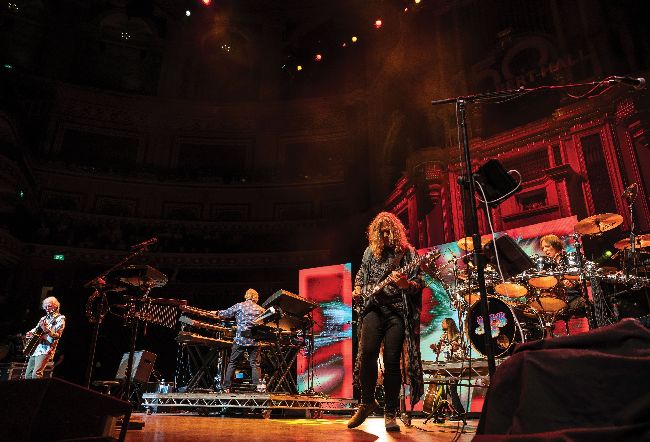
Yes give a thrilling performance of some extraordinary music.
KEVIN NIXON
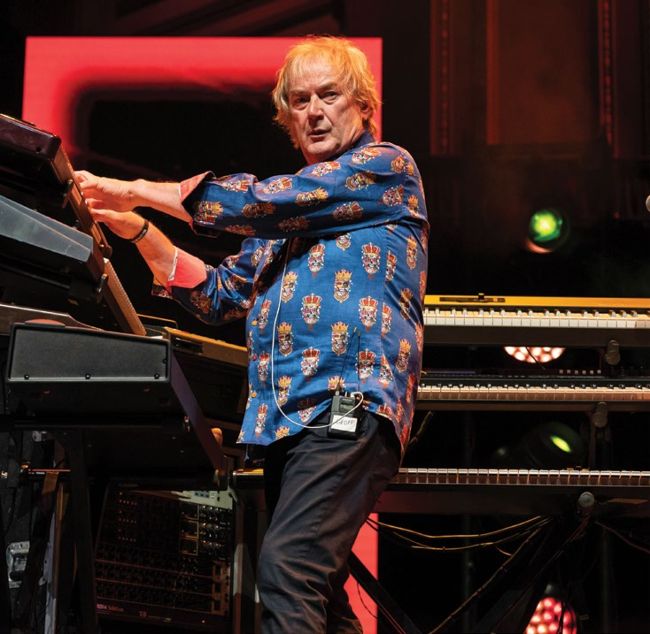
Cheeky chappie Geoff Downes.
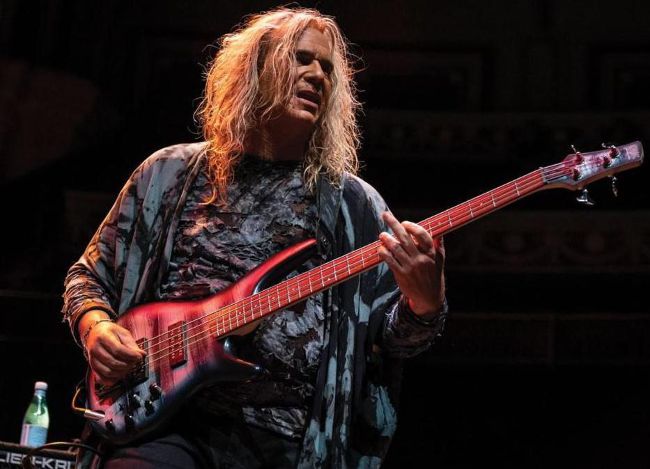
Billy Sherwood: slick bass.
YES
VENUE ROYAL ALBERT HALL, LONDON
DATE 21/06/2022
Half a century ago Close To The Edge emerged, greeted by reviews ranging from “unmemorable meaninglessness” to “transcending the medium”. It’s endured as the Yes album most often begrudgingly admired by sceptics, while topping polls such as Prog’s own Greatest Progressive Rock Albums Of All Time. Tonight the Yes of 2022, a very different beast, personnel-wise, to that which recorded it, deliver a thrilling performance of that extraordinary music, plus much more besides.
Of course there is a eulogy to be given first. Alan White, who replaced Bill Bruford shortly after the album’s recording and occupied Yes’ drum stool for the following 50 years, passed away not long before this tour. Prior to the band taking the stage at this opulent venue, a tribute is given via films and slides, dovetailing with aesthetic contributions from Roger Dean. Later, Steve Howe says a few – though just a few – words in White’s honour. From here on though, it’s showtime and the band focus completely on the music, of which there is plenty.
After the customary blast of Stravinsky’s Firebird we’re into the first set of miscellaneous moments from Yes’ labyrinthine catalogue. It does a good job of balancing the old, the new and the in-between. Not many would have predicted an opening number lifted from Tormato, but On The Silent Wings Of Freedom cruises in effectively before Yours Is No Disgrace (“My foot in the door,” says Howe) brings grins to the faces of an audience primarily here for the vintage wine.
“Steve Howe is having an absolutely spectacular time. Towards the end, he’s practically skipping and duck walking with happiness.”
It quickly becomes clear – if there was any residual doubt – that the current quintet is very much The Steve Howe Band. The others defer to him, implicitly and explicitly. Even if Jon Davison is nominally the frontman, it’s as if he reins himself in, not keen to draw too much attention. The metaphorical spotlight always reels back to Howe who, tonight, is happily one of the greatest living guitarists having an absolutely spectacular time. Towards the end, he’s practically skipping and duck walking with happiness, the years shedding from his body.
Surely enough debate has “raged” among the Yes community as to whether this is a “valid” version of Yes, or some kind of tribute band which shouldn’t go out without Jon Anderson, Rick Wakeman and the late Chris Squire. Squire, himself, stated his dream of the music being played eternally, whoever the personnel. And the musicianship, a challenge, is impeccable. Anyway, those Yes fans on board are here, relishing it, and those not on board are presumably at home typing complaints in their mum’s basement. This, then, is the happier place.
Davison deals superbly with the range of vocals required by this breadth of material: there’s a lot more to it than singing in a high voice. As he says himself after Wonderous Stories, he’s been on the Yes microphone (having been recommended to Squire by none other than the Foo Fighters’ late drummer Taylor Hawkins) for 10 years now. Billy Sherwood looks and sounds the part on bass and harmonies, albeit forsaking Squire’s justifiable showboating, while Geoff Downes cooks the keyboards while retaining the air of a cheeky chappie off Minder or The Sweeney. On drums, Jay Schellen is so accomplished that for long periods you forget he’s the latest new boy.
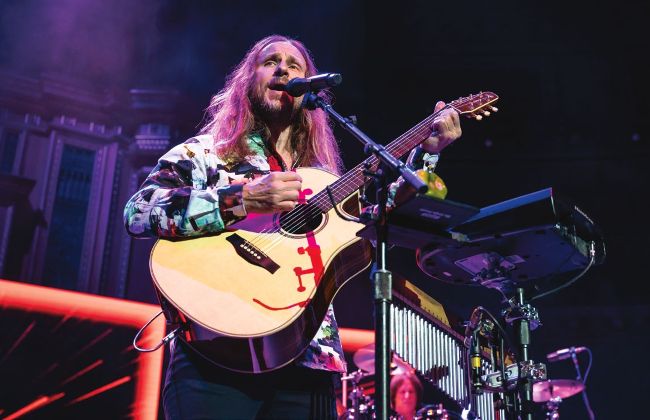
Jon Davison rises to all the vocal challenges.
So that first set ranges from a spin through their interpretation of Richie Havens’ No Opportunity Necessary, No Experience Needed and Howe’s solo Clap, to selections from latest album, The Quest (which come to life in this context), to a thundering finale of Heart Of The Sunrise. The second set takes us round by the river where Close To The Edge flows, and it’s stunning. It’s not treated over-respectfully like a museum piece, but feels refreshed. What comes across is that although, of course, it technically demands these players’ concentration, they’re enjoying themselves greatly. As are the crowd, swaying to the serenity of And You And I, then grooving to the fidgety almost funk of Siberian Khatru.
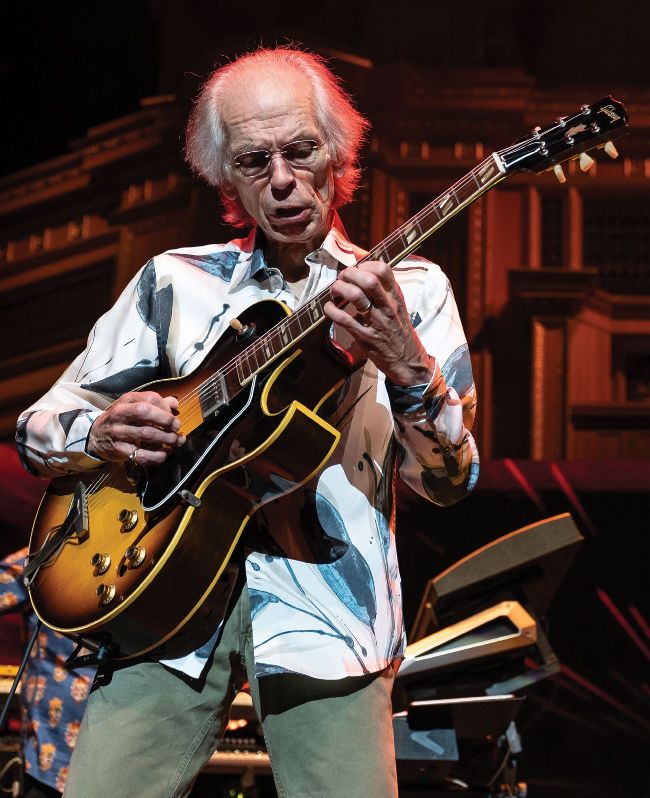
Steve Howe leads tonight’s show.
Standing ovations follow. As the Yes of 2022 return for the encore, Howe makes a quip about the day’s transport strikes – which don’t seem to have affected the full house – and Roundabout is drilled out dynamically. Starship Trooper is tonight’s final frontier, and as its climax of Wurm whirrs and whirls, Howe lets rip like a man possessed. Seasons will pass you by, but right now Yes are getting down.
CHRIS ROBERTS
HERBIE HANCOCK
VENUE THE BARBICAN, LONDON
DATE 22/06/2022
What becomes a legend most? Is it the company they keep? In the case of Herbie Hancock, the celebrated pianist, keyboardist and composer must boast one of the most enviable address books in jazz or any genre. Just flip the pages and there will be the names, numbers and domiciles of musical titans including trumpeters Donald Byrd and Miles Davis, as well as saxophonists Wayne Shorter and Eric Dolphy. And in the digital age, there’ll be contemporary trailblazers like Thundercat, Flying Lotus and the influential Kendrick Lamar.
Or could it be Hancock’s seven decades of involvement in music that not only set the standards for generations to come, but also altered the course of music in ways previously unimaginable? To do so once is a victory but to do so over and again with Miles Davis’ second great quintet and the start of the trumpeter’s so-called “electric period” is a major triumph. And that’s before we even consider the music made under his own name – let’s not forget the electronic gamechanger Rockit that dominated MTV and introduced him to a whole new generation of fans and pioneers-to-be.
Based on tonight’s evidence in the sold-out environs of the Barbican, it’s all of those things, but Hancock’s generosity of spirit and space to his well-drilled band is what truly makes its mark. With a sprightly approach to both his music and performance that belies his 82 years, Hancock is acutely aware of the contribution that his cohorts make.
As displayed on the extended Actual Proof, each musician has a crucial role to play. Guitarist Lionel Loueke deploys an incredible fingerpicking technique that’s augmented by stunning use of his pedals. With Terence Blanchard feeding his trumpet through a number of effects, his double-tracked efforts bring a richness and expansiveness to the music, and the links from this stunning aural display to modern saxist Kamasi Washington’s spiritually cosmic explorations are easy to make.
Elsewhere, Phoelux is stretched to almost breaking point, not least with James Genus’ extended workout on his five-string – natch! – bass. And though Loueke’s detour into heavy metal soloing is ill-advised during an otherwise exemplary Cantaloupe Island, the meshing of Blachard playing that riff with Hancock’s grooving piano motif and Justin Tyson’s crisp drum rhythms is irresistible. And through it all, Herbie Hancock effortlessly and seamlessly moves from piano to keyboards to, yes, keytar, all the while serving the music by pushing its barriers.
“Was that weird enough for you?” asks Hancock at one point. It’s hard to disagree but there’s more to consider. This is progressive music as it should be – forever questing and never satisfied with the present. ‘Weird’ doesn’t really do tonight justice. ‘Far out’ does.
JULIAN MARSZALEK