Home truths
A housing lawyer’s Dickensian account of navigating the benefits system on behalf of his clients puts a human face on a crisis, finds Anna Minton
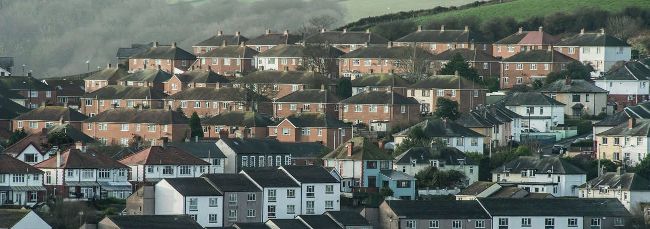
On the wane: council housing on the outskirts of Aberystwyth
© KEITH MORRIS/ALAMY STOCK PHOTO
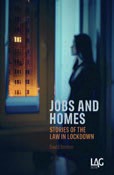
Jobs and Homes: Stories of the Law in Lockdown
by David Renton (Legal Action Group, £20)
The 2016 Ken Loach film I, Daniel Blake features a single mother forced by the housing system to move from London to Newcastle. Despite winning the Cannes film festival’s Palme d’Or, it was dismissed as “a work of fiction” by government minister Greg Clark.
Technically, of course, that was true. But the scenario the film described is very real for many people. Researching my 2017 book on the housing crisis, Big Capital, I visited a housing law centre in Hackney. In a tiny, cramped office overflowing with case files, a lawyer told me similar stories. Families were being forced to move out of London to Slough, Maidenhead, Leicester, Luton and Coventry, to homes they had to accept or risk being labelled “intentionally homeless,” and therefore beyond the reach of the duty on councils to house their citizens. Those who tried to fight the move, which would rip them away from their schools, families and support networks, went to court, where sometimes they won and sometimes they lost.
David Renton, the author of Jobs and Homes, is a housing and employment barrister who takes cases like this in court. In a book that could so easily have been mired in obscure jargon and dry statistics, Renton highlights the human stories he encounters on a daily basis. Housing is a complex area, especially when it interacts with the benefits system, and there is a woeful lack of scrutiny. As a result of Margaret Thatcher’s Right to Buy policy, which saw the sale of more than two million council homes, today more than 40 per cent of former council homes are owned by private landlords who rent them out at three or four times the cost of social housing rents.