The last warrior
As a wartime general and peacetime president Charles de Gaulle fought for a France made in his own grand self-image, finds Piers Brendon
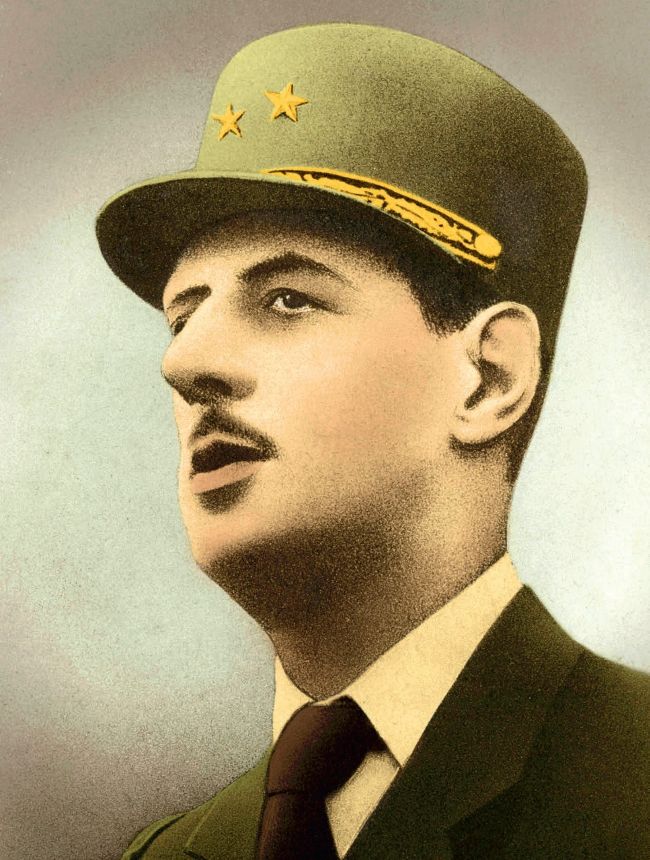
© LEBRECHT MUSIC & ARTS / ALAMY STOCK PHOTO
A Certain Idea of France: The Life of Charles de Gaulle
by Julian Jackson (Allen Lane, £35)
On the dank evening of 22nd August 1962, a dozen terrorists from the OAS, a paramilitary group opposed to Algerian independence, ambushed General Charles de Gaulle. In a scene memorably re-enacted in The Day of the Jackal, gunmen sprayed the French president’s Citroën DS19 with automatic fire as it sped through the Paris suburb of Petit-Clamart. They hit at least 14 times, penetrating the coachwork, smashing the gearbox and puncturing two tyres. Amazingly, de Gaulle and his wife Yvonne were unharmed, though the general cut his finger slightly while brushing broken glass off his jacket. Quite unmoved, he went on to inspect a guard of honour before flying home to Colombey-les-Deux-Églises. To his prime minister Georges Pompidou, de Gaulle remarked contemptuously: “My dear fellow, those men shot like pigs!”
De Gaulle’s courage was on display throughout his long career. During the First World War, he showed himself indifferent to danger, engaging the enemy so closely at Verdun that he was bayonetted in the thigh before being taken prisoner. Similarly, during his march from the Arc de Triomphe to Notre Dame on 26th August 1944 to mark the liberation of Paris, de Gaulle ignored the rooftop snipers (perhaps Germans, diehard Vichyites or anti-Gaullist members of the resistance).
Lofty, impassive and indomitable, de Gaulle appeared to be the embodiment of Gallic unity and strength. It was easy, wrote one journalist, to imagine him encased in the helmet and chain mail of a crusader. Churchill suggested that he was “the last survivor of a warrior race.”
Manifesting himself thus to the Parisian crowds, de Gaulle wrote in his brilliantly self-serving memoirs: “I felt I was… an instrument of destiny.” His Olympian personality excited comparisons with Napoleon, Louis XIV, Joan of Arc and Charlemagne. Around de Gaulle, in fact, reality and myth were so entwined as to be almost inseparable. But in this superb biography, a masterpiece of empathy as well as scholarship, Julian Jackson has probably made the best effort yet to elucidate the truth about this awkward, opaque, vindictive and messianic man. “He is extraordinary,” noted one member of his 1944 provisional government. Back came foreign minister Georges Bidault’s scribbled reply: “Lucifer was the most beautiful of the angels.”