FICTION
Unreliable confessions
Memory, lies, and storytelling intertwine in Russell Banks’s latest novel
BY STEVEN W. BEATTIE
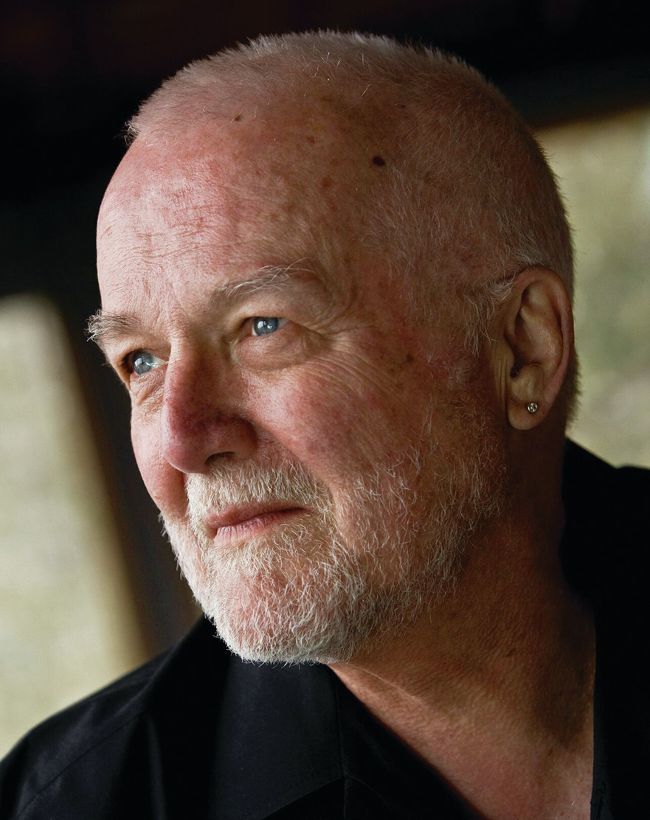
Russell Banks
RUSSELL BANKS: NANCIE BATTAGLIA
Foregone
Russell Banks
Biblioasis
MIDWAY THROUGH
Foregone, the latest novel from Russell Banks, the main character recalls a woman who published a memoir titled My Autobiogr I Remember It. Banks’s protagonist, a Canadian-American documentary filmmaker named Leonard Fife, appreciates “the clarity and apparent modesty” of the memoirist but also recognizes that her title represents little more “than permission and justification for a book of lies.”
The tension between memory – which is notably fungible and prone to revision – and any notion of objective truth is a notorious point of contention where memoir and autobiography are concerned. Just ask James Frey. Or, indeed, Leonard Fife, who spends much of his time in Foregone insisting that he has built the bulk of his life and public career on a foundation of lies. Now in his late 70s, Fife is determined to set the record straight for his wife, Emma. He does this in an extended confession to her, chronicled by a film crew that has been commissioned by the CBC to make a documentary about one of the country’s great narrative nonfiction filmmakers.
What the film crew gets is a long, rambling reminiscence about Fife’s time as a young man in 1960s America, where fear of the Vietnam War draft competes with an erotic history involving betrayal, abandonment, and theft on the part of the selfish, immature younger Fife.
Or perhaps not. As the novel progresses, it becomes increasingly apparent that Fife is an unreliable narrator of his own life. Suffering late-stage terminal cancer, he is on a cocktail of drugs and the narrative he unfolds is constantly criticized for being incoherent.
“Confabulation” is the word Fife’s oncologist uses to describe the way his patient conflates and elaborates events, time frames, and memories: “The chemo has dissolved chunks of his temporal lobe like acid. Synaptic pruning in a stressedout seventy-eight-year-old brain takes care of the rest.” Which sounds reasonable, though what his doctor insists is a function of old age and cancer meds is actually, Fife asserts, a function of storytelling: “[It] is just the way Fife sometimes tells stories, that’s all, mixing memories and dreams and imagined details and meanings, embedding whatever drifts his way, exaggerating some elements and eliminating others, fooling with chronology, trying to make life more interesting and exciting than it would be otherwise.”