ULTIMATE GUIDE Pilotwings
THE ORIGINAL PILOTWINGS IS AN ANACHRONISM; IT REPRESENTS PEAK EIGHTIES TECH, YET IT HELPED DEFINE THE VIDEOGAME ERA OF THE NINETIES. WHAT WE ULTIMATELY RECEIVED IS ALSO VERY DIFFERENT TO THE GAME ORIGINALLY ENVISIONED. NINTENDO HAS SEEMINGLYFORGOTTEN THE SERIES, BUT WE CERTAINLY HAVEN’T!
Words by John Szczepaniak
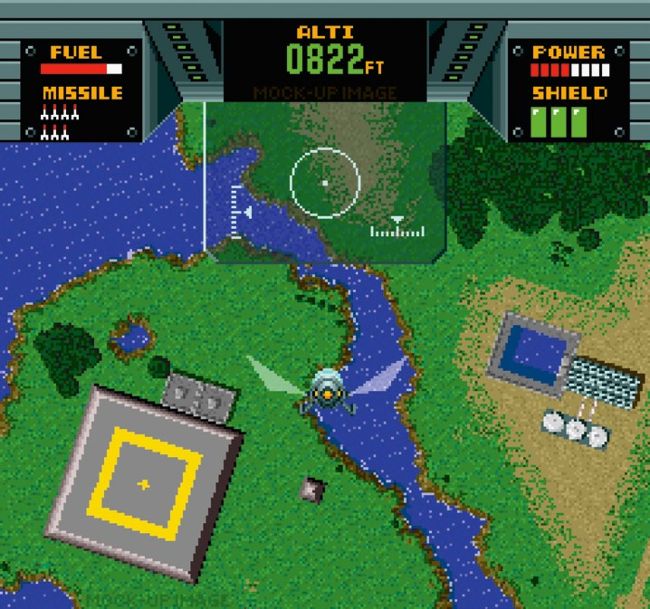
» Using old magazine scans and leaked graphics assets, Chris Covell created this accurate mock-up of the unreleased Dragonfly.
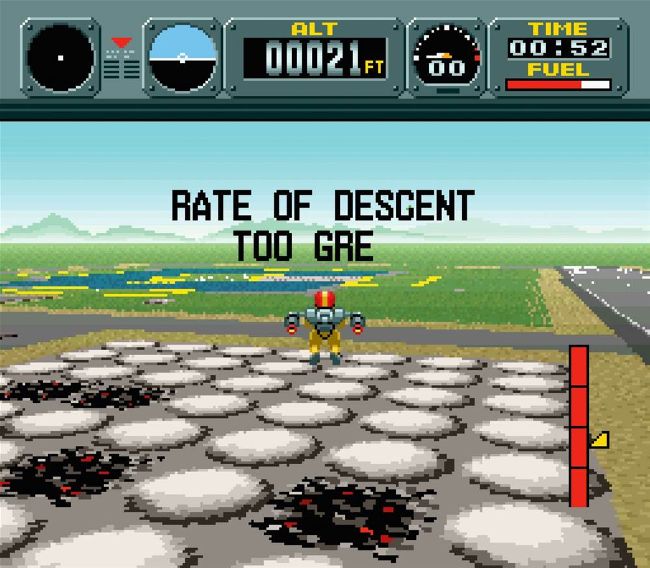
» [SNES] We’re not sure what these white blisters are supposed to represent, but the jetpack can bounce on them unharmed.
JETPACK IN HEAVEN
The history of Pilotwings is inextricably entwined with the conception of the Super Famicom itself, and to fully appreciate it, one needs to visualise the global zeitgeist of November 1988. This was the same month the films They Live and Scrooged both premiered; Last Ninja 2 topped UK software charts, while Super Mario Bros 2 on NES enthralled the US. In Japan though, on the 21st of that month, Nintendo was demonstrating the Super Famicom for the first time. This new hardware had been hinted at as early as September 1987, but this was its grand unveiling. Famitsu magazine naturally ran a feature in its 64th issue.
Nintendo’s timing was shrewd: Sega had launched its Mega Drive less than a month earlier, now suddenly here was the successor to Nintendo’s Famicom, the system that gave Japan Dragon Quest and national hysteria. The Super Famicom and its promised on‐screen colours, resolution and touted Mode 7 feature captured Famitsu’s interest – the magazine actually explained its capabilities in terms of how many Dragon Quest characters could be displayed. Sega’s new hardware? Nintendo had in effect strived to give a slow-acting ‘dim mak’ (‘touch of death’) to its rival – never mind that the Super Famicom wouldn’t even launch for another two years.
Trawling that 1988 Famitsu report reveals little in the way of actual Super Famicom games, apart from one called Dragonfly. Over 16 pages, this demo was given at least 45 screenshots. There were no new Mario, new Zelda, nor new Dragon Quest images – all the focus was on Dragonfly’s various demos. Other magazines followed in announcing the Super Famicom, also focusing on Dragonfly. The name would eventually change, but the red biplane shown in screens was unmistakably the same one players would fly in Pilotwings. For you see, Dragonfly is the unreleased precursor of what would ultimately become Pilotwings.