IMAGES STUDIO PROFILE
Karl Jeffery began Images Software in the mid-Eighties, and his company became a reliable development team for many publishers as the transition from 8-bit and 16-bit computers to Sega and Nintendo consoles hit the industry, specialising in coin-op conversions
WORDS BY RICHARD HEWISON
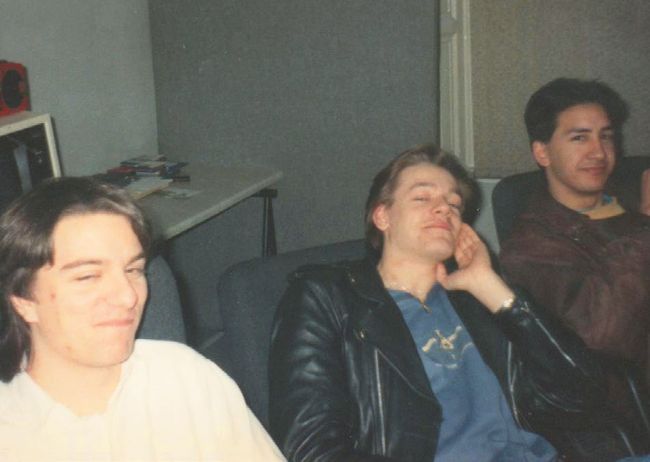
» Tom Pinnock, Damian Stones, and Andy Pang taking a break from converting Space Gun (1990).
Teenager Karl Jeffery started programming in the early Eighties. “I taught myself coding on the ZX81 and wrote some 1K games, then I developed a string of games for the Spectrum, but as soon as I finished one and shared it with my friends I went straight on to the next. It wasn’t until a friend suggested sending off some demo tapes that things moved from a hobby to a business.”
Artic published Karl’s Mutant Monty for the ZX Spectrum in 1984, Mad Caverns and Rocket Man Mike were published as listings in Your Computer magazine the following year. “After the Spectrum games I went to uni for a year to study computer science but found it boring and I missed games, so I dropped out when I was 19,” says Karl, who then took his first steps to turning his hobby into a profession. “For the first few years I was working as ‘Karl Jeffery T/A Images’ as it was just me working alone as a ZX Spectrum programmer, and I later incorporated the company as Images Software Limited.”
Karl set up an office in a flat above his dad’s kitchen shop in Fareham, Hampshire. “It was more a hippy commune than a dev studio,” he admits. “We had people sleeping on the floor and socialising together.” Images quickly began picking up work via another local development team based in Southsea, Hampshire, called Catalyst Coders, run by David Wainwright.
“Catalyst had taken on several coin-op conversion contracts from Activision UK, but they were struggling to complete the projects,” recalls Karl. To be able to complete the subcontracted work himself, Karl needed to attract more development talent, so he posted adverts in the local Job Centre, as Rob Hylands remembers. “I saw an advert for a programmer, and I got an interview. I took some of the stuff that I had been doing at home on the Spectrum. Unfortunately, Karl was looking for someone to help out on an Atari ST game, but he was impressed enough to loan me an ST and send me away to see what I could do.”
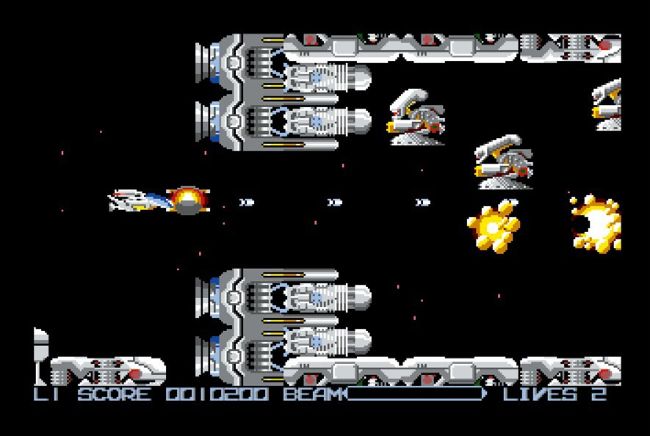
» [Atari ST] This conversion of R-Type to Atari’s 16-bit computer was officially Images’ first published game.
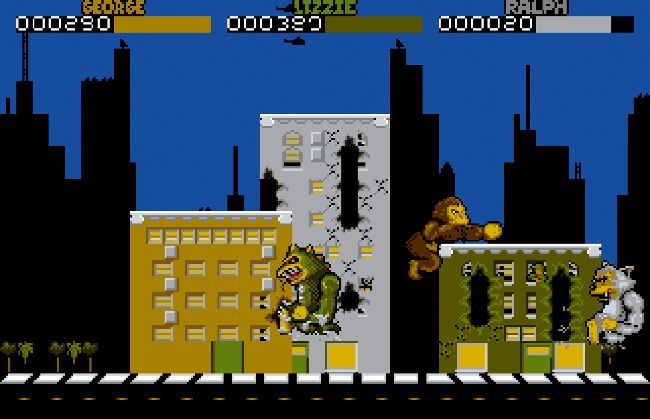
» [Atari ST] Images helped Catalyst by converting the arcade coin-op Rampage to the Atari ST.
Rob learned as much as he could about 68000 programming and returned with a demo of multiple balls bouncing around against each other. Rob got the job and immediately started working with Karl on the Atari ST conversion of the Irem coin-op R-Type for Activision’s publishing label, Electric Dreams. Rob later helped Catalyst programmer Bob Pape with the sound and music routines on the exceptional ZX Spectrum version. Images was soon called upon to perform a similar job for Activision via Catalyst on another coin-op conversion, the smash-’em-up arcade game Rampage, from Bally Midway. Karl once again contributed code to the Atari ST conversion.