ULTIMATE GUIDE X-OUT
IF THERE WAS ONE THING THE AMIGA COULDN’T COMPLAIN ABOUT, IT WAS A LACK OF HIGHQUALITY HORIZONTAL SHOOT-’EM-UPS: APIDYA, AGONY, PROJECT-X AND URIDIUM 2 ARE JUST SOME OF THE BEST KNOWN NAMES. WAS THERE ROOM FOR MORE SHOOTER ACTION? HELL, YEAH!
WORDS BY PAUL KAUTZ
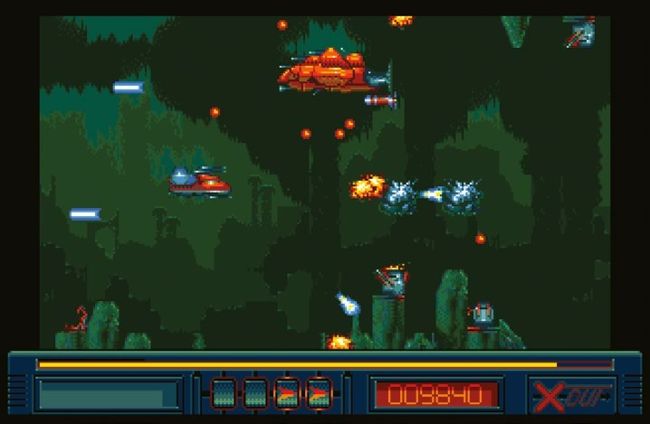
» [Amiga] Unlike most of its shooter counterparts, X-Out is not set in outer space, but underwater.
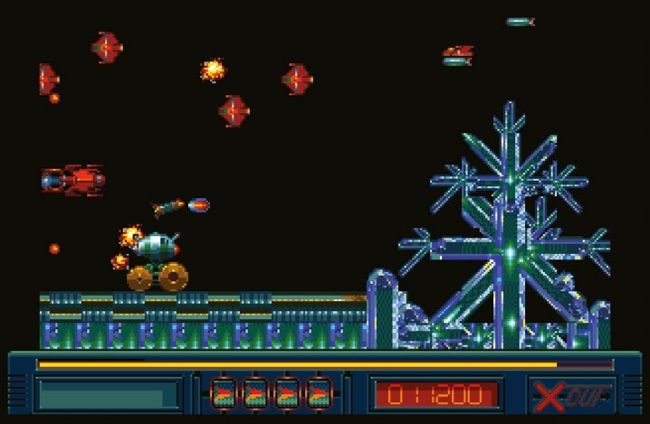
» [Amiga] X-Out is not only characterised by a large number of simultaneously attacking enemies, but also by its challenging level design.
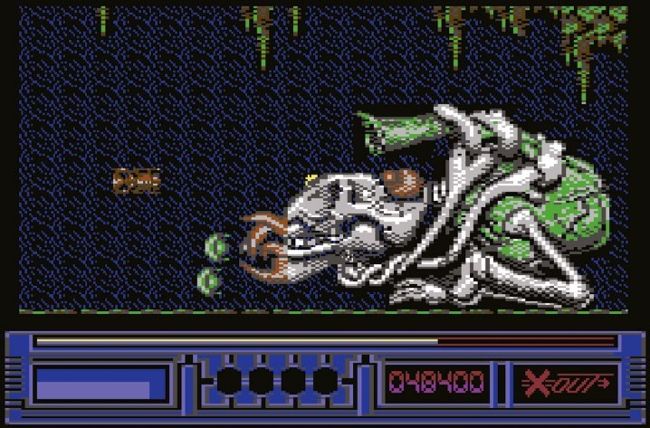
» [C64] No classic shoot-’em-up is complete without oversized boss monsters and X-Out is no exception.
If you’re going to go all out, you might as well do it right. So it was only logical that Rainbow Arts should advertise its X-Out as “the ultimate shoot-’em-up”. In retrospect, this may have been a bit of an exaggeration, but there is no doubt that the game, which was essentially developed by just five people, got a lot of things right: smooth lef t-to-right horizontal scrolling, a multitude of powerful weapons, a rechargeable super shot, plenty of enemies and impressive boss battles. The game also surprised with a very unusual scenario – for a change, the invading aliens were fought not in space, but underwater.
According to the game’s manual, this invasion took place in 2019, which was a long way off in 1990, the year the game was released. Many internet sources claim that at least the C64 version, which was assumed to have been developed first, was released in 1989 – but none of this statement is actually true, as game director Teut Weidemann confirmed to us. The Amiga and Atari ST versions were developed first, simultaneously even, thanks to an advanced cross-compiler by programmer Heiko Schroeder, and released in January 1990. The C64 version was a conversion developed in-house by Rainbow Arts and released a few months after the 16-bit originals. All versions were originally supposed to be released at the end of 1989, but this date could not be kept – according to Teut, the developer of the C64 version simply forgot to correct the year in its title screen.