ULTIMATE GUIDE: RESIDENT EVIL 2
IN 1998, CAPCOM RETURNED TO THE WORLD OF SURVIVAL HORROR WITH AN AMBITIOUS SEQUEL THAT WOULD PROPEL THE RESIDENT EVIL SERIES INTO THE STRATOSPHERE. JOIN US AS WE REVISIT EVERYONE’S FAVOURITE NECROPOLIS, RACCOON CITY, AND REACQUAINT OURSELVES WITH ITS SHAMBLING POPULACE
WORDS BY MARTYN CARROLL
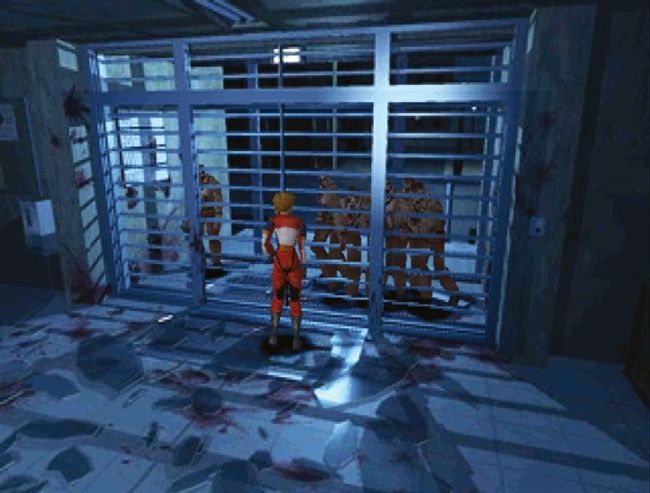
» [PlayStation] In the scrapped Resident Evil 1.5 build, Claire Redfield’s spot was occupied by a different character, Elza Walker.
For fans of the first
Resident Evil,
the game’s 1997
Director’s Cut
was an eagerly anticipated release.
This wasn’t necessarily because of the core game – which added extra modes and a few new frissons to the survival horror classic – but because it came bundled with a playable demo of Resident Evil 2.
This preview finally lifted the veil on the sequel that Capcom had been teasing for more than a year, allowing players to finally experience the aftermath of the ‘mansion incident’. In the demo you played new character Leon Kennedy, a rookie cop who arrives in Racoon City just as a living dead rave hits full swing. Whereas the original was a bit of a slow burn, the sequel dropped you into the thick of it, on a city street surrounded by multiple zombies – who were hungry, and on fire. A frantic dash through some alleyways, via a gun shop where you briefly met the unfortunate owner Kendo, brought you to the Raccoon City Police Department and its promised refuge.
“WHEREAS THE ORIGINAL WAS A SLOW BURN, THE SEQUEL DROPPED YOU INTO THE THICK OF IT, ON A STREET SURROUNDED BY ZOMBIES”
The demo only offered about 20 minutes of play, but it was clear that producer Shinji Mikami, director Hideki Kamiya and their team had turned up all the dials. The zombies – in that innocent time when they were still the domain of George Romero movies and Italian gore flicks, and not yet done to death in popular culture – were the stars of the show and they were given appropriate attention. They were no longer limited to the country clodhoppers from the original and now wore various outfits. Female zombies were also introduced, and they all ambled around with increased curiosity, their heads slowly turning to track you, arms outstretched. The way they recoiled to gunshots was more lifelike (irony acknowledged), and it was now possible to blow them to bits using the more powerful weapons – arms flying, legs akimbo. Brilliant.
Character animation on the whole was improved and the pre-rendered backgrounds were far more detailed. This was particularly true in the ruined city streets and the Gothic police station building. Perhaps the most surprising aspect of the demo was that it looked quite different to the early preview screens shown previously. As we now know, the original build of the sequel – officially Biohazard 2 Prototype, unofficially Resident Evil 1.5 – was scrapped due to quality concerns and the game was radically reworked. This decision pushed the release date back to early 1998 and it’s claimed that Resident Evil: Director’s Cut was created to compensate for the delay, but we don’t buy that – this was Hyper Turbo Arcade Edition Capcom we’re talking about, after all. It’s clear that the Japanese giant was in franchise-building mode and the Resident Evil series was a slow train gathering steam.