LOST IN THE SHADOWS
THE EXECUTIVE PRODUCERS OF INTERVIEW W ITH THE VAMPIRE DISCUSS THE FUTURE OF LESTAT, LOUIS, CLAUDIA AND WHERE THE ANNE RICE UNIVERSE IS HEADING
WORDS: TARA BENNETT
IS THERE A BETTER EXAMPLE OF the agony and the ecstasy of dysfunctional relationships than the vampiric love/hate story of Louis de Pointe du Lac and Lestat de Lioncourt? Gothic novelist Anne Rice introduced the poster boys of homoerotic hotness in her 1976 novel Interview With The Vampire, and vampire storytelling took off in new directions.
Yet despite the characters’ incredible popularity, Rice’s creations have sputtered in live-action films, with Hollywood clearly too chicken to go as far as her books do. Lestat was disappointingly watered down in interpretations played by Tom Cruise in Interview With The Vampire (1994) and Stuart Townsend in Queen Of The Damned (2002).
It wasn’t until AMC’s 2022 television adaptation of Interview With The Vampire that series executive producer and showrunner Rolin Jones and his team cracked Rice’s sexy/scary/tragic alchemy via the smouldering chemistry of Jacob Anderson’s Louis and Sam Reid’s Lestat.
FATT ER HEARTS
In keeping with the first half of Rice’s original novel, season one closed with Louis revealing to his human interviewer, Daniel Molloy (Eric Bogosian), how he and their sired “daughter” Claudia (Bailey Bass) orchestrated Lestat’s brutal murder. Two years later, the series returns picking right up with the repercussions of that betrayal, as Louis and Claudia scour the far reaches of Europe seeking others of their vampiric kind.
Executive producers Jones and Mark Johnson tell SFX that while the hiatus might have felt long for audiences, there was no break for the writers and crew, as they moved production from New Orleans to Prague and Paris soon after. “We were all a little bit like Louis and Claudia,” Jones says. “Packing up, strangers in a strange land.”
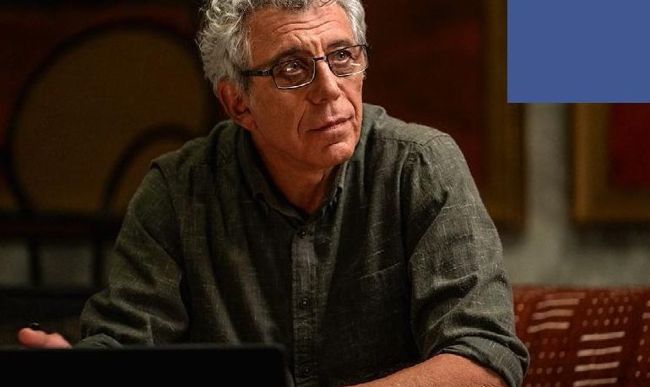
Eric Bogosian returns as interviewer Daniel Malloy.
With the critical success of the show, Jones was empowered to continue crafting a narrative that would surprise readers of the book and viewers new to the story alike. “The challenges all came in the adaptation of the second half because there’s a lot to plot,” he explains. “We’ve tried to figure out how we can be as ‘honourable’ and also aggressive, like we were in season one, with something that isn’t plot-driven. We clearly went bigger, which can be a pitfall for folks. But I think we work really, really hard and were very critical on ourselves to make sure that we didn’t lose any emotional depth.