WHERE THE DUEGARS DWELL
What’s short, hairy and lures us to the moors of Northumberland -Pete, or a Duegar?
WORDS & PHOTOGRAPHY PETE SCULLION
North of Hadrian’s Wall and south of the Scottish border lies Northumberland, a land that blends the culture of its neighbours with its own, along with a solid dollop of Norse and Danish influence, courtesy of some enterprising plunderers.
It’s in search of one of the lesser-known branches of this that I have met local and mountain biking legend Ian Jones and his pal Tim in Thropton which lies just down the road from the equally sleepy Rothbury in the Coquet Valley. High above Thropton sits Simonside, a popular walking spot for locals and Newcastle residents alike – it is here that my quarry is said to reside.
Not do-gooders
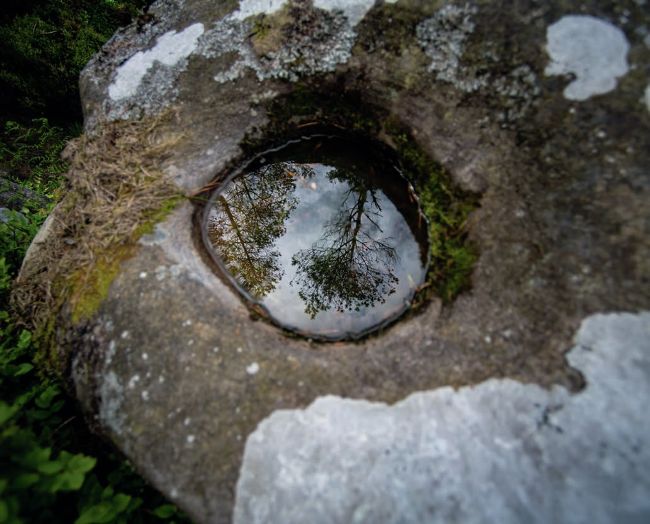
Eye of frog, toe of newt...
We are following the story of the duegars. Much like myself, they’re short and hairy creatures, but unlike myself, fond of luring unsuspecting travellers to their deaths. Duegars are dwarves of Old Norse myths and come with a myriad of different spellings in Middle and Old English, as well as Northumbrian dialect. Beyond the multiple spellings there are multiple pronunciations, and more than one local has pronounced duegar differently: ‘durjers’, ‘dyoogars’… the lot.
In Frederick Grice’s The Duergar in Folk Tales of the North Country (1944), duegars are described as short and wear a lambskin coat, moleskin trousers and shoes, and a hat made of moss stuck with a feather. Quite the ensemble.
In Norse mythology, it is said that duegars were once maggots that ate the flesh of the dying giant Ymir, and were given human-like knowledge and powers. Like the dwarves of Middle Earth, their Nordic cousins were skilled metalworkers, creating weapons and armour without parallel, and making fine jewellery out of precious metals and stones. There is no account of Simonside duegars doing anything but tricking people to their deaths. Either way, these mischievous dwarves used lit lanterns to lure unwary, and often lost, travellers into bogs or off cliffs. Tales tell of duegars welcoming those wandering the open hills, offering shelter in their small huts.