How to Teach Evolution to Religious Students
BY SURAT PARVATAM
IN A STUDY CONDUCTED AT A PUBLIC COLLEGE IN THE United States, only 50 percent of the students said that they believe in evolution. More broadly, a Gallup poll found that only 44 percent of adult Americans said that they believe humans were created by God and that evolution had no part in the process.1 According to a Pew Research Centre survey, 60 percent of Americans believe that “humans and other living things have evolved over time,” while one-third of them reject evolution and believe “humans and other living things have existed in their present form since the beginning of time.” About a quarter of the adult American population (24 percent) also thinks that “a supreme being guided the evolution of living things for the purpose of creating humans and other life in the form it exists today.”2
Apart from climate change, evolution is curently the most charged and debated topic in the public sphere. This is mainly because many students and adults feel that there is a conflict between their religious beliefs and acceptance of evolution. Unless efforts are taken by scientists and educators to change the way we communicate about evolution, this resistence to accepting evolution will persist and may even increase.
CREATIONISM CONTINUUM

1. FLAT EARTH CREATIONISM Young Earth—less than 10,000 years old
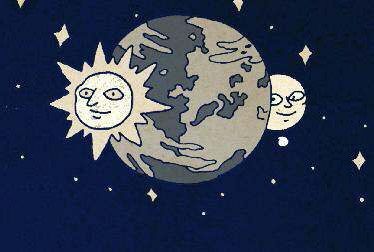
2. GEOCENTRIC CREATIONISM Young Earth—less than 10,000 years old
Illustrations by Simone Rein
Reasons for Disbelief
In a study conducted in a large Midwestern university, almost 30 percent of students in junior-and senior-level biology courses said that they do not accept evolution.3 Many students in the study reported being religious, although they varied in their strength of religious identification and the type of faith practiced. Several studies have tried to determine the role of religion in accepting or rejecting evolution. Results from multiple studies strongly suggest that it is one of the primary factors predicting a person’s beliefs about evolution. “There is often the inaccurate perception that there are only two extremes,” said Dr. Sara Brownell (in an email to me), a neuroscientist at Arizona State University turned fulltime education researcher who has worked extensively on how to reduce this perceived gap: “one can either accept evolution and be an atheist or one can be religious and reject evolution.”