You are currently viewing the United Kingdom version of the site.
Would you like to switch to your local site?
12 MIN READ TIME

Duped by Data Mining

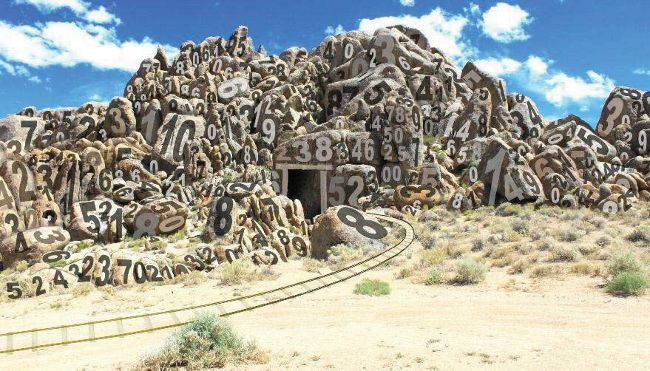
The photo for this illustration is of the Alabama Hills in California. It was taken by David Patton.

DATA MINING INVOLVES RANSACKING DATA AND searching for patterns, without being motivated by theories, common sense, or wisdom. The inescapable problem is that patterns can always be found, even in random numbers, so finding a pattern proves nothing at all.

Decades ago, data mining was considered a sin, akin to plagiarism. If someone presented research that seemed implausible or too good to be true (for example, a near perfect correlation), a rude retort was “data mining!”

Nowadays, data mining is often considered a virtue, not a vice. In 2008, Chris Anderson, Editor-in- Chief of Wired, wrote an article with the provocative title, “The End of Theory: The Data Deluge Makes the Scientific Method Obsolete.” Anderson argued:

The new availability of huge amounts of data, along with the statistical tools to crunch these numbers, offers a whole new way of understanding the world. Correlation supersedes causation, and science can advance even without coherent models, unified theories, or really any mechanistic explanation at all.

A 2015 article in The Economist argued that macroeconomists (who study unemployment, inflation, and the like) should abandon the scientific method and, instead, become data miners:

Macroeconomists are puritans, creating theoretical models before testing them against data. The new breed ignore the white board, chucking numbers together and letting computers spot the patterns.

The Economist is a great magazine, but this was not great journalism. Let’s look at several examples of worthless pattern spotting.

Fighting Crime With Facebook

A data savvy amusement park data mined the Facebook accounts of local residents to see if surges and slumps in the use of certain words might be helpful in predicting park attendance. They identified the 200 most popular words (100 nouns, 50 adjectives, and 50 adverbs) in the English language. Then they collected daily data for 10 summer weeks on the frequency with which these 200 words were used in status updates on Facebook and amusement park attendance the next day. All the data were scaled to equal 100 at the start of the study, thus a value of 101 means 1 percent more than initially, and 99 means 1 percent less.

Unlock this article and much more with
You can enjoy:
Enjoy this edition in full
Instant access to 600+ titles
Thousands of back issues
No contract or commitment
Try for 99p
SUBSCRIBE NOW
30 day trial, then just £9.99 / month. Cancel anytime. New subscribers only.


Learn more
Pocketmags Plus
Pocketmags Plus

This article is from...


View Issues
Skeptic
24.1
VIEW IN STORE

Other Articles in this Issue


COLUMNS
The SkepDoc
Is Low-Dose Radiation Good for You? The Questionable Claims for Hormesis
The Gadfly
Define Your Terms (or, Here we Go Again)
ARTICLES
Making Gasoline from Water
John Andrews and the Invention of a Legend
Online Gaming
A Virtual Experiment in the Dark Side of Human Nature
How Science Will Explain and Fix Fake News
THE INSTANT, GLOBAL SPREAD OF INFORMATION through the
The Cult of Falun Gong
How this Group Raises Big Money Using a Dance Troupe and its Own Victimhood
The Opioid Epidemic Misunderstood
DRUG OVERDOSE IS NOW THE LEADING CAUSE OF death for
Why the Human- Centered View Has Not Served us Well
“Humanity takes itself too seriously. It is the world’s
Behe’s Last Stand
The Lion of Intelligent Design Roars Again
Straw Man on a Slippery Slope
The Case Against the Case Against Postmodernism
A Disproof of God’s Existence
THE TRADITIONAL DEFINITION OF GOD CREDITS HIM WITH
REVIEWS
Coddling Untruths
A Review of The Coddling of the American Mind: How Good Intentions and Bad Ideas are Setting Up a Generation for Failure by Greg Lukianoff and Jonathan Haidt
How to Know What’s Really Real
A review of The Skeptics’ Guide to the Universe: How to Know What’s Really Real in a World Increasingly Full of Fake, by Steven Novella with Bob Novella, Cara Santa Maria, Jay Novella, and Evan Bernstein.
What Are Ghosts, Anyway?
A review of Investigating Ghosts: The Scientific Search for Spirits by Benjamin Radford
Hoaxed!
Reviews of Bunk: The Rise of Hoaxes, Humbug, Plagiarists, Phonies, Post- Facts, and Fake News by Kevin Young and Hoax: A History of Deception: 5000 Years of Fakes, Forgeries, and Fallacies by Ian Tattersall and Peter Nevraumont
The Mead-Freeman Controversy 4.0
Review of Truth’s Fool: Derek Freeman and the War Over Anthropology by Peter Hempenstall.
CONTRIBUTORS
Michelle E. Ainsworth holds an MA in history. She enjoys
JUNIOR SKEPTIC
QUEST FOR THE TRUTH ABOUT DUNGEONS & DRAGONS
Today we’ll sharpen our pencils, pick up our magical
INVENTING WARGAMES
As we’ll learn, role-playing games (RPGs) such as Dungeons
PLUNGE INTO FANTASY
Strategy board games like Risk were complicated enough
A DARKER MAZE
It took a year to sell the first thousand Dungeons
THE SATANIC PANIC
Fear of Satanic cults trickled first through certain
D&D’s TRIUMPHANT RETURN
Eventually the Satanic Panic faded away. The FBI concluded
Chat
X
Pocketmags Support