Dress Codes
BY DAVID P. BARASH
It’s not at all clear that clothes make the man, or woman. However, it is clear that although animals don’t normally wear clothes (except when people dress them up for their own peculiar reasons), living things are provided by natural selection with a huge and wonderful variety. Their outfits involve many different physical shapes and styles, and they arise through various routes. For now, we’ll look briefly just at eye-catching color among animals, and the two routes by which evolution’s clothier dresses them: sexual selection and warning coloration.
Human observers are understandably taken with the extraordinary appearance of certain animals, notably birds, as well as some amphibians and insects, and, in most cases, the dressed-up elegance of males in particular. In 1860, Darwin confessed to a fellow biologist that looking at the tail of a peacock made him “sick.” Not that Darwin lacked an aesthetic sense, rather, he was troubled that his initial version of natural selection didn’t make room for animals having one. After all, the gorgeous colors and extravagant length of a peacock’s tail threatened what came to be known (by way of Herbert Spencer) as “survival of the fittest,” because all that finery seemed to add up to an immense fitness detriment. A long tail is not only metabolically expensive to grow, but it’s more liable to get caught in shrubbery, while the spectacular colors make its owner more conspicuous to potential predators.
Eventually, Darwin arrived at a solution to this dilemma, which he developed in his 1871 book, The Descent of Man and Selection in Relation to Sex. Although details have been added in the ensuing century and a half, his crashing insight—sexual selection—has remained a cornerstone of evolutionary biology.
Sexual selection is sometimes envisaged as different from natural selection, but it isn’t. Natural selection is neither more nor less than differential reproduction, particularly of individuals and, thereby, genes. It operates in many dimensions, such as obtaining food, avoiding predators, surviving the vagaries of weather, resisting pathogens, and so on. And yet more on! Sexual selection is a subset of natural selection that is so multifaceted and, in some ways, so counterintuitive that it warrants special consideration, as Darwin perceived and subsequent biologists have elaborated.
The bottom line is that in many species, bright coloration—seemingly disadvantageous because it is both expensive to produce and also carries increased risk because of its conspicuousness— nonetheless can contribute to fitness insofar as it is preferentially chosen by females. In such cases, the upside of conspicuous colors increasing mating opportunities compensates for its downsides.
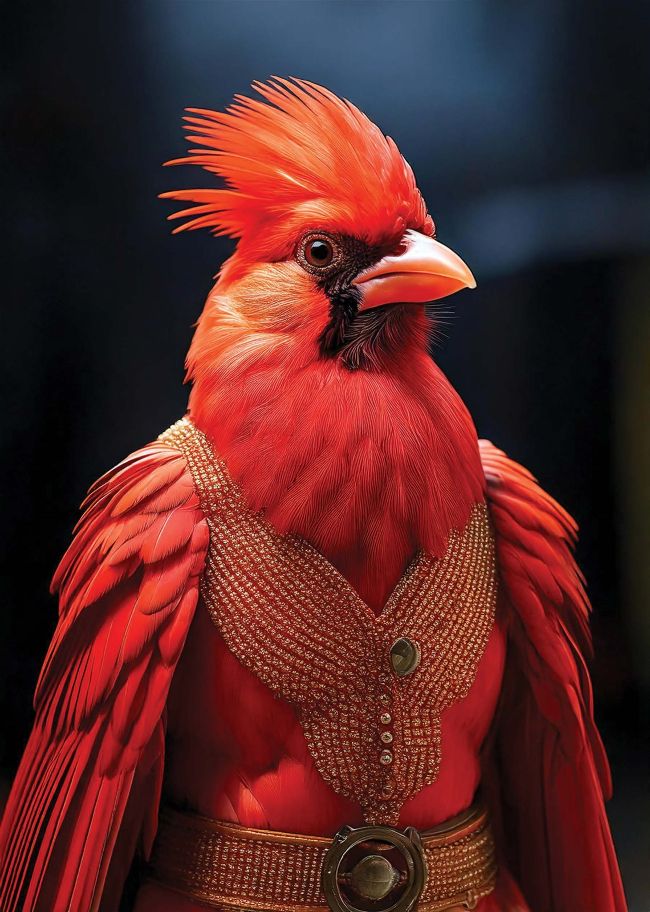
Nothing in science is entirely understood and locked down, but biologists have done a pretty good job with sexual selection. A long-standing question is why, when the sexes are readily distinguishable (termed, sexual dimorphism) it is nearly always the males that are brightly colored. An excellent answer comes from the theory of parental investment, first elaborated by Robert Trivers. The basic idea is that the fundamental biological difference between males and females is not in their genitals but in the defining difference between males and females, namely, how much they invest when it comes to producing offspring. Males are defined as the sex that makes sperm (tiny gametes that are produced in prodigious numbers), while females are egg makers (producing fewer gametes and investing substantially more time and energy on each one).