HYUNDAI IONIQ 6
SLIP STREAM
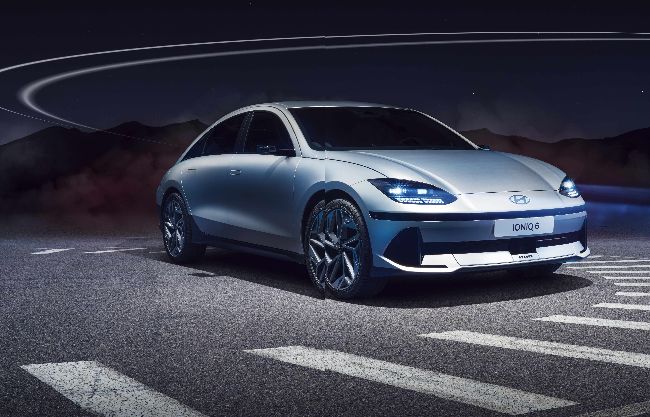
While the angular Ioniq 5 is a Seventies throwback, the 6 is inspired by streamliners from the Twenties and Thirties. The results are... challenging
WORDS JASON BARLOW
PHOTOGRAPHY JOHN WYCHERLEY
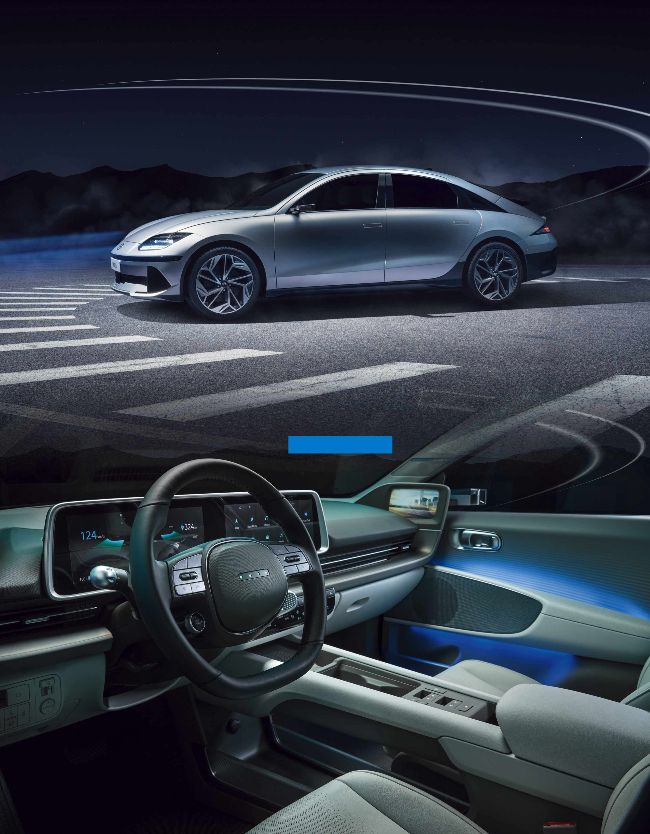
It’s 50/50 as to whether you emerge from this “mindful cocoon” a moth or butterfly
“THAT’S THE THING WITH STREAMLINED SHAPES: THEY LOOK GREAT BUT THEY’RE DIFFICULT TO EXECUTE”
We know what you’re thinking, has Hyundai’s design department just dropped the ball spectacularly for the first time in years? To put it kindly the new Ioniq 6 is, er, challenging, but you may need to do a bit of internet cross-referencing to fully assimilate what you’re looking at here, because this is a car that doesn’t shy away from its influences.
And what influences they are. Hyundai’s HG Wells-style time machine stopped off in the mid-Seventies for the rapturously received Ioniq 5, but this time we whirl further back to the Twenties and Thirties, a spectacularly creative time for automotive and transport design.
Back then, streamlining was all the rage, and the results were often fascinatingly barmy. Take the Stout Scarab, for example, designed by John Tjaarda (whose son Tom would later make a name for himself), an Art Deco and aviation-inspired masterpiece that also featured a unitary chassis and ingenious packaging. Or the one-off Phantom Corsair, commissioned by Rust Heinz (yes, the beans and ketchup Heinz) in 1938. Perhaps more pertinent is the Tatra 87, whose finned fastback was designed by Paul Jaray, who helped design those epic Zeppelin airships. Saab, too, had aviation roots, and its first production car, the 92, also gets a namecheck from Hyundai’s vice president of styling, SangYup Lee. See also the Douglas C-47 Skytrain, which actually did fly.