HEADLINER
VOLTE-FACE
BECAUSE THEY DON’TMAKE EMLIKE THEY USED TO
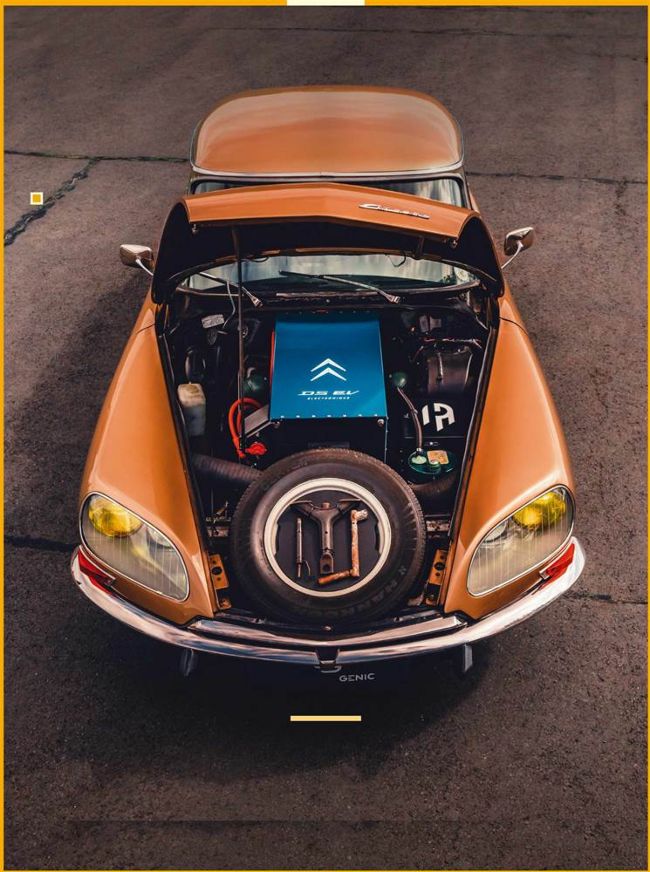
Is it possible to swap out the beating heart of a Citroen DS for batteries, and still retain its je ne sais quoi? Mais, oui!
WORDS PAUL HORRELL
PHOTOGRAPHY MARK FAGELSON
We really haven’t seen Paul this excited to drive a car in quite a long time
Behind me, sitting in the big sofa of a back seat, I have passengers. They’re the ghosts of the DS’s creators, but the apparition doesn’t feel sinister. They are surely delighted, finally satisfied that after all these years this is exactly the DS they would have built were they able.
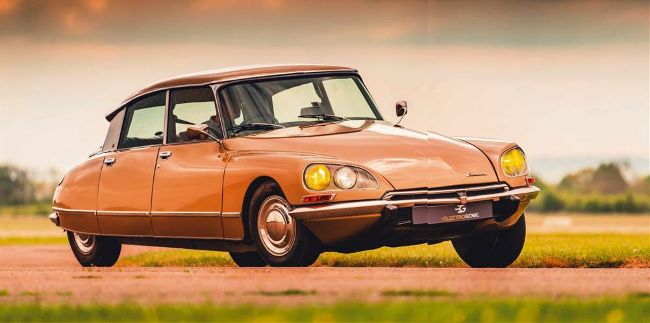
It’s beyond argument that the DS is one of the most beautiful cars ever. But also for its era the most advanced, both stylistically and technically. During its Paris show appearance, Citroen took 80,000 deposits, a record unbeaten until Tesla’s Model 3. Right from its 1955 debut it had high-pressure hydraulics for the self-levelling suspension, steering and brakes, which had discs mounted inboard to cut unsprung mass. It ran on radial tyres.
The monocoque body had demountable panels and a lightweight glass fibre roof. Later, that shark nose got faired-in headlamps that steer around corners.
But none of that is what we’re here to talk about. Because missing from that list of advances is the propulsion. The DS was meant to have a new flat six. But Citroen ran out of money, so it inherited the boring pushrod four from the older Traction Avant.