A BRIEF HISTORY OF
Porsche Seats
Like much else in the Porsche firmament, its seats have become a minor phenomenon in themselves. Total 911 charts their evolution over 60 years
Written by Kieron Fennelly Photography courtesy Corporate Archives Porsche AG
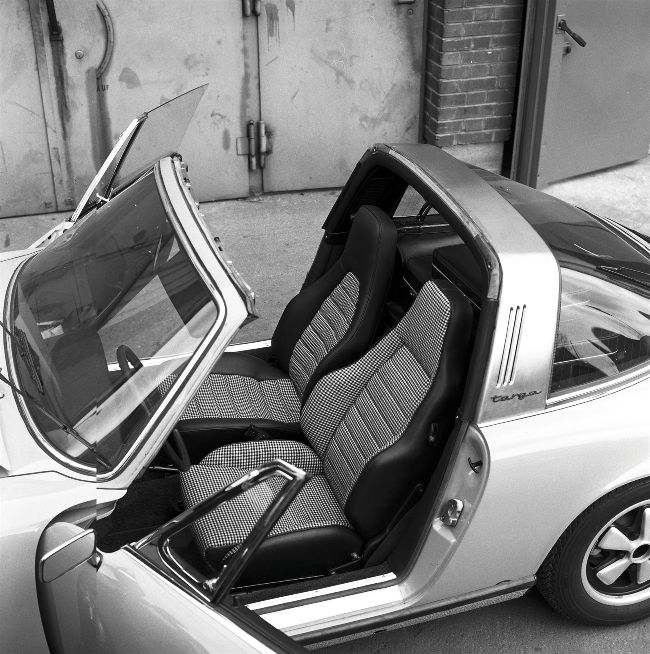
This 2.7-litre 911 Targa, photographed in 1974, features both tombstone and Recaro Sports seats with different upholstery styles
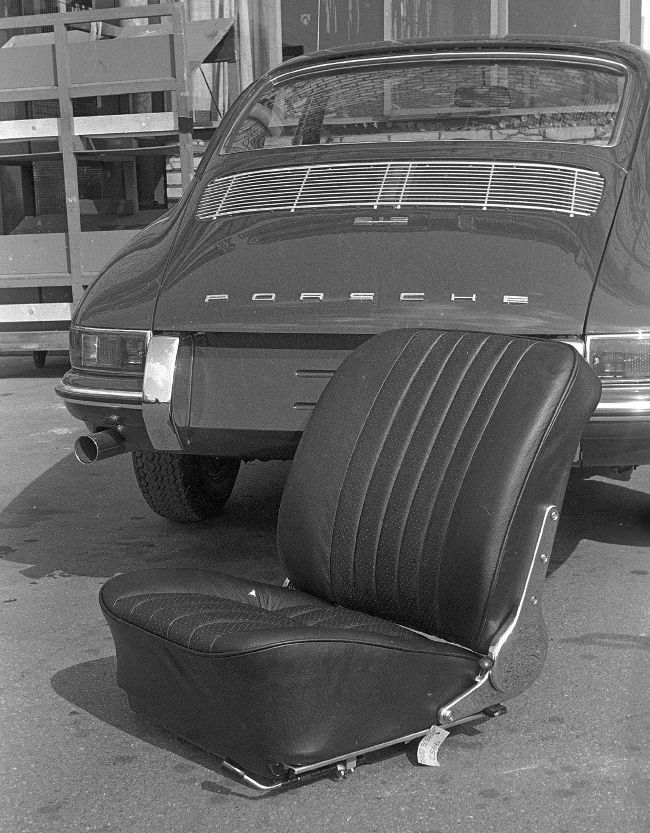
An example of the Recaro leather seat that was fitted in the 2.0-litre 911 from 1967
An engineering consultancy turned sports car manufacturer, Porsche was always concerned that the driving environment of its cars reflected what Ferry expected owners would want from his cars. The buyers were keen drivers and often racers. They needed a reactive, agile sports car with controls that were to hand and responded exactly to whatever manoeuvre they required. Hence the pre-A 356’s quick, light steering and (by 1952) a competition-designed gearbox.
Ahead of the driver by then was a dashboard with clear, informative instruments, and especially, a rev counter of larger diameter than the other dials placed directly in front of the driver. But if Porsche designed the car that would always be known by its Typ number (356) and built the engine, chassis and running gear, body manufacturer was undertaken by Stuttgart coachbuilder, Reutter. As part of the contract Reutter also produced and installed the seats and upholstery.
By 1959, Porsche was well established as a producer of upmarket sports cars and the quality of Reutter’s fittings and furnishings in the 356B reflected this. Seats were available in seven colour schemes in either fabric or vinyl, and had adjustable backrests.
Relatively soft, they lacked any lateral support and for its competition models Porsche often turned to local specialists to produce tightfitting, rather crude bucket seats of the sort it had originally bought in for its 1953 Max Hoffman-inspired, lightweight Speedster.
In the 1950s specialist equipment was largely unknown. An item like a racing seat would probably have been farmed out to a local artisan. Reviewing Porsche history, it’s 1967 before a reference can be found to a named specialist seat supplier. In his quest to make the prototype 911R ever lighter, Ferdinand Piëch turned to a newly-established Stuttgart company, Scheel, to make a feather-light, closely fitting and heavily bolstered driver’s seat. Today, Scheel-Mann is a well-known aftermarket seat specialist, and that requirement for the 911R may well have been the company’s first significant order.