ICON
Kim Thayil
AS SOUNDGARDEN’S LEAD GUI TARIST, KIM THAYIL’S HEAV Y, DARK AND PSYCHEDELIC GROOVES SET THE TONE FOR ALT-ROCK. NOW, ON THE 30TH ANNIVERSARY OF THE BAND’S CLASSIC ALBUM BADMOTORF INGER, HE REVEALS THE ORIGINS OF HIS UNIQUE SOUND. HIS MOTTO: “I LIKE NOISE!”
Interview Amit Sharma
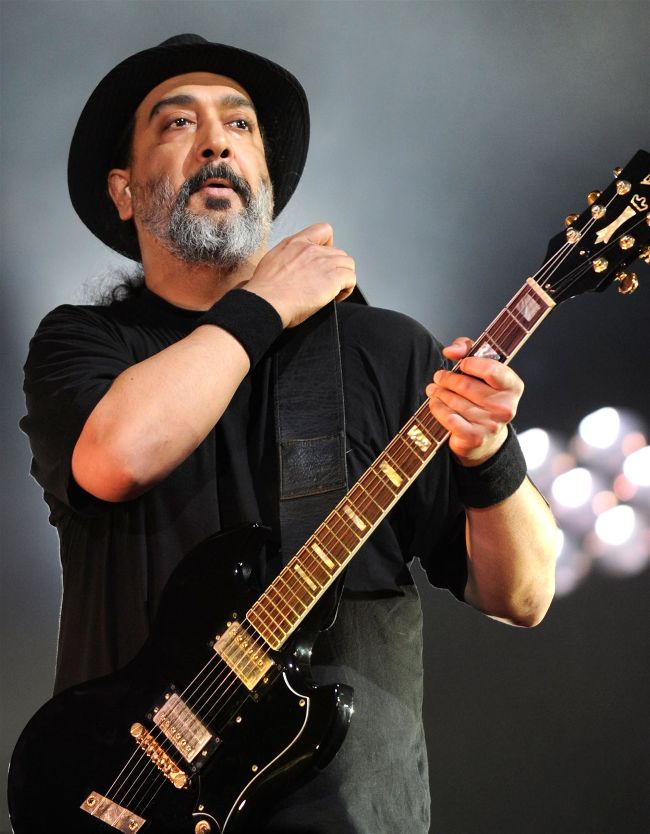
Photo Getty
I n 1991, three albums by Seattle bands had a seismic effect on the sound of rock music - Nirvana’s Nevermind, Pearl Jam’s Ten and Soundgarden’s Badmotorfinger. Like punk before it, grunge was a revolutionary force, and Soundgarden, the first of those bands to sign to a major label, played a leading role as architects of the ‘Seattle Sound’.
Badmotorfinger was the band’s third album and the first to feature the classic line-up of Chris Cornell (vocals, rhythm guitar), Kim Thayil (lead guitar), Matt Cameron (drums) and Ben Shepherd (bass). It was also the heaviest of those three era-defining albums of 1991 – with Thayil delivering screaming leads and scorching riffs, and combining altered tunings and odd-time meters into his own church of psychedelic noise.
30 years on, as Thayil speaks to TG from his home in Seattle, his thoughts are focused on the album that stands tall as the pinnacle of Soundgarden’s career -a career which ended, tragically, with the death of Chris Cornell in 2017. Most of all, he remembers the fun that he and Cornell had working as a two-guitar team. But in an hour-long Zoom call, the conversation turns to all things six-string-related.
First, he offers an apology. “I’ll try my best for you,” he grins from behind his white wizard-like beard. “But I must admit, I fail to be on a first-name basis with my gear. I can probably come up with the general make and then the specifics somehow elude me!”
Even so, he has plenty of sound advice to pass on - beginning with how an “affordable” guitar was pivotal to his development as a self-taught player.
You’ll know when you find the right instrument for you...
Unfortunately, I don’t think this advice is given to younger guitarists. Get something that feels good to play. Don’t buy a cheap guitar that’s tough to play. It is discouraging. It will take you longer to learn those chords. You want something that will facilitate your learning and give you the rewards to encourage you to go on. The S-100 is the guitar I bought when I was 18, and ultimately was the one I could afford to buy. I had started playing a few years before that, when I was 15. So at that stage I was learning new techniques and getting better gradually, as I was self-taught. But I had to buy a guitar that I could afford. And the Guild S-100, which I bought in ’77 or ’78, was pretty affordable. It only cost me $250, which was way less than a Les Paul or Strat. I think friends would have directed me to those other guitars, but this one looked good – it was black – and it was in good condition with great action. When I picked it up, I found that it was easy to play and had a fast neck.”