FINAL FRONTIER
Control of pollution and aquaculture in Eastern Canada is providing habitats where Atlantic salmon can thrive, writes Robbie Hollis
ROBBIE HOLLIS is a co-founder of City Flickers and serves as a trustee of WildFish.
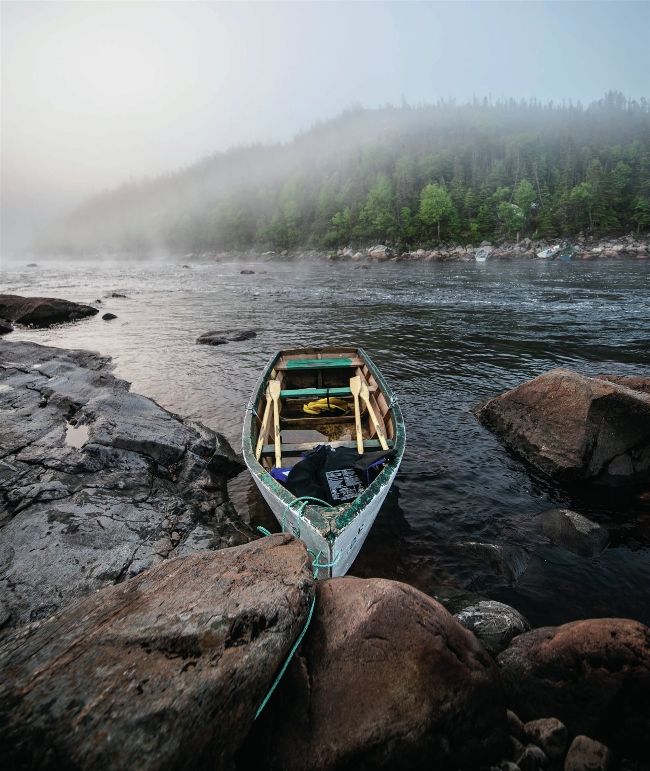
PHOTOGRAPHY:
TWINPEAKES FLY FISHING AND ROBBIE HOLLIS
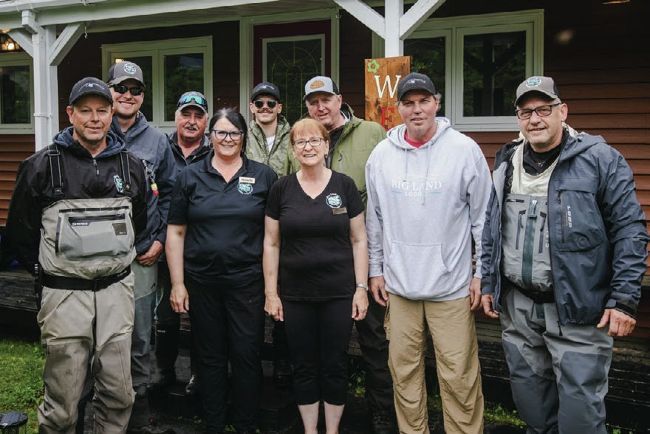
Welcoming guides and chefs at the family-run Big Land Lodge
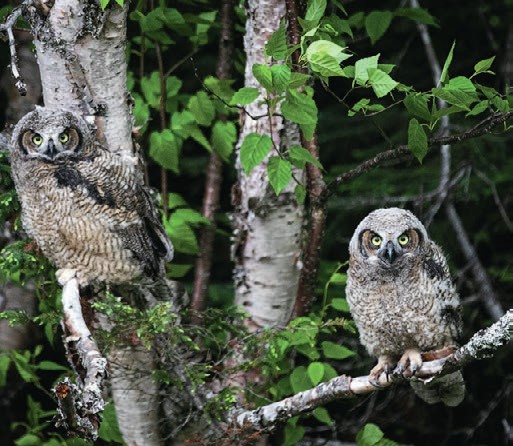
Northern hawk owls don't miss a thing
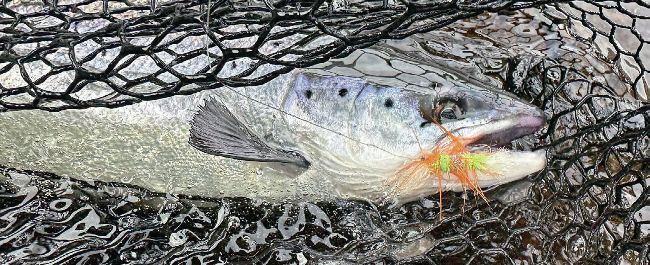
One that rose to a Dirty Bomber
THE
PINWARE RIVER FLOWS
through the south of Labrador in Eastern Canada, running into the strait of Belle Isle, which separates the mainland from Newfoundland.
It’s close to the border of Quebec and the locals have a unique accent, blending Irish, French and North American with a hint of Westcountry to create an amalgam that you would never place without having heard it.
After a flight into Goose Bay from Halifax, anglers staying at Big Land Lodge must make a 350-mile drive down the trans-Labrador highway, the only road in either direction, and it quickly becomes obvious why they nickname the area ‘The Big Land’. A black bear and a few very large moose were spotted on our drive, which was mostly through a forest of black spruce showing signs of charring from last year’s wildfires. Having been fortunate enough to fish in Norway for the past few years, we chose Labrador because of its similarities in landscape and beauty but also its unrivalled vastness. Being so remote, it provides the very real chance of larger salmon, where numbers are still plentiful in a mostly untouched landscape away from the perils of industrial salmon farming and pollution that plague many other destinations. It is an isolated place that has countless rivers, each with their own bountiful runs and varying methods of approach to fishing.