THE MAKING OF...
There She Goes
How Lee Mavers’ chiming ’60s-tinted tune went through the mill before becoming a foundation stone of Britpop
by The La’s
WHATEVER happened to Lee Mavers? After the success of “There She Goes” in 1990, the La’s singer disappeared from public view, only occasionally resurfacing: for afull La’s tour in 2005 and most recently as part of an acoustic duo in 2011, tantalisingly performing afew new songs alongside the hallowed cuts from his old band’s sole, self-titled album. In the intervening years, apocryphal tales of Mavers have come to light –that he hunted for “’60s dust” to sprinkle on studio equipment or spent years re-recording The La’s debut while simultaneously amassing piles of amazing new songs that remain, it seems, unrecorded.
The La’s formed in Liverpool in 1983. The band went through astring of members and producers as they attempted to record their debut album, driven by Mavers’ exacting, and exasperating, vision. Eventually, afrustrated record company intervened and in 1990 released aversion of the album reclaimed by producer Steve Lillywhite. Although the album arrived to huge acclaim, the band instantly disowned it and Mavers vowed to never release another record.
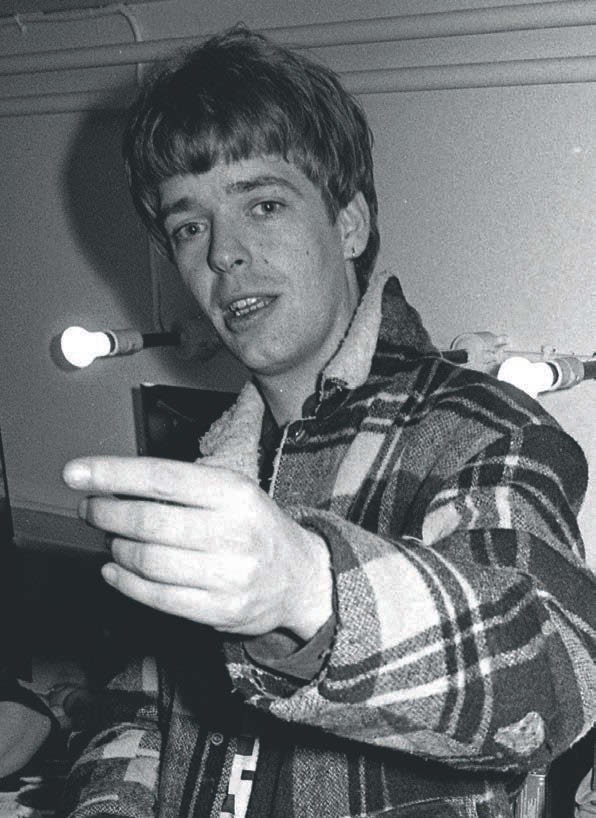
“Looking for the magic”:
Lee Mavers backstage in Rennes, France, 1989
MARTYNGOODACRE/GETTYIMAGES
Whatever the truth or the future, The La’s left behind a wonderful album, rich with sublime songcraft, of which “There She Goes” became the band’s biggest hit. With its guitars like churchbells, the lyrics ache with unspecified or unrequited longing – lines such as “racing through my brain” and “pulsing through my veins” have led to speculation that the song is about heroin, something denied by former band members including Mavers.
Bassist/backing vocalist John Power went on to huge Britpop-era success in Cast –they recently released “Love Is The Call”, their first single for six years, with an album to follow. Although Power lives in London now and hasn’t seen his old bandmate for “ages”, he sympathises with Mavers’ struggle to reconcile the sounds he heard in his head with the realities of the industry and its recording facilities.