George Harrison
Let It Roll
To mark the 50th anniversary of GEORGE HARRISON’s mysterious and magnificent second solo album, Living In The Material World, his great friend and go-to drummer JIM KELTNER recalls their first meeting in 1971 and how they came to make the record, the first of numerous auspicious collaborations. Their “brotherly” relationship continued for a further 30 years – in good times and more challenging ones – cemented in friendship, laughter, truth and music. “He always spoke about the conflict in his life,” says Keltner. “It was apparent when you knew him, you could see it. George had the beautiful ability to put it into his songs.”
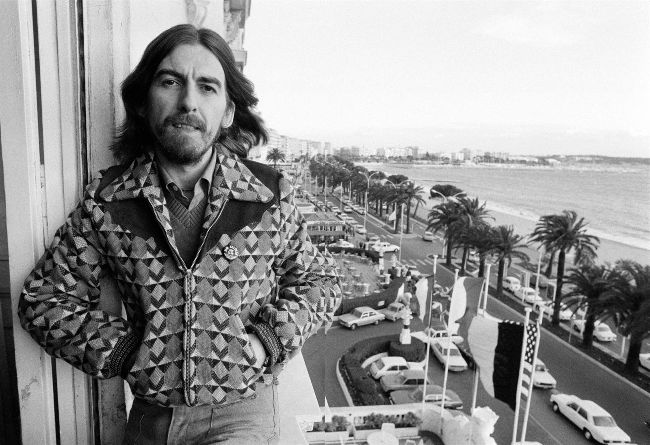
Coffee and Croisette: George Harrison in Cannes,January30, 1976, wearing a “Jim Keltner FanClub” badge
Photo by MICHAEL PUTLAND MICHAELPUTLAND/GETTY IMAGES
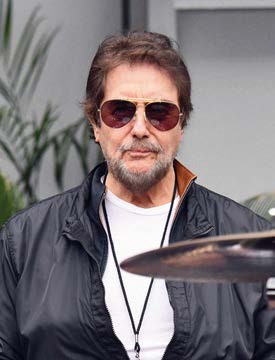
“Istill remember the feel”: JimKeltner, July2019
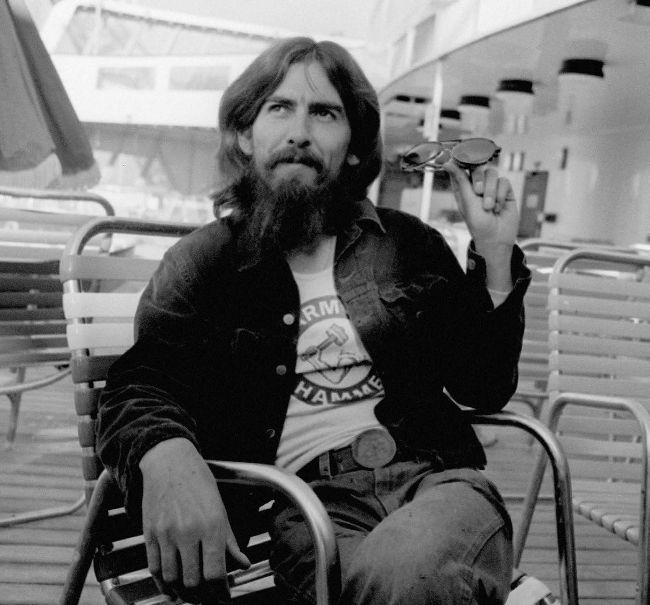
On the QE2 returning from New York after three months recording in America, September8,1971
PA IMAGES VIA GETTY IMAGES; SCOTT DUDELSON/GETTY IMAGES; REDFERNSROLLS PRESS/POPPERFOTO VIA GETTY IMAGES; LMPC VIA GETTY IMAGES
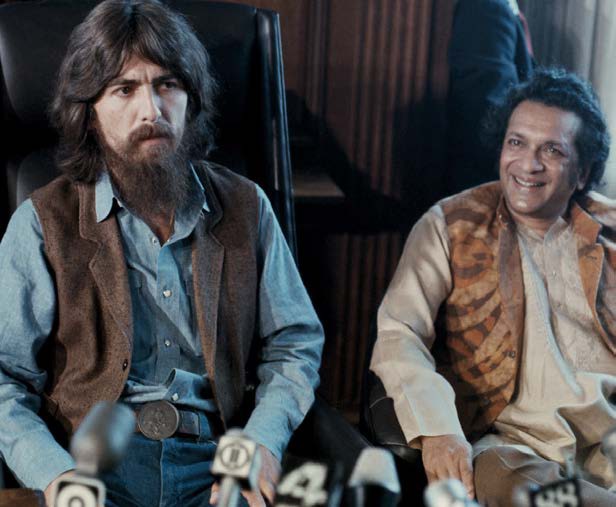
With Ravi Shankarat a press call to promote The Concert For Bangladesh, July 27, 1971
LIVING IN THE MATERIAL WORLD
A worthy follow-up to the epic All Things Must Pass, the beautiful production mixes pop, protest, intimate spiritual yearning and some of Harrison’s best ever writing and singing. Released 50 years ago, on May 30, 1973, the album remains a somewhat unsung masterpiece.
THE very first time I laid eyes on George was at John Lennon’s Ascot Sound studio on February 16, 1971. John was making Imagine. George was walking into the hall. I’d gone to the bathroom and I came out and saw him and we just said, “Hi.” He said that he really loved the Delaney & Bonnie record that I’d played on, Accept No Substitute. It wasn’t a successful record, or a big record, but all the English guys loved it. To have George say that to me was a big deal.
Suddenly, after Ascot Sound, I saw George a lot. It was a really busy time. I was on sessions with him with Leon Russell, Phil Spector was producing, and Gary Wright. It did feel at that time, post-Beatles, that George was gathering this community of new artists and like-minded, soulful musicians around him.
He was the most unusual person. John was just very, very normal. He was a regular kind of guy: funny, incredibly smart, and incredibly fast with everything. Nothing took a long time. When we got to hanging out, it was fantastic but it was like living in a cloud. There’s so much John stuff that I just can’t remember because we were so loaded, and everything was so condensed, timewise. George was just the opposite. With George, it was always kind of mystifying how he would come up with stuff to do, and how easily he made it happen.