What you need to know about heat pumps
Thinking of installing this renewable tech? Nigel Griffiths looks at the pros and cons of the various options and how they compare to conventional heating
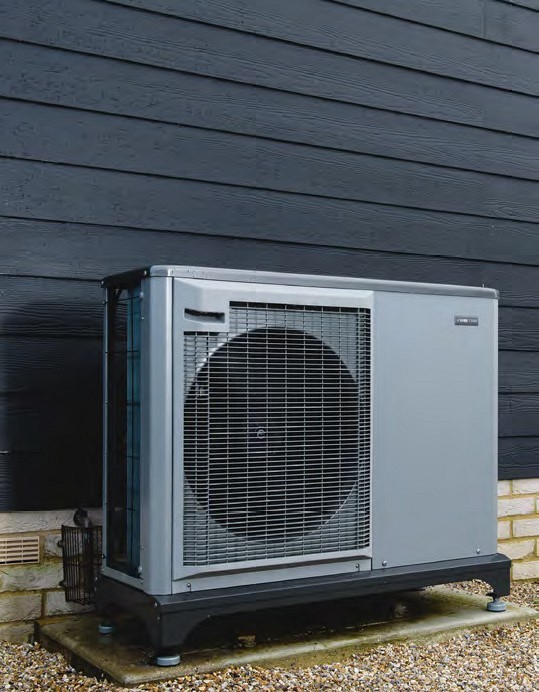
Nibe’s F2040 8kW air source heat pump features a sleek, compact design. The appliance is approved by the Microgeneration Certification Scheme (MCS), an essential requirement for the Renewable Heat Incentive
One of the big drivers for taking on a major home building project is to achieve a low-energy, lowbills household. One piece of the puzzle is how you choose to provide central heating and hot water. A popular option for those undertaking an eco build is to install a heat pump – but is it the right choice for you?
What is a heat pump?
These appliances take low-grade energy from the ground or air and convert it into usable, higher-temperature warmth that can be pushed into the living environment and used for space and water heating. They basically work on the same principle as a refrigerator, but operating in reverse.
It takes electric energy to run the pump, so while it does make use of renewable heat, it’s not a completely carbon free system. For each unit of power used by the appliances, you get more than one unit of heat output – and this is what makes them an attractive option.
Heat pumps work best when they’re used to run lowtemperature distribution setups, such as underfloor heating (UFH). This is a great option for new homes, and can now be relatively easily installed in many existing buildings thanks to the proliferation of low-profile UFH systems. This converts your entire floor into a heat emitter; the increased surface area allows for a much lower flow temperature to create a cosy environment – so less energy is required from the pump to raise the warmth of the water. An alternative is to go for oversized radiators.