18 MIN READ TIME

SATURDAY NIGHT’S ALRIGHT FOR FIGHTING

Despite limited personnel changes, 1973 was a transformative year for Doctor Who. As the show began its second decade, things would never be quite the same again…

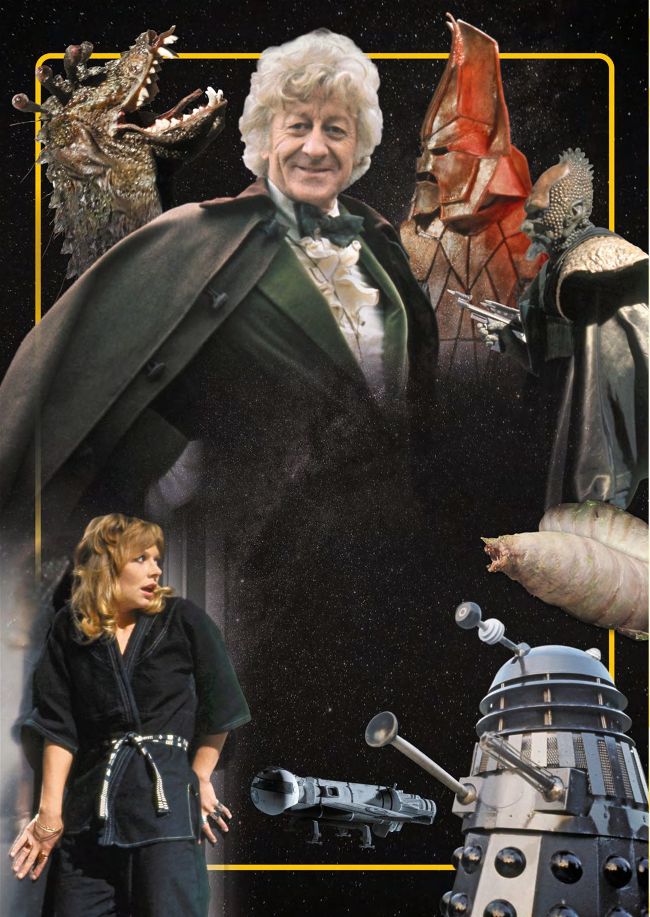
A Drashig in Carnival of Monsters; Jon Pertwee as the Doctor in The Time Warrior (1973-74); Omega in The Three Doctors; a Draconian in Frontier in Space; giant maggots in The Green Death; a Dalek in Planet of the Daleks; the Master’s spaceship in Frontier in Space; and Jo Grant (Katy Manning) in the same story.
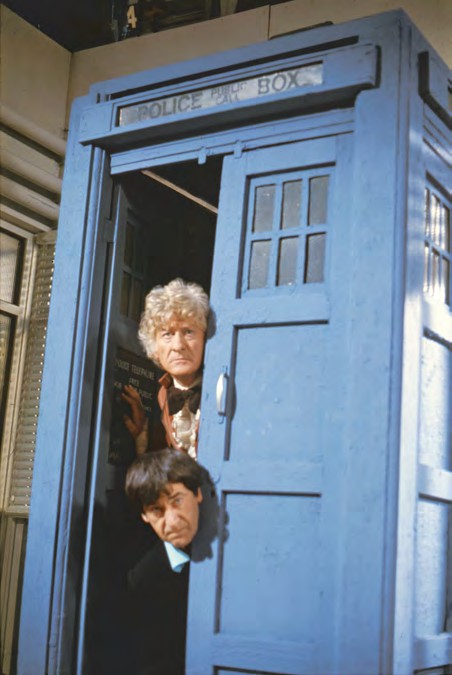
Jon Pertwee and Patrick Troughton in The Three Doctors.

In its tenth anniversary year, Doctor Who would have had every excuse for kicking back and taking its foot off the gas a little. Under the stewardship of producer Barry Letts and script editor Terrance Dicks, the series had revived its once flagging fortunes and secured its place at the heart of BBC1’s Saturday schedule. Jon Pertwee’s flamboyant showman of a Time Lord was arguably the most popular Doctor yet, supplanting even the Daleks – who hadn’t even shown up until his third season – as the undisputed star of the show. On paper, 1973 wasn’t a year of seismic change for Doctor Who. It entered January with the same team that had made the previous few seasons such a success, and exited December with Pertwee, Letts and Dicks’ names still above the door. But look closer, and it was a year of quietly radical reinvention: one that introduced bold new forms of storytelling while also becoming aware, perhaps for the first time, that it was now a programme with a legacy. And if it didn’t quite close the book on the Third Doctor’s travels, in many ways 1973 feels more like the end of the ‘Pertwee era’, as it exists in the popular imagination, than does Planet of the Spiders from 1974.

THE SCENES OF COMIC ONE-UPMANSHIP BETWEEN THE DOCTORS ARE THE INEVITABLE HIGHLIGHT OF THE THREE DOCTORS.

The birthday celebrations started somewhat prematurely, when The Three Doctors debuted on the last Saturday of 1972 – little more than a month after the series’ ninth anniversary. From a 21st-century perspective, it’s hard to appreciate just how extraordinary this story must have seemed to viewers at the time. These days, we think nothing of different incarnations of the Doctor casually bumping into each other whenever it’s convenient to the plot. In The Three Doctors, though, it’s stated that “the First Law of Time expressly forbids him to meet his other selves”. Clearly, then, this was a Big Deal all round.

The idea didn’t come completely out of left field, though. According to Barry Letts, “People had often come up to us and said, ‘Why don’t you have the Doctor meet himself?’ And we suddenly thought, ‘Why are we so against it?’”

Despite William Hartnell’s contribution being severely limited by ill-health, the scenes of comic one-upmanship between the Doctors are the inevitable highlight of the anniversary story – the puckish Patrick Troughton all twinkly-eyed mischief, Pertwee’s patrician Time Lord brisk, businesslike and irritable. These scenes also establish the tradition of the ‘younger’ incarnations deferring to the First Doctor as the elder statesman – even though, technically speaking, he’s the baby of the group.

Read the complete article and many more in this issue of Doctor Who Magazine
Purchase options below
If you own the issue, Login to read the full article now.
Single Digital Issue Chronicles 1973
 
$8.99 / issue
This special issue is not included in a new Doctor Who Magazine subscription. Subscriptions include the latest regular issue and new issues released during your subscription.
Annual Digital Subscription SPECIAL OFFER: Was $54.99 Now $34.99 billed annually
Save
66%
$2.69
PRINT SUBSCRIPTION? Available at magazine.co.uk, the best magazine subscription offers online.
 

This article is from...


View Issues
Doctor Who Magazine
Chronicles 1973
VIEW IN STORE

Other Articles in this Issue


Editorial
DOCTOR WHO CHRONICLES
A glance at the internet paints a fairly
Doctor Who Magazine Special
THE DIARY OF Doctor Who
The series’ tenth-anniversary celebrations were already underway by the time 1973 began...
THE THREE DOCTORS
If the Doctor’s own people are prepared to break the laws of time, then it must be a grave matter indeed…
GETTING THE PICTURE
For Doctor Who’s tenth season, producer Barry Letts stretched the technical resources of the BBC’s electronic multi-camera studios to the limit.
LETTERS FROM WHITE CITY
Terrance Dicks’ letters to the writers of The Three Doctors and Planet of the Daleks reveal some fascinating insights into the work of the Doctor Who script editor.
Stitches in Time
Although he was the most flamboyant Doctor to date, Jon Pertwee’s outfits were relatively conventional compared to some of the other challenges facing the costume designers of 1973.
CARNIVAL OF MONSTERS
The Doctor is finally free to wander space and time again – but on his very first trip, he finds his horizons suddenly limited…
SPECIAL EFFECTS
The demands of the most ambitious serials prompted the BBC Visual Effects Department to enlist freelance contributors.
STATE OF THE ART
Comic strips inspired by the series appeared in different forms – and across several publications – in 1973. The best of these stories are some of the most faithful Doctor Who adaptations published up to that point.
WHERE WERE THEY THEN?
Many past and present stars of Doctor Who appeared in a lavish photoshoot for a Radio Times special celebrating the show’s tenth anniversary. But let’s see where their careers were at in 1973…
FRONTIER IN SPACE
Assisted by the Ogrons, someone is using “hypno-sound” to make space pilots see things they haven’t – in an effort to spark an apocalyptic war.
The Final Fronier
Photographs taken during the making of Frontier in Space Episode Six provide a unique record of Doctor Who production in the early 1970s.
ON LOCATION
Location shooting for Season 10 was complicated by the need to film the series on land, in the sea and from the air….
TOY STORIES
Perhaps surprisingly, this was a rather lean year for merchandise – although it did introduce a series of books that continues to this day.
PLANET OF THE DALEKS
No, not Skaro – this time the Daleks are massing on Spiridon. The planet may be different, but the plan is familiar…
PAGES OF history
The Dr Who Annual 1974 happens to be the only one from that decade that doesn’t include a roll-and-move game. Unfortunately, there’s rather less originality on offer in the book’s fictional adventures…
FROM THE ARCHIVES
BBC paperwork from 1973 reveals that the producer’s remit involved soothing the nation’s heartache and defending the series from accusations of irresponsibility.
THE GREEN DEATH
There’s trouble down the pit at Llanfairfach when some fellow turns up “bright green, apparently – and dead!”
Partner in Time
The Green Death brought Jo Grant’s relationship with the Third Doctor to a poignant end. Jo is still one of the series’ most popular characters, but how much do we actually know about her?
MOONBASE 3
Science-fiction drama Moonbase 3 has significant behind-thescenes links to early 1970s Doctor Who. But is this short-lived series worthy of greater recognition in its own right?
Times and SPACE
The Radio Times celebration of Doctor Who’s tenth anniversary was a groundbreaking magazine that included the series’ first official episode guide.
MASTERING THE DALEK PLANS
For many readers of 1973’s Doctor Who Radio Times special, the highlight of the souvenir magazine was a set of instructions showing how to build a full-size Dalek.
BREAKING NEWS
In 1973, the series offered newspaper and magazine journalists plenty to write about – including three Doctors, a new assistant and a flying car.
On the BOX
The adventures of the Third Doctor attracted huge audiences in 1973 – especially when he was joined by his two predecessors. There was, however, plenty of high-quality alternative viewing on offer from ITV and the BBC.
FINAL SCORE
As Doctor Who entered its eleventh year on screen, Jon Pertwee led a resurgence in the show’s popularity, with audience numbers reaching heights not seen since the days of Dalekmania.
Chat
X
Pocketmags Support