Yes Ma’am! the Sacrifice of Britain’s Domestic Servants
Their lives have been romanticised in period dramas ‚but becoming one of ‘the help’ was often not a happy choice. Tessa Dunlop finds out how the lives of live-in servants evolved in the first half of the 20th century
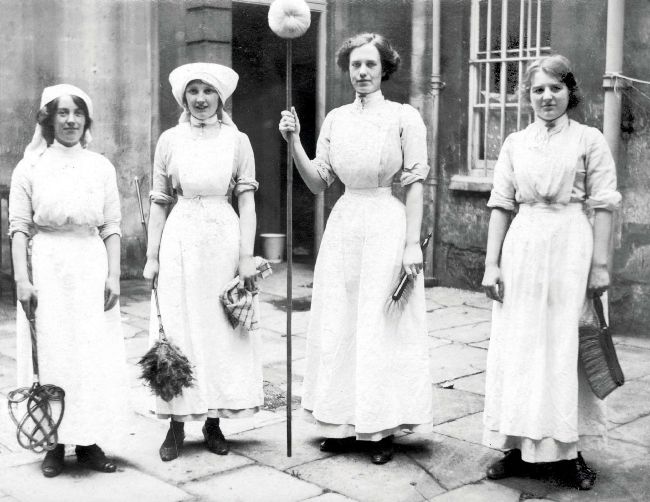
The days of permanent service didn’t suddenly end with the arrival of the 20th century – it took a long time for change to come about
GETTY X2
In 1901, one-third of British women were in domestic service, but less than 20 years later there were predictions of a ‘servant problem’. During World War I, women had driven buses, threshed in fields and ripped their hands in munitions factories; they’d proved their economic worth and for some it was a first taste of freedom. Why on Earth would they want to return, en masse, to the ignominy of domestic service?
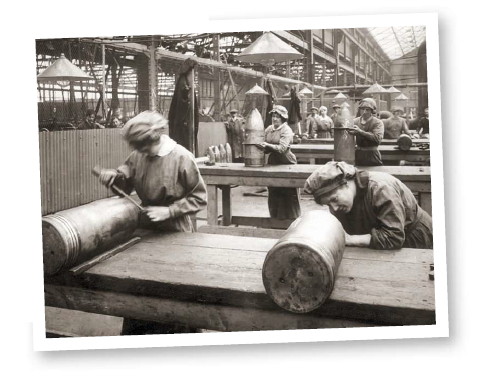
When the men went to fight in WWI, women took on their jobs making munitions and more
The Establishment duly panicked that the era of the faithful Victorian maid was over, with press and Parliament anguishing over the prospect of flappers refusing to resume their biddable positions out of sight in private households.
In 1918, women over the age of 30 had won the right to vote. In theory, their world was changing, and the first buds of consumer Britain looked promising. The prospect of clerical work or serving in a high-street shop was so much more alluring (and better paid) than the scrubbing and scrutiny that came with domestic servitude. Two government commissions probed the issue, the Daily Mail bemoaned working-class women’s “restless desire for independence which is a legacy of war”, and broadcaster and writer J B Priestley wrote that servants were as “obsolete as the horse”.
In the end, economics dictated the outcome. An industrial slump in the 1920s and stubborn mass unemployment in the 1930s ensured that many girls had no choice. If, before World War I, one in three women were in service, after 1918 a quarter soon found themselves back inside other people’s homes cleaning and clearing, scuttling along back passages, sweeping in the corners and sluicing steps with chapped hands.
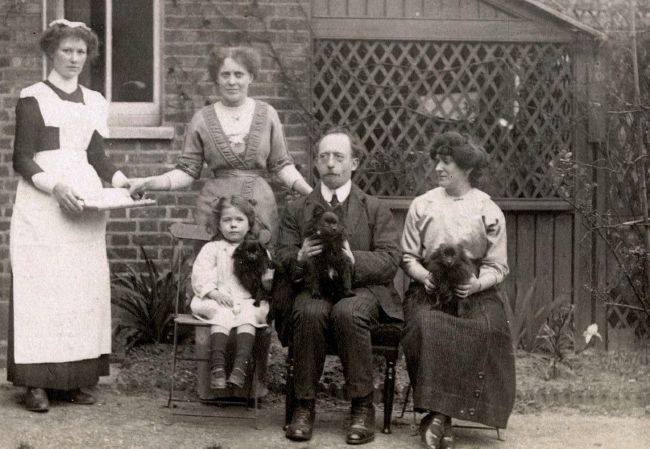
Not all girls worked with their peers; for many, domestic service meant being the lone adjunct to someone else’s family
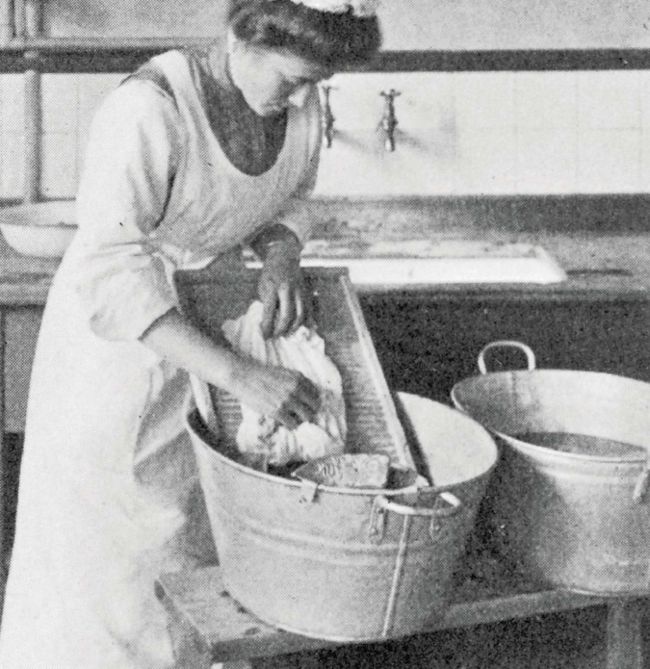
Before the washing machine became a fixture of the home, clothes had to be scrubbed clean