OLED & the future of Apple displays
Apple uses OLED displays on iPhone and iPad, but not on Mac. That may be about to change…
WRITTEN BY DAVID CROOKES
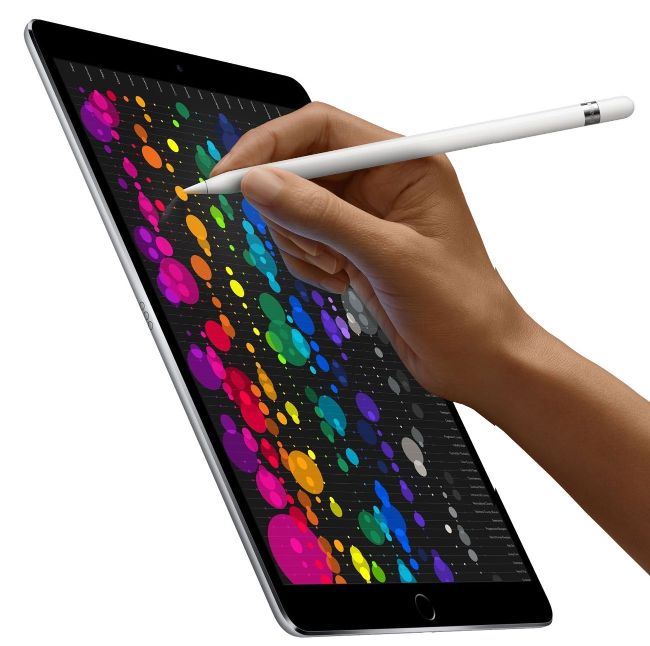
The 2017 12.9-inch iPad Pro was said to feature the world’s most advanced display at the time, thanks to its use of ProMotion technology.
Image credit: Apple Inc
For our latest subscription offer see page 34!
There was a time when Apple was dismissive of OLED displays. In 2010, Apple debuted its Retina display on iPhone 4 and iPod Touch, which relied on LED-backlit IPS LCD technology, and Steve Jobs told Apple’s Worldwide Developers Conference: “You can’t make an OLED display with this resolution.”
Three years later, Apple doubled down, saying the Retina display was twice as bright and didn’t suffer from ‘awful’ colour saturation. “If you ever buy anything online and really want to know what the colour is, as many people do, you should really think twice before you depend on the colour from an OLED display,” Tim Cook proclaimed to a Goldman Sachs investor conference.
But then, a year later, Apple used an OLED display for the first time with Apple Watch. In 2017, the company moved away from LCD on iPhone, lending iPhone X a stunning OLED screen, which it called the Super Retina HD display. More recently, in 2024, Apple used an OLED display in the M4 iPad Pro and called it the Ultra Retina XDR, and now it’s looking likely to use it on Mac. So, why did Apple go from criticising OLED to embracing it?